
A magical circle is often considered the cornerstone of many spiritual and ritual practices, serving as a protective boundary between the physical and spiritual realms. The practice of casting a circle has deep roots in ancient traditions but remains vital in contemporary spiritual rituals and ceremonies. Historically, the concept can be traced back to various ancient cultures, from the Greeks and Romans to the Celts and Egyptians, each utilizing circles in their sacred rites. Today, the circle remains a prominent feature in practices such as Wicca, Paganism, and similar spiritual paths, providing a space for meditation, spellwork, or honoring sacred events.
For those new to this spiritual practice, learning to cast a circle can prove to be an empowering experience. Many beginners report feeling a greater sense of focus and reassurance during rituals performed within a cast circle. The process not only marks a designated sacred area but also helps practitioners mentally prepare for the work or meditation ahead. A 2022 survey found that 70% of individuals practicing modern-day spiritual rituals consider circle casting an essential step in their practices. This demonstrates how widely valued this tool is for maintaining spiritual connection and concentration.
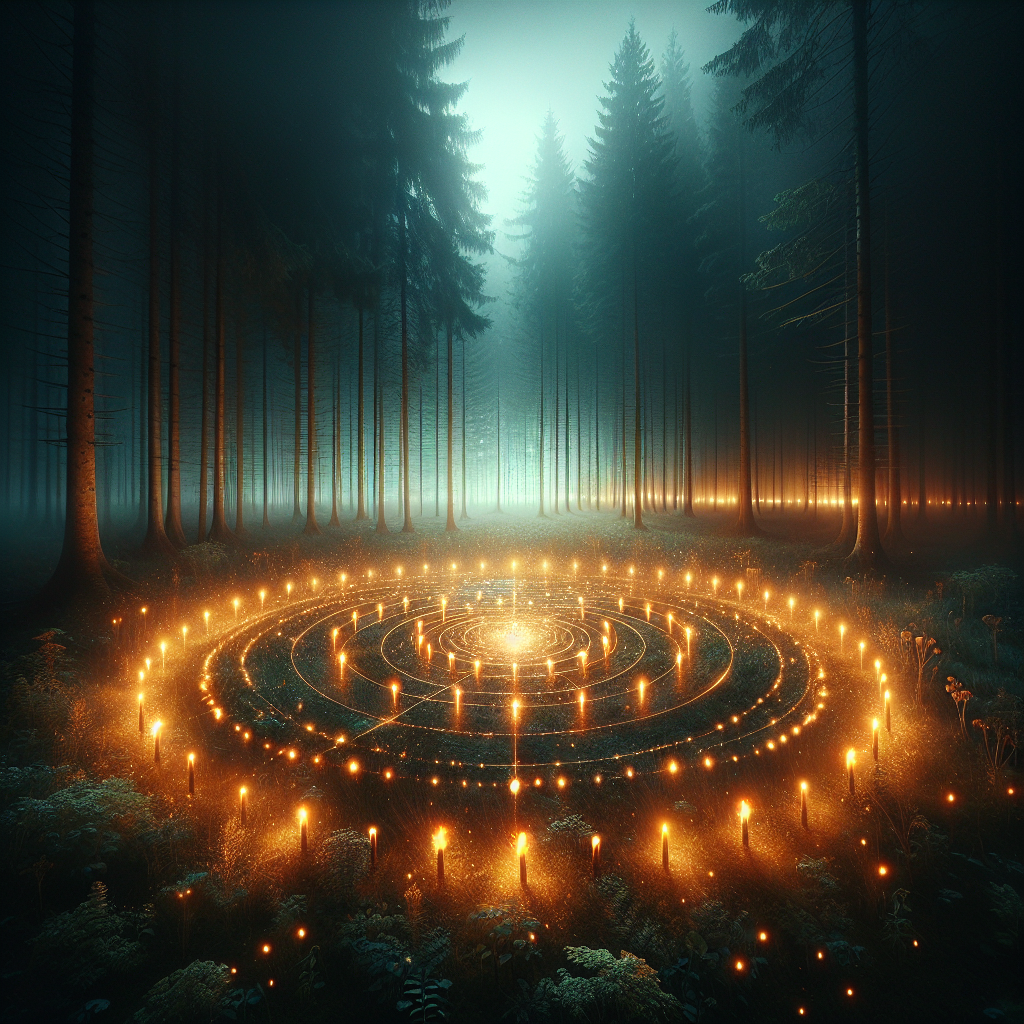
To begin casting a circle, one typically gathers necessary tools such as candles, salt, or a wand to delineate the boundary. The process begins by selecting a quiet and undisturbed space, ideally cleansed beforehand. While there are many variations, commonly, the practitioner starts by standing in the center of the intended circle, facing north or east, and visualizes a boundary emanating from within. This boundary may be drawn or marked physically on the ground or visualized using one's energy. Practitioners often walk the circle's perimeter, pointing a wand or their extended hand to project energy into forming the boundary.
Depending on one's tradition or personal preference, the circle may then be consecrated with elements like water and salt, representing Earth and Water, or incense representing air. Many practitioners also invite spiritual guides or elemental forces for protection and guidance within the circle. Once the circle is securely cast and all preparations are in place, it's common to light candles or incense to symbolize the sanctity of the space. At this point, individuals can proceed with their ritual, meditation, or spiritual work. This sacred enclosure remains intact, keeping out unwanted energies and holding the practitioner's focus until their ritual is complete.
### How to Cast a Circle: A Beginner’s Guide to Sacred Space
Casting a circle is an essential practice in many spiritual and magical traditions, serving as a means to create a sacred and protected area for rituals or meditative activities. This practice helps to delineate a space that is imbued with intent and energy, fostering an environment where individuals can focus their spiritual work without external disruptions or negative influences. By drawing a circle, one establishes a boundary between the mundane and the spiritual, enhancing the overall effectiveness and safety of the ritual. To delve deeper into the specific steps and methods involved in casting a circle, we will explore techniques, tools, and intentions that beginners can employ to create their sacred space effectively.
How to Cast a Circle: A Beginner’s Guide to Sacred Space
Understanding the Purpose of Casting a Circle
Casting a circle is a fundamental practice in witchcraft and other magical traditions. It involves creating a sacred space where practitioners can perform rituals, spells, and meditations safely and with focused intent. The circle acts as a barrier, protecting against negative energies while containing and amplifying the practitioner's personal power.
Preparing to Cast a Circle
Before you begin casting a circle, preparation is key. Here are the steps to set the stage:
- Choose Your Space: Select a quiet and undisturbed area, either indoors or outdoors, where you feel comfortable and safe.
- Gather Your Tools: Collect any tools or items you may need, such as a wand or athame (ritual knife), candles, salt, incense, or crystals.
- Cleansing: Cleanse the space physically and spiritually using methods like smudging with sage, sprinkling saltwater, or ringing a bell.
- Set Your Intentions: Clearly define what you wish to achieve with your ritual or spellwork.
Steps to Cast a Circle
- Grounding and Centering: Begin by grounding yourself, which means connecting to the Earth, and centering your energy to stabilize your focus.
- Marking the Circle: Walk in a clockwise direction and visualize the circle forming around you. You can use your ritual knife, wand, or simply your finger to trace the circle's perimeter.
- Calling the Quarters: Invoke the elements (Earth, Air, Fire, Water) at the cardinal directions (North, East, South, West).
- Invoking Deities or Spirits: If your path includes working with deities, guides, or spirits, invite them into your circle to lend their energy and protection.
Working Within the Circle
With the circle cast, you are now inside a sacred space. Perform your spellwork, meditation, or ritual with focused mind and clear purpose. Be mindful of your thoughts and energy as the circle amplifies your intentions.
Closing the Circle
Once your work is done, it's essential to formally close the circle.
- Thanking Entities: If you called upon any deities or spirits, thank them for their presence and assistance.
- Releasing the Quarters: Release the energy of the elements by acknowledging their presence and asking them to go in peace.
- Closing the Circle: Walk counter-clockwise around the perimeter, visualizing the energy of the circle dissipating and returning to the earth.
- Ground and Cleanse: Re-ground your energy and cleanse your tools and space as needed.
Common Mistakes to Avoid
It's not uncommon for beginners to encounter some challenges when learning to cast a circle. Here are frequent mistakes to be aware of:
- Skipping the cleansing step and inadvertently inviting negative or stagnant energies into the circle.
- Not setting a clear intention, which can lead to unfocused or ineffective ritual work.
- Neglecting to properly close the circle, potentially leaving energy leaks in the space.
Enhancing Your Circle Casting Practice
As you grow more experienced, you can explore personalizing your circle casting ritual to resonate more deeply with your path. Consider:
- Incorporating different tools or objects that hold personal significance.
- Writing your own invocations or invocations specific to the energies you are working with.
- Experimenting with additional elements, such as bells, music, or dance, to raise or shift energy.
According to the 2020 Pew Research Center study, approximately 0.4% of U.S. adults identify with contemporary forms of paganism, including Wicca and witchcraft, underscoring the growing interest in these practices worldwide.
Recommended for You
🛒 Spell Jar Supplies
As an Amazon Associate we earn from qualifying purchases.
- What is the purpose of casting a circle?
-
Casting a circle is a ritual process to create a protected and sacred space for spiritual practices, such as meditation, spellwork, or connecting with the divine. It serves as a barrier against negative energies and distractions, allowing the practitioner to focus and work in a safe environment.
- Do I need any specific tools to cast a circle?
-
While specific tools are not strictly necessary, many practitioners use items such as a wand, athame, or crystals to help define and empower the circle. These tools often serve as a focus for energy and intention while performing the ritual.
- Can I cast a circle indoors?
-
Yes, you can cast a circle indoors. Many people choose to perform their rituals in a personal space at home. It's more about the energy and intention than the physical location, so as long as you have enough room to visualize or physically walk your circle, indoors is perfectly fine.
- How large should my circle be?
-
The size of your circle depends on your personal needs and the space available. It can be as small as the area directly surrounding you or large enough to encompass an entire room. The key is to make sure it feels comfortable and adequate for your work or ritual.
- Is there a specific time or moon phase best for casting a circle?
-
While you can cast a circle at any time, many practitioners choose to align their rituals with certain phases of the moon or specific times of the day that correlate with the energies they wish to invoke. Full moons are traditionally seen as powerful times for such practices.
- How do I open and close a circle?
-
Opening and closing a circle typically involves visualizing or marking the boundary and calling upon elements or deities to bless the space at the start. To close a circle, you thank these entities and either physically dismiss the boundary or visualize releasing the protective energies.
- What should I do if my mind wanders while casting a circle?
-
It's common for the mind to wander, especially for beginners. If this happens, gently refocus on your intention and the purpose of your circle. Some practitioners find it helpful to use a chant, visualization, or repeated phrase to aid concentration.
- Can I involve others in casting a circle, or is it personal?
-
You can certainly include others in the process of circle casting. Many traditions support group rituals and find strength in shared energy and intent. Ensure all participants are aware of the intention and procedure for mutual respect and alignment.
- What should I do if I feel the circle has been broken?
-
If you sense that your circle has been disrupted, pause and take a moment to determine if you need to recast it. You can either mentally reinforce the boundary by focusing your energy or physically walk the circle again. Trust your instincts and proceed as you feel necessary.
- Do I need to follow other rituals or perform certain actions after casting a circle?
-
Once a circle is cast, many practitioners proceed with their planned rituals, such as meditation, spellwork, or other spiritual practices. Some may choose to close the circle and perform grounding exercises afterward to help return to everyday consciousness.
Conclusion
Casting a circle stands as a fundamental technique within witchcraft and magical practices, providing a protective and sanctified arena for rituals to unfold. Beginners are introduced to this practice with an emphasis on intention and reverence, understanding that the circle serves as both a boundary and a bridge connecting the practitioner to higher energies. When embarking on this practice, essential tools such as salt, candles, and incense may be employed to delineate the space and to heighten one's focus and connection. The process invites individuals to be mindful of the symbolic directions of north, south, east, and west, each embodying distinct elements and attributes crucial to the ritual's balance and potency. Mastering this foundational ritual enables practitioners to engage more deeply with magical workings, ensuring a grounded yet transcendent experience.
Novices are encouraged to develop their circle-casting techniques through repeated practice and personal customization, thereby nurturing their unique spiritual paths. As outlined, calling upon the elements, infusing personal energy, and closing the circle with deliberate intent form core components of this traditional practice. Engaging in these actions fosters a profound sense of safety and empowerment, integral to enacting desired change and spiritual growth. Moreover, casting a circle not only ensures a protected ritual space but also strengthens one’s bond with the earth and cosmos, reinforcing the interconnectedness of all things. Culminating in the wisdom shared, beginners are equipped with the knowledge and insight to cultivate sacred spaces that resonate with personal authenticity and magical purpose.
📚 Explore More on This Topic
Editor's Pick: A beginner's guidebook on circle casting.
Join The Mystic Circle
Weekly spells, moon rituals & magickal wisdom — plus a free ritual planner.
Continue Your Magical Journey
Enhance Your Practice
As an Amazon Associate, I earn from qualifying purchases.
Everything a Witch Needs, in One Living Grimoire
941 pages across 5 volumes and 6 bonus guides — foundations, herbalism, tarot, crystals, 26 traditions, a fillable Book of Shadows, and a seasonal companion. The last witchcraft resource you'll ever need.

🌙 Get a Free AI Tarot Reading
Luna reads the cards just for you — powered by AI, guided by the stars. No account needed.
Draw Your Cards Now ✨Powered by Luna's Circle — AI Spiritual Guidance
