


As an Amazon Associate I earn from qualifying purchases.
Have you ever stood at your altar, surrounded by your tools, and wondered which essential oils would truly elevate your practice? It can be overwhelming, especially when you’re just starting out. Tonight, let’s explore a few oils that can bring specific benefits to your rituals, ones you’ll reach for time and time again. After 10 years of practice, I’ve learned what really makes a difference. Start with just a couple of these oils, and you might find your connection deepening. Trust this—your journey is uniquely yours, and every choice counts.
Key Takeaways
- Stock up on lavender, eucalyptus, peppermint, rosemary, and clary sage — they form a powerful toolkit for immediate stress relief and grounding during chaotic times.
- Incorporate frankincense and sandalwood in your meditation routine — they can lower cortisol levels, enhancing focus and depth in your spiritual practices.
- Use lemon and rose oils in a diffuser for 30 minutes daily — their uplifting aromas boost mental clarity and emotional support, making them perfect for tough days.
- Dilute essential oils with a carrier oil at a 2% ratio before applying to skin — this reduces the risk of irritation and ensures a safer experience.
- Invest in ethically sourced, high-quality oils — they not only support sustainable practices but also enhance the effectiveness of your wellness rituals.
- Keep a journal to track your experiences with each oil — this helps you identify what works best for you and refine your personal wellness journey.
Introduction
Introduction
Ever felt overwhelmed by stress or just a bit out of balance? I remember those days when I was starting out, trying to navigate the world of essential oils. It can feel like a lot at first, but trust me, it’s all about simplicity and finding what resonates with you.
Essential oils can be a wonderful addition to your routine, offering a gentle way to support your mind and body. These plant-based wonders work through their aromatic compounds, which you can absorb through your skin or by inhaling. It’s like giving your nervous system a little hug.
Essential oils offer a gentle way to support your mind and body through their aromatic compounds—like giving your nervous system a little hug.
Here’s something to try tonight: Grab a bottle of lavender oil. Just a few drops in a diffuser or on your wrists can create a calming environment. It’s one of those oils the FDA recognizes as Generally Recognized as Safe. That’s a good sign, right?
In my practice, I’ve seen how aromatherapy can be more than just a pleasant scent. It can help manage feelings of anxiety or sleepless nights, and even support your immune system. The traditional uses of essential oils are backed by years of experience—think antimicrobial, antiviral, and antioxidant effects.
A Grounded Approach
What I wish I’d known as a beginner is that it’s okay to take your time. You don’t have to know everything at once. Start slow. Essential oils can be your allies in creating spaces for meditation, healing, and personal growth.
When choosing your oils, consider their traditional correspondences. For instance, chamomile is often associated with relaxation, while peppermint can invigorate you. It’s all about what you need in that moment.
And remember, safety first: always dilute oils before applying them to your skin, and if you’re pregnant or have health concerns, check in with a healthcare provider.
Engaging with Your Practice
As you’re exploring essential oils, think about how they can fit into your daily life. Do you struggle with sleep? Maybe try a calming blend of lavender and cedarwood before bed.
Feeling anxious? A few drops of bergamot in your space can help lift your mood.
After years of working with these oils, I’ve learned that everyone’s experience is different. Some practitioners swear by a specific oil, while others mightn’t feel the same benefits. That’s valid! Be patient with yourself—results can vary.
Here’s a step-by-step you can follow tonight:
- Choose Your Oil: Pick one that speaks to you.
- Set the Scene: Find a quiet space where you won’t be disturbed.
- Use Your Diffuser: Add a few drops of oil to your diffuser, or mix with a carrier oil and apply to your wrists.
- Breathe: Inhale deeply, focusing on the aroma. Close your eyes if you feel comfortable.
- Reflect: Take a moment to notice how you feel.
Next Steps
What’s your takeaway? Trust the process. Explore, experiment, and find what works for you.
You might find joy in blending oils or discovering new ones that resonate with your spirit.
Remember, it’s about creating a personal practice that feels right for you. And don’t hesitate to reach out to practitioners for guidance, especially when exploring traditions that might be new to you.
Essential oils can be a beautiful way to enhance your well-being. So, ready to give it a try? Start with one simple step tonight, and see where it takes you.
The Problem
As you navigate the complexities of wellness on your own, the absence of sensory tools like essential oils can leave significant gaps in your healing journey. What happens when you introduce targeted aromatherapy into the mix? The potential benefits—like alleviating anxiety and enhancing sleep—become even more pronounced, turning your solitary practices into a more robust approach to mental and emotional well-being. Incorporating healing practices of witchcraft can further enrich your experience, connecting you with ancient traditions that emphasize holistic healing.
Why This Matters
Ever felt like the weight of the world is on your shoulders? I remember when I first started my practice, juggling everything life threw my way—it was overwhelming. The stress and anxiety often felt like they were drowning out my spiritual work.
If you’re in that space now, know you’re not alone. Stress can trigger anxiety and depression, and sometimes traditional therapies just don’t cut it. I learned this the hard way, feeling stuck in a gap where I craved emotional balance but didn’t always know how to get there.
You might be finding that poor sleep and mental fatigue are sneaking into your rituals, making it tough to stay focused in meditation. Trust me, I’ve been there. Depression can sap your energy for personal ceremonies, and anxiety can throw off your emotional equilibrium.
So, what can you do?
Here’s a practical suggestion: try incorporating essential oils into your daily routine. They’re a simple way to support your nervous system and can be used right at home. I often reach for lavender or chamomile to help ease tension and ground myself when things feel chaotic. You don’t need clinical oversight for this—just a little bit of intention.
Before you dive in, remember to check that the oils you choose are ethically sourced. Not all oils are created equal; some come from practices that aren’t sustainable. It’s worth taking the time to find brands that respect the earth and their communities.
A Beginner’s Guide to Essential Oils
- Pick Your Oil: Start with something accessible. Lavender is calming, while peppermint can invigorate you.
- Create Your Space: Find a quiet corner in your home. Light a candle—just make sure it’s in a fire-safe container and never leave it unattended.
- Set Your Intention: Before you begin, take a moment to breathe deeply. What do you want to release? What do you hope to invite in?
- Use Your Oil: You can add a few drops to a diffuser or even mix them with a carrier oil for a soothing massage. Remember, if you’re considering ingestion, consult a healthcare provider first.
It’s all about making these practices your own. There’s no right or wrong way to do this, and personal interpretation is part of the journey.
Let’s Pause Here
So, have you ever tried using essential oils in your practice? What was that experience like for you?
I wish someone had told me earlier that it’s okay to experiment. Some methods resonate, and some mightn’t work at all. And that’s perfectly valid. Be patient; results vary for everyone.
Bringing It All Together
As you explore, keep these points in mind: essential oils can support your emotional state, but they’re not a cure-all. They’re a tool. Some practitioners mightn’t resonate with this approach, and that’s okay. Everyone has their path.
If you’re feeling anxious or drained, try this tonight: find a quiet space, light that candle, and breathe in your chosen oil. Allow yourself a moment to settle. It might just help to bring a little peace to your day.
Who It Affects
If you’ve ever felt that tight knot in your stomach or that restless feeling at night, you’re not alone. We all go through periods of anxiety, stress, or sleep disturbances. I remember my early days as a practitioner, grappling with the same challenges—my nervous system just couldn’t find its footing.
It’s tough when these feelings creep in, affecting your mood and energy levels. You might even notice it intensifying during hormonal shifts, like menopause or PMS. I learned this the hard way: poor sleep can spiral into fatigue, slowing down healing and emotional recovery.
Muscle tension and irritability aren’t just in your head; they manifest physically, too. Stress can feel like a heavy weight, especially when life demands keep piling up. Ever felt that? It’s exhausting, isn’t it? That’s why it’s crucial to have accessible tools to help you navigate these ups and downs.
One practical step you can take tonight is to try a simple aromatherapy practice. Using essential oils can be a gentle way to support your nervous system. Lavender, for instance, is traditionally associated with relaxation and sleep. Just a few drops in a diffuser or a warm bath can create a soothing atmosphere.
But remember, always consult a healthcare provider before using essential oils, especially if you’re pregnant or on medication.
In my practice, I often recommend starting with grounding techniques. Something as simple as deep breathing can make a big difference. Take a moment—find a comfortable spot, close your eyes, and breathe deeply in for a count of four, hold for four, and exhale for four. Start there. It’s a small but powerful way to bring your focus back.
As you explore these practices, keep in mind that they won’t work for everyone, and that’s okay. Be patient with yourself—results vary. What I wish I’d known at the beginning is that it’s a journey, not a race.
If you’re ready to try something new, consider incorporating herbal teas into your evening routine. Chamomile is a classic choice, known for its calming effects. Just make sure to source your herbs ethically; look for brands that prioritize sustainable harvesting.
The Explanation
You’re drawn to essential oils because they address the core challenges solitary practitioners face—managing stress without external support systems, maintaining emotional balance during isolation, and protecting your energy field when you’re working alone.
Contributing factors like irregular sleep patterns, accumulated tension, and difficulty grounding yourself amplify these struggles, making it harder to sustain your practice. Essential oils work on both physiological and energetic levels, offering you accessible tools that require minimal setup while delivering measurable results in relaxation, mood, pain relief, and spiritual fortification.
Incorporating a cleansing spell can further enhance the effectiveness of essential oils by clearing negative energy around you.
So, how can you harness these benefits effectively?
Let’s explore practical ways to incorporate essential oils into your routine, transforming your solitary practice into a more enriching experience.
Root Causes
You know that feeling when you’re pushing through a busy day, juggling client needs and your own well-being? I remember those times all too well. It’s easy to get lost in the demands of your practice, especially when you’re on your own. That’s why I want to share something that helped me: essential oils. They’re not just for creating a lovely atmosphere; they can really support your physical and emotional health.
When you’re working solo, the pressure can build up. You might find yourself dealing with chronic oxidative stress from long hours and irregular schedules. This stress can lead to a buildup of reactive oxygen species (ROS), which can wear you down mentally and physically. I learned this the hard way—there were days when I felt like I was running on fumes. Trust me, you don’t want to get to that point.
Here’s something practical you can try tonight: add a few drops of a polyphenol-rich essential oil, like rosemary or clary sage, to your diffuser. These oils can help neutralize that oxidative stress. They’ve been traditionally associated with enhancing mental clarity, which is something we all need, right?
But it’s not just about the oils. You’re also facing environmental challenges—without a team behind you, those little pathogens seem to sneak in. Plus, isolation can raise your cortisol levels, which messes with your sleep and decision-making. I can still remember the nights when I tossed and turned, my mind racing. Ever felt that?
Essential oils can help with that, too. Oils like tea tree or eucalyptus have antimicrobial properties that can act as a barrier against those pesky invaders. And for your mind? Oils such as peppermint or lemon balm can uplift your mood while keeping your cognitive function sharp.
What I wish I’d known as a beginner is that these oils work best when you address the root causes of your stress, rather than just the symptoms. They’re not a magic fix, but they can be part of a toolkit that helps you stay grounded and focused in your practice.
Before you dive in, remember: safety first. Always use these oils in a well-ventilated space, and if you’re thinking about ingesting any herbs, check in with a healthcare provider. And if you’re considering using any herbs or plants, look for sustainably sourced options—they’re better for you and the planet.
Now, let’s take a moment to reflect. What’s one small change you can make this week to support your well-being? Maybe it’s setting aside a few minutes each day to breathe deeply or to meditate. Start there. It doesn’t have to be elaborate. Small, consistent actions can lead to big shifts over time.
Ready to give it a try? You’ve got this!
Contributing Factors
Now, let’s talk about something we all face: stress. I remember when I was just starting out; I often felt overwhelmed, and it really impacted my practice. Ever felt that?
When stress kicks in, your cortisol levels rise, and it can throw your body and mind into a whirlwind. I learned this the hard way—your nervous system gets stuck in that fight-or-flight mode, making it tough to relax and connect deeply during practice. It’s like trying to meditate on a rollercoaster!
But there are ways to ease that pressure. Essential oils can help ground you and bring you back to a centered space:
- Nervous System Dysregulation: Lavender and chamomile are fantastic for calming your activated sympathetic nervous system. They can help restore balance. Just a few drops in a diffuser can create a serene atmosphere.
- Hormonal Imbalance: Frankincense and sandalwood may help lower cortisol levels. These oils have traditional associations with stability, which could help clear the mental fog that clouds your intuition.
- Mental Fog: Peppermint and rosemary? They’re like a breath of fresh air for your mind. They can enhance clarity, making it easier to focus during meditation or energy work.
Here’s a simple practice: Try blending a few drops of lavender and peppermint in a small bowl of water. Place it beside you during your next meditation. Trust me; it can shift the energy in the room.
Engagement Break: What’s your go-to method for handling stress? I’d love to hear how you cope.
These botanical allies can optimize your neurochemistry, creating the right conditions for a deeper spiritual connection. Remember, it won’t work for everyone, and that’s okay. Be patient with yourself; results can vary.
What I wish I’d known as a beginner is that it’s completely normal to feel the weight of the world on your shoulders. Acknowledge it. Sit with it. Then, gently let it go.
What the Research Says
As we explore the promising effects of lavender and chamomile on anxiety and stress, it’s important to consider not just the benefits but also the complexities surrounding their use.
While researchers agree on their effectiveness through methods like inhalation and massage aromatherapy, questions arise about optimal dosing, the best oils for specific conditions, and the need for more robust clinical evidence.
This brings us to the crucial issue of how we can better understand and validate these practices through rigorous research.
Key Findings
When I first started exploring essential oils, I was drawn in by their captivating scents and the promise of wellness. Ever felt that rush of excitement when you discover something new?
But I learned this the hard way: not all oils are created equal, and their effects can be as varied as our personal experiences.
Take lavender, for example. It’s got that “Generally Recognized as Safe” stamp from the FDA, and many folks, especially older adults, find it helpful for anxiety and stress.
But here’s where it gets tricky: studies show mixed results. What works wonders for one person mightn’t have the same effect for another. So, take a moment to assess how lavender—or any oil—affects your unique symptoms. Start there.
Keep in mind that essential oils lose their potency over time. The chemical composition can degrade, and those lovely aroma compounds can dissipate quickly once they hit the air.
This means you want to store them properly—dark glass bottles and cool, dry places are your friends.
In my practice, I’ve seen the need for more large-scale human trials to really nail down safe dosing and long-term effects. We’re in a bit of uncharted territory here, blending traditional knowledge with what’s evidenced-based.
And that’s okay! It’s part of the journey. Just remember to keep a close watch on how your body responds.
Practical Tip: If you’re new to using essential oils, try a simple lavender inhalation tonight. Just put a drop on a tissue or cotton ball, close your eyes, and breathe deeply.
Notice how it makes you feel. That’s enough for now—trust the process.
As you explore, remember to integrate these oils thoughtfully with other practices. Some practitioners emphasize blending with herbal remedies or meditation, which I find enriching.
But always, always be patient—results vary.
What I wish someone had told me back then is to listen to my body. Some oils may not resonate with you, and that’s totally valid.
And don’t forget to consider the source of your essential oils. Seek out ethical brands that prioritize sustainable harvesting and responsible practices. It’s a small step, but it makes a difference.
Before you dive deeper, let’s take a moment to reflect. Have you ever felt a connection with a scent that brought you back to a certain memory?
That’s the beauty of aromatic healing. It’s personal and rooted in tradition.
Next Steps: As you embark on this path, consider keeping a journal. Document your experiences with different oils, how they make you feel, and any rituals you create around them.
This practice can help you build a deeper connection to the oils and yourself. Happy exploring!
Where Experts Agree
Ever felt that knot in your stomach when life gets overwhelming? I remember those days all too well. It took me a while to discover how essential oils could help ease that tension. If you’re just starting out, here’s a gentle nudge: try incorporating lavender into your routine tonight. A few drops in a diffuser or mixed into a carrier oil for a calming massage can work wonders.
Lavender is widely recognized for its calming properties. The FDA even considers it safe, and numerous studies show it can help reduce anxiety, depression, and cortisol levels. In my practice, I’ve seen it transform spaces into soothing sanctuaries. Trust me, it’s a staple you won’t want to overlook.
Next up, consider eucalyptus. It’s often praised for its ability to help with sleep issues and even lower frantic behaviors in animals. While research is still catching up, I’ve found that a few deep breaths of eucalyptus can ground you in moments of stress.
Peppermint, too, deserves a mention. I’ve seen it work wonders for those pesky anxiety-related behaviors. It’s refreshing and invigorating—perfect for when you need a quick pick-me-up.
And don’t forget about lemon and rose. These oils are often highlighted in research for their uplifting qualities.
What I wish I’d known as a beginner is that integrating these oils into your life doesn’t have to be complicated. Start small. A simple inhalation or a drop on your wrist can be powerful.
Before you dive in, always remember to check for any sensitivities or allergies. If you’re pregnant or nursing, it’s best to consult with a healthcare provider to ensure everything’s safe.
And when sourcing your oils, consider their origins. Support ethical practices—look for sustainably harvested herbs and ethically mined crystals.
If you’re curious, take a moment to reflect on how these oils resonate with you. What do you feel drawn to? That’s your intuition speaking.
As you explore, be patient with yourself. Results can vary, and that’s okay. Some practitioners may disagree on the effectiveness of certain oils, and that’s valid. Keep an open heart and mind as you learn.
Ready to give it a go? Tonight, pour a few drops of lavender into your diffuser and breathe deeply. Let it wrap around you like a comforting hug. Trust the process—this is just the beginning of your journey into the world of essential oils. Start there. That’s enough for now.
Where They Disagree
Ever felt overwhelmed by the conflicting advice out there? I remember when I first started exploring essential oils. It was a bit of a maze, and I made a few missteps along the way. Here’s what I learned: the scientific community doesn’t always align with popular wellness narratives.
Take dosing, for instance. Most oils are relatively safe at low doses, but some, like Boldo and Mentha pulegium, can be much more toxic. Their LD50 values are surprisingly low—ten times lower than others. That’s a big difference! Always start with caution.
Allergic reactions are another area where opinions differ. I’ve seen patch test results swing from 1% to 69% depending on the oil. It’s essential to listen to your body and trust what feels right for you. Remember, what works for one person mightn’t work for another.
Now, let’s talk about neurological risks. There’s a lively debate around terpenes in suppositories. The EMA recommends avoiding them for infants, yet they’re often marketed without much caution. It’s a reminder to be vigilant and informed.
Reproductive toxicity is a complex topic, too. Estragole and pulegone have shown potential carcinogenic effects in animal studies, but we don’t have clear safety margins for humans. This is where you’ll encounter differing recommendations. Standardization gaps exist, and that can leave us navigating a sea of fragmented evidence.
Take a Step Back
What I wish I’d known as a beginner is that it’s okay to question the sources of information you come across. There’s no one-size-fits-all answer. The best approach is to blend traditional knowledge with your own experiences.
If you’re curious about incorporating essential oils safely, start with a simple practice tonight. Choose a single oil, like lavender or tea tree. Dilute a drop in a carrier oil, and do a small patch test on your skin. Wait for 24 hours and see how your body responds. This is a gentle way to begin your journey.
And always remember: safety first. If you’re pregnant, nursing, or taking medications, consult with a healthcare provider before diving deeper.
What about you? Have you ever had a surprising reaction to an oil? Let’s keep this conversation going!
Next Steps
As you explore, think about the sources of your herbs and oils. Ethical sourcing matters—look for sustainably harvested options and support practices that protect our planet.
In my practice, I’ve found that blending personal exploration with respect for the origins of these traditions creates a fulfilling experience. Keep it grounded, trust the process, and take it one step at a time. That’s enough for now.
Practical Implications
Integrating essential oils into your practice can enhance your environment and personal well-being without running into regulatory issues.
So, what happens when you incorporate these oils thoughtfully? By using a diffuser in your workspace or applying diluted oils topically for your own benefit, you set the stage for a more immersive experience.
However, it’s crucial to avoid making therapeutic claims or suggesting these oils as substitutes for medical treatments.
As you explore these applications, consider how clients can independently benefit from inhalation methods you recommend.
What challenges might arise when balancing personal use with professional boundaries?
What You Can Do
Integrating essential oils into your solitary practice can feel overwhelming at first, but it doesn’t have to be. I remember starting out, trying to follow complex rituals that only added to my anxiety. Here’s a simple way to weave them into your routine without the fuss. Trust me, you’ll find it amplifies your spiritual work beautifully.
Try this tonight: Start by diffusing. Grab your favorite blend—maybe lavender for calm or frankincense for grounding—and add 8-10 drops to an atomizer. Run it intermittently during your meditation or energy work. This keeps your space refreshed without drowning you in scent. Ever felt that sense of overwhelm when the aroma is too strong? Keeping it subtle makes a big difference.
Topical application is another effective method. Mix your essential oils with a carrier oil, like jojoba or sweet almond. Apply it to your ankles—this can help with hormonal balance and anxiety, which is key when you’re trying to focus. I learned this the hard way; it’s easy to overlook the basics in favor of the more glamorous practices.
Layer your practice for deeper effects. Combine inhalation aromatherapy with meditation. For instance, pair Vetiver with Cedarwood. The synergy between these two can create a profound grounding experience. That’s something I wish I knew when I first started; the right combinations can elevate your work significantly.
Remember, consistency is key. These methods can become powerful tools that support your practice. But be patient—results vary for everyone, and that’s perfectly okay.
Now, let’s pause for a moment. What’s your experience been with essential oils? Do you have a favorite blend?
As you explore, keep in mind that some traditions have specific guidelines when it comes to essential oils, so it’s wise to seek guidance if you’re drawing from those practices.
And always prioritize safety: use fire-safe containers for candles, never leave them unattended, and consult a healthcare provider before ingesting any herbs.
When you’re ready, consider sourcing your oils ethically. Look for sustainably harvested herbs and responsibly mined crystals. This respect for the materials can deepen your practice and connection to nature.
What to Avoid
When I first started working with oils, I was so excited about their potential that I overlooked some important safety tips. Ever felt that rush? It’s easy to get carried away, but trust me, there are essential boundaries to keep your practice safe and enjoyable.
First off, let’s talk about internal use. I learned this the hard way: ingesting oils daily can concentrate toxins in your liver and kidneys. That’s a risk you don’t want to take. If you’re even considering it, please consult a healthcare professional first. They can help you avoid dangerous interactions with medications.
Now, let’s discuss topical applications. Applying undiluted oils directly on your skin? That’s a no-go. You risk sensitization and chemical burns. It’s just not worth it. Instead, always dilute oils with a carrier oil like jojoba or sweet almond before applying them.
And eyes? Keep those oils far away! Mucous membranes too, and your face in general. You don’t want to deal with irritation or damage. I remember my first mishap with a phototoxic oil. Using mandarin without proper dilution led to some serious skin issues for me. Always dilute before use, especially with oils like mandarin that can cause permanent pigmentation damage.
If you’re working with eucalyptus or peppermint, be cautious around vulnerable populations—think pregnant individuals, kids under six, and pets. These oils can pose serious poisoning risks. It’s better to err on the side of caution.
Here’s a quick practice for tonight: Take a few drops of your chosen oil, dilute it properly, and blend it with a carrier oil. Use this mix for a calming neck massage. Start there. It’s a simple way to integrate oils safely into your routine without overwhelming yourself.
Remember, everyone’s practice is unique. What works for one mightn’t work for another. Be patient—results vary. And if you’re unsure about any oils or techniques, don’t hesitate to reach out to experienced practitioners.
What I wish I’d known as a beginner is that boundaries enhance your practice, allowing you to explore your spirituality safely. So take your time, enjoy the journey, and trust the process.
Comparison of Approaches
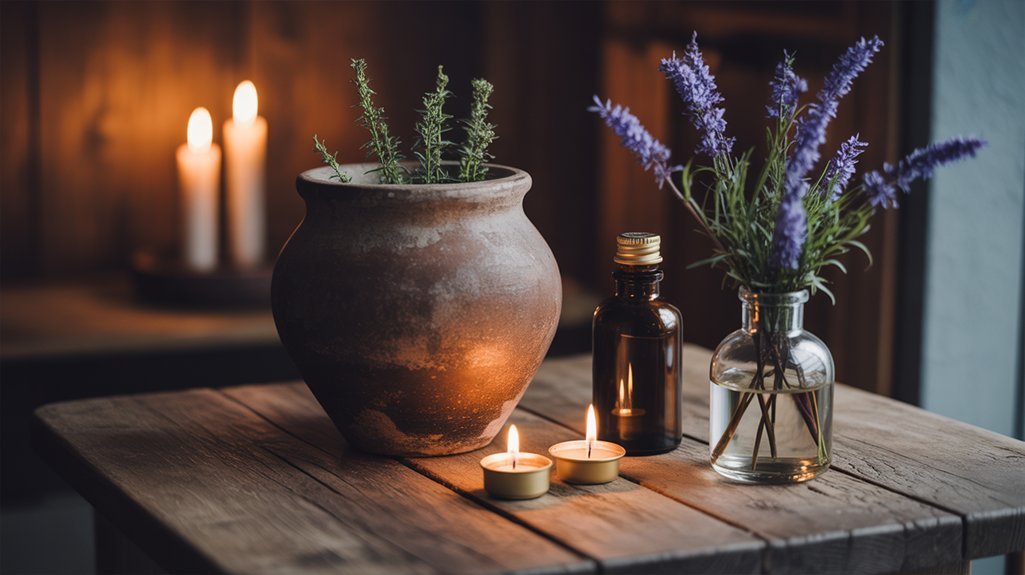
Essential oils can be such a comforting presence for solitary practitioners. I remember the early days of my practice, fumbling through different oils, trying to find what worked for me. Have you ever felt overwhelmed by choices? It’s easy to get lost in the options, but here’s the thing: you don’t have to choose between therapeutic benefits and magical intentions. They can work together beautifully.
Let’s break it down. Here’s a quick guide you can use tonight:
| Oil | Therapeutic Use | Magical Property | Practitioner Benefit |
|---|---|---|---|
| Lavender | Eases anxiety, promotes relaxation | Love, healing, protection | A versatile foundation oil |
| Rosemary | Boosts mental focus, alleviates pain | Clarity, purification, healing | Enhances cognitive function |
| Peppermint | Stimulates circulation, invigorates | Protection, divination | Sharpens your focus |
| Cedarwood | Grounds energy, supports skin health | Attracts abundance, offers protection | Provides stability |
| Frankincense | Elevates spiritual awareness | Used in offerings, exorcism | Amplifies rituals |
Start with peppermint. This oil is a great introduction because it sharpens your mind while setting protective boundaries. Just inhale it before you start your day, and notice the clarity that comes. Trust me, the difference can be remarkable.
Recommended for You
🛒 Dried Herbs For Rituals
As an Amazon Associate we earn from qualifying purchases.
A Little Guidance
As you explore these oils, remember to source them ethically. Look for suppliers who prioritize sustainable practices. It’s not just about the oil—it’s about the respect for the plants and traditions behind them.
I learned this the hard way: not all oils are created equal. Some may be diluted or mixed with synthetic ingredients. Always choose high-quality oils. If you’re unsure, check reviews or ask fellow practitioners for recommendations.
Engage and Reflect
What’s your favorite oil so far? Have you noticed any particular effects? It’s okay if you’re still figuring it out. This journey is as much about personal exploration as it is about following tradition.
When working with essential oils, safety is key. Don’t forget: always dilute oils when applying them to your skin, and consult with a healthcare provider if you’re considering ingestion or have health concerns. Some plants can interact with medications, so take care.
Next Steps
Try creating a simple ritual tonight. Light a candle in a fire-safe container (never leave it unattended!), and set your intention. Maybe you want clarity or protection. Inhale your chosen oil deeply and visualize what you wish to manifest. Just remember, this won’t work for everyone, and that’s okay. Be patient with yourself.
What I wish someone had told me as a beginner was that it’s perfectly fine to make mistakes. Each misstep taught me something valuable about my practice. So, embrace the process. You’re doing great!
Key Takeaways
As I look back on my early days as a practitioner, I remember the excitement of exploring essential oils. I dove into everything, thinking I needed every single option out there. Sound familiar? Over time, I learned it’s less about quantity and more about quality.
Let’s simplify your essential oil toolkit. You don’t need a shelf full of bottles; instead, aim for a few versatile oils that can support different aspects of your solitary practice. Here are some key players to consider:
- For mental clarity and spiritual connection: Give rosemary and frankincense a try. They can sharpen your focus while also deepening your connection to your inner self. Ever felt that boost when you’re truly present? It’s powerful.
- For grounding and protection: Think about cedarwood and patchouli. These oils help establish energetic boundaries and create a safe space for your work. I can’t tell you how many times I’ve relied on them to feel anchored.
- For optimizing sleep and relaxation: Lavender and sandalwood are your go-tos. They help you transition smoothly between work and rest. Trust me, creating that balance is key.
It’s all about aligning these oils with your intentions. This won’t work for everyone, but finding what resonates with you is crucial. Start there.
What I wish I’d known as a beginner: It’s okay to take your time. Instead of trying to collect every oil, focus on a curated selection that reflects your journey. After years of working with these oils, I can assure you that intentional application beats sheer volume any day.
Ready to try this tonight? Pick one oil from each category and set aside a moment to connect with them. Can you feel the difference?
As you practice, keep in mind the importance of sourcing. Choose ethically produced oils and herbs. If you’re looking for something to ingest, always consult a healthcare provider first, especially if you’re pregnant or taking medications. Safety first!
In my practice, I’ve found that simplicity often leads to the most profound experiences. So, let’s keep it straightforward: choose what resonates with you, apply it with intention, and see how it enhances your practice. That’s enough.
Frequently Asked Questions
How Should I Safely Store Essential Oils to Maintain Their Potency and Shelf Life?
How should I store essential oils to keep them effective?
You should store essential oils in dark glass bottles with airtight seals to maintain their potency.
Keep them in a cool, dark place between 60–70°F, away from heat, light, and humidity—so avoid bathrooms and kitchens.
For added longevity, refrigerate them separately from food and always close the lids tightly after each use.
Is it safe to use essential oils during pregnancy?
It’s best to consult a healthcare provider before using essential oils during pregnancy.
Some oils can pose risks, so getting professional advice ensures you’re making safe choices for you and your baby.
Always prioritize safety when it comes to essential oils in this context.
Can I use essential oils in cooking?
No, not all essential oils are safe for ingestion.
Many are meant for topical or aromatic use only.
If you’re interested in culinary applications, focus on oils specifically labeled as food-grade and consult a knowledgeable practitioner or chef for guidance on safe usage.
How can I minimize air exposure to my essential oils?
You can transfer low-volume oils into smaller containers to reduce air exposure.
This helps maintain their effectiveness.
Always make sure to seal them tightly after each use to further extend their shelf life.
Keeping your oils away from light and heat sources also plays a big role in preservation.
Can I Ingest Essential Oils, or Should They Only Be Used Topically and Aromatically?
Can I ingest essential oils?
No, this is a common misconception because essential oils are meant for topical and aromatic use only.
Instead, you can safely enjoy their benefits by diluting them for skin applications (under 5%) or using them in inhalation therapy for short intervals.
Always consult a healthcare provider if you have any concerns about safety or health conditions.
What are safe ways to use essential oils?
You can safely use essential oils through topical application (diluted) and aromatherapy.
For skin use, mix with a carrier oil to keep it under 5%.
Inhalation can be done by adding a few drops to a diffuser.
Remember to consult a healthcare professional if you’re pregnant or have health issues before using essential oils.
Which Essential Oils Are Safe to Use Around Pets and Children in My Home?
Q: Which essential oils are safe to use around pets and children?
Yes, chamomile, frankincense, and lavender are safe when properly diluted and diffused.
Start by using a diffuser and ensure the oils are heavily diluted. Always keep an eye on your pets and kids for any adverse reactions, and consult your vet or pediatrician before introducing new oils.
Q: Are there any essential oils I should avoid around my pets?
Yes, you should avoid tea tree, eucalyptus, citrus oils, peppermint, and spices like cinnamon, especially around cats.
These can be harmful to them. If you’re unsure, consult your veterinarian for guidance tailored to your specific pets.
Q: What safety precautions should I take when using essential oils?
Make sure to always use oils in a well-ventilated area and dilute them heavily before use.
Monitor for any reactions from pets or children. If someone is pregnant or has health concerns, consult a healthcare provider before using essential oils.
Q: Can I use essential oils if my child has allergies?
No, it’s best to avoid using essential oils if your child has known allergies, as they can trigger reactions.
Consult with a pediatrician for personalized advice and consider alternative methods for creating a calming environment. Your child’s safety is the priority.
How Do I Know if an Essential Oil Brand Is High Quality and Pure?
Q: How can I tell if an essential oil brand is high quality?
Yes, look for brands that provide batch-specific GC/MS testing and certificates of analysis.
Check for certified organic seals, botanical Latin names, extraction methods, and the country of origin on the label.
Avoid vague claims like “therapeutic grade.”
Remember, quality often comes at a price—cheap oils may be diluted or adulterated.
Q: Why is transparency important in essential oil brands?
Transparency builds trust.
Choose companies that share their sourcing and testing practices openly.
This ensures you’re getting pure oils.
Strong reputations and public third-party results are good indicators of quality.
If you’re unsure, check reviews from other users or consult knowledgeable practitioners.
Q: What’s the significance of aroma in essential oils?
Rich, complex aromas often indicate authenticity.
If an oil smells flat or overly synthetic, it mightn’t be pure.
Trust your senses, but remember that some oils can be very potent and should be used with care.
Always conduct a patch test before using a new oil on your skin.
Q: Are there any safety concerns with essential oils?
Yes, essential oils can be potent and should be used with caution.
Always dilute oils before applying them to your skin, and avoid ingestion unless guided by a qualified practitioner.
If you’re pregnant or have health concerns, consult a healthcare provider before using essential oils.
What’s the Difference Between Essential Oils, Fragrance Oils, and Carrier Oils for Practitioners?
FAQ: Essential Oils, Fragrance Oils, and Carrier Oils
Q: What’re essential oils, and how can I use them?
Yes, essential oils are concentrated extracts from plants that offer therapeutic benefits. To start, always dilute them with a carrier oil before applying to your skin.
Remember, some oils can be irritating, especially during pregnancy, so consult a healthcare provider if you’re unsure.
Q: What’re carrier oils, and why do I need them?
Carrier oils are used to dilute essential oils, making them safe for topical application while also nourishing your skin.
Look for cold-pressed plant oils like jojoba or almond. Always patch-test a new oil to check for any allergic reactions.
Q: Can I use fragrance oils for therapeutic purposes?
No, fragrance oils are synthetic and don’t offer therapeutic benefits. They’re great for adding scent to candles or diffusers.
If you’re looking for healing properties, stick with essential oils or consult a practitioner for guidance.
Q: How should I safely use essential oils in my practice?
To use essential oils safely, always dilute them in a carrier oil and avoid applying them directly to your skin.
Be cautious with oils like peppermint or cinnamon, which can cause irritation. If you’re pregnant or have health concerns, consult a healthcare provider before use.
Q: Are there cultural considerations I should be aware of?
Yes, some practices involving essential oils come from specific cultural traditions.
It’s important to respect those origins and learn from practitioners within those traditions to ensure proper use and understanding.
Conclusion
Embracing the world of essential oils can open up new avenues for self-care and mindfulness. Tonight, take a moment for yourself: light a single white candle, hold your intention for three minutes, then journal one sentence about what you felt. This simple practice can deepen your connection to the oils and to your own well-being. Remember, it’s about the journey, not perfection. Start there. You’ll find joy in the process, and with each drop, you’re nurturing your spirit. Trust the process, and enjoy the fragrant path ahead.
Amazon and the Amazon logo are trademarks of Amazon.com, Inc, or its affiliates.
Continue Your Magical Journey
Free Witchcraft Starter Kit
Get 6 free printable PDFs: grimoire pages, moon calendar, spells, crystals, herbs, and tarot journal.
We respect your privacy. Unsubscribe anytime.
Enhance Your Practice
As an Amazon Associate, I earn from qualifying purchases.