

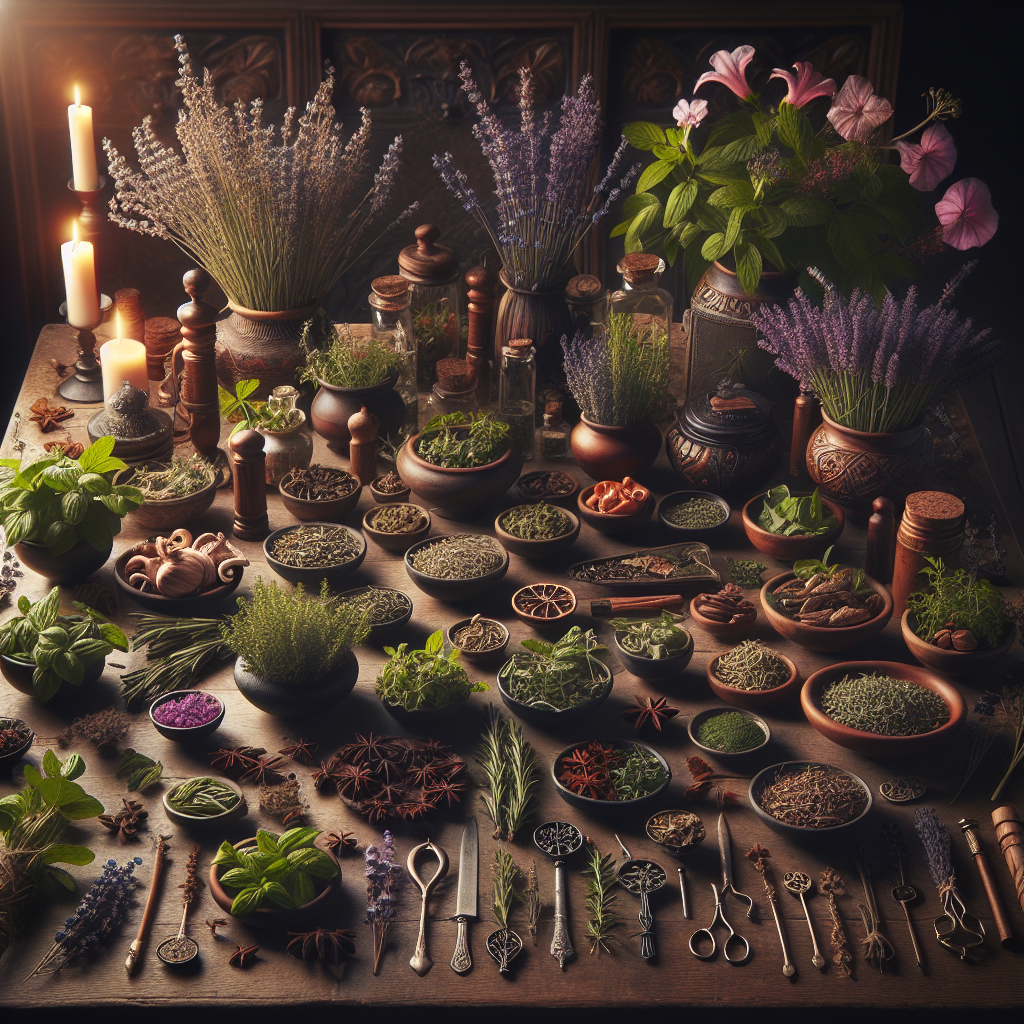
Popular in many spiritual practices, herbs have been used for centuries in witchcraft for their potent natural energies.
Introduction to Using Herbs in Witchcraft
Witchcraft has a rich historical tapestry that spans centuries, with herbs playing a crucial role in its practices. Known for their intrinsic magical properties, herbs are utilized to enhance spells, rituals, and daily magical workings. Today, the resurgence of interest in pagan and earth-centered spiritual practices has brought herb usage in witchcraft to the forefront, providing accessible and natural methods to practitioners. A recent survey indicated that over 70% of modern witches incorporate herbs into their practices, highlighting their enduring significance.
Protection Spells
Herbs like rosemary and basil are frequently used in protection spells. Sprinkling rosemary at the entrance of a home or burning basil incense can create a protective barrier, keeping negative energies at bay.
Healing Rituals
Lavender and chamomile are common choices for healing rituals. Crafting a sachet filled with these herbs and placing it under a pillow can promote restful sleep and emotional healing.
Love Spells
Rose petals and jasmine are staples in love spells. Mixing rose petals in a bath or creating a sachet with jasmine can attract love and strengthen existing relationships.
Meditation and Spiritual Awareness
Using herbs like sage and frankincense in meditation helps heighten spiritual awareness and clarity. Burning sage before meditative practices can cleanse the space and enhance focus.
Manifestation and Prosperity
Bay leaves and cinnamon are known for their manifestation properties. Writing a wish on a bay leaf and then burning it is a common practice to manifest desires.
Cleansing and Purification
Herbs such as sage and eucalyptus are powerful for cleansing. Performing a smoke cleansing with sage or using eucalyptus in a ritual bath can purify both spaces and auras.
Divination
Mugwort and dandelion are often used in divination practices. Brewing a tea with mugwort before a divination session can enhance psychic abilities, while dandelion can be used in dream work to reveal hidden truths.
Banishing Spells
Garlic and black pepper are regularly employed in banishing spells. Placing garlic cloves around a space can drive away unwanted influences, and sprinkling black pepper can form a protective line that entities cannot cross.
Binding Spells
Herbs such as knotweed and myrrh are utilized in binding spells to restrict negative energies or malicious individuals. Creating a braided cord with knotweed while focusing on the intended binding effect enhances its power.
Boosting Creativity
Rosemary and thyme are excellent choices for spells intended to boost creativity. Keeping a rosemary plant in a workspace or burning thyme sachets can stimulate creative thinking and artistic expression.
Enhancing Intuition
Bay leaf and clary sage are commonly used to enhance intuition. Meditating with a bay leaf under the pillow or diffusing clary sage essential oil during a reading can sharpen intuitive insights.
Dream Work
Herbs like mugwort and chamomile can enhance dreams. Sleeping with a sachet of mugwort under the pillow or drinking chamomile tea before bed can foster vivid and insightful dreams.
Luck Spells
Allspice and rosemary are typical herbs for luck spells. Placing allspice in a charm bag or carrying a sprig of rosemary can attract good fortune.
Fertility Rituals
Herbs such as red clover and nettle are traditionally used in fertility rituals. Drinking a tea made from these herbs is believed to support conception and a healthy pregnancy.
Psychic Protection
Angelica root and rue are used for psychic protection. Carrying an amulet with angelica root or placing rue around a home keeps psychic attacks at bay.
Astral Projection
Dittany of Crete and mugwort are effective for astral projection work. Burning dittany of Crete or making a mugwort-infused oil can aid in safe and controlled astral travel.
Herbal Talismans
Creating herbal talismans involves using herbs with specific energies for protection, love, or luck. These are often carried or placed in significant areas to continuously channel their energy.
Seasonal Celebrations
Different herbs are used to celebrate the Wheel of the Year. For instance, using holly and mistletoe during Yule can honor the winter solstice and attract seasonal blessings.
Alchemy and Potion Making
Herbs are integral in alchemy and potion making. Combining different herbs can create potions for various magical intentions, such as love, healing, or protection.
Creating Herbal Charms
Charms made from herbs like lavender and rose can be used for various purposes. Wearing these charms can bring about calm, attract love, or enhance psychic abilities.
Enhancing Ritual Tools
Herbs can be used to consecrate and enhance ritual tools. Washing a wand in an infusion of rosemary or storing tarot cards with bay leaves can empower these tools with added magical properties.
Daily Magical Practice
Incorporating herbs into daily routines can continuously foster a magical environment. Starting the day with a peppermint tea for clarity or keeping a basil plant in the kitchen for protective energies are simple yet effective practices.
1. **Talisman Creation**
Herbs like rosemary and thyme can be used to craft protective talismans. These can be small pouches filled with Witch herbs intended to ward off negative energies and bring protection to the bearer.
2. **Spiritual Healing Baths**
Creating a spiritual healing bath with herbs like lavender and chamomile helps to cleanse the aura and calm the mind. Simply steep the herbs in hot water, strain them, and pour the infusion into your bath.
3. **Home Cleansing and Protection**
Burning juniper or sage in a ritual plant smoke cleansing, often known as smudging, can purify the home of negative energies and protect the space. The intention set during the process is crucial for its effectiveness.
4. **Dream Pillows**
For better sleep and prophetic dreams, herbs such as mugwort and hops can be sewn into a pillow. These magical uses date back centuries and are still popular in modern witchcraft practices.
5. **Incense for Rituals**
Herbs like frankincense, myrrh, and sandalwood can be ground into incense for use in various magical rituals. Burning these herbs can aid in communication with spiritual entities and enhance the ritual atmosphere.
6. **Herbal Amulets**
Crafting small amulets by filling pouches with herbs like bay leaves and ginseng can provide vitality and ward off ill health. These spell ingredients are often carried or worn around the neck.
7. **Herbal Witch Bottles**
Witch bottles filled with herbs like basil and dill can be buried in the garden or hidden in the home to attract prosperity and protection. This practice leverages the natural energies of these herbs to manifest the desired outcomes.
8. **Spell Jar Creation**
Herbs such as sage and mint can be combined with other spell ingredients in a jar to set intentions. The jar is then sealed and placed on an altar or another significant location to reinforce the spell.
9. **Mojo Bags**
Incorporate herbs like cotton (for protection) and rosemary (for remembrance) into mojo bags. These bags can be customized for different magical uses depending on the herbs selected and the desired outcome.
10. **Candle Dressing**
Anointing candles with herbal oils or rolling candles in crushed herbs such as cinnamon and marjoram can amplify a spell’s potency. This technique is commonly used in rituals for love, prosperity, and protection.
11. **Herbal Teas for Divination**
Sipping herbal teas made from plants like lemon balm and mugwort can open up intuitive channels and enhance divination practices, making it easier to receive messages from beyond.
12. **Anointing Oils**
Create herbal infusions with oils by steeping ritual plants like lavender and rose petals in carrier oils. These anointing oils can be used to consecrate magical tools or applied to the body for spiritual healing and protection.
13. **Sacred Circles**
Sprinkle crushed herbs like sage or hyssop in a circle around your ritual space. This acts as a protective boundary, ensuring that the energy within the circle remains pure and focused.
14. **Herbal Talismen for Travel**
Bay leaves and rosemary can be used to create talismans that protect travelers. These are often placed in luggage or carried to ensure safe and problem-free journeys.
15. **Herbal Grounding Practices**
Using herbs like vetiver and patchouli in baths or as incense can help in grounding, returning the individual to a calm and centered state after intense rituals or spiritual work.
16. **Herbal Poppets**
Stuffing poppets with herbs such as lavender (for peace) or thyme (for courage) embodies the desired qualities you wish to invoke. These poppets can be used in spells for love, healing, and protection.
17. **Facilitate Meditation**
Burning herbs like frankincense and cedarwood during meditation can clear the mind and elevate the spiritual atmosphere, aiding in deeper, more insightful sessions.
18. **Herbal Charms**
Recommended for You
🛒 Dried Herbs For Rituals
As an Amazon Associate we earn from qualifying purchases.
Binding herbs like fenugreek (for luck) and basil (for wealth) into small charms can attract positive energies and desired outcomes when hung around the home or carried on the person.
19. **Herbal Writing Inks**
Creating herbal inks from plants like oak galls and walnut shells can be utilized for writing magical spells and sigils, thereby enhancing the power imbued in the written word.
20. **Seasonal Rituals**
Incorporate season-specific herbs like holly and mistletoe for Yule, or marigolds for Samhain, to align your rituals with the natural energies and cycles of the earth.
21. **Altar Offerings**
Herbs like myrrh and frankincense can be offered on altars to deities and spirits, conveying respect and drawing their favors in return.
22. **Potion Making**
Herbs such as mint (for clarity) and ginger (for energy) can be brewed into potions. These elixirs are consumed or used in rituals to invoke specific energies or intentions.
According to a 2022 survey by the Pew Research Center, approximately 0.4% of adults in the United States identify as Pagan, which includes many who practice forms of modern witchcraft involving the use of herbs.
u003ch2u003eDaily Mindfulness Ritualsu003c/h2u003e
u003cpu003eOne of the ways I've integrated herbs into my daily life is through mindfulness rituals. I start my mornings with a cup of chamomile tea, which not only has calming properties but also sets a tranquil tone for the day. As I sip my tea, I focus on the flavors and the warmth, using this moment to practice present-moment awareness.u003c/pu003e
u003cpu003eIn the evening, lavender becomes my go-to herb. I sprinkle a few drops of lavender essential oil on my pillowcase before bed. The soothing scent helps me ease into sleep, and I often pair this with a brief meditation session. This combination creates a nightly ritual that helps clear my mind of the day’s stress.u003c/pu003e
u003cpu003eRosemary is another herb I use throughout the day to promote focus. I keep a small sachet of dried rosemary in my desk drawer. Whenever I find myself losing concentration, a quick inhale of the sachet's uplifting aroma brings me back to my task. This simple practice helps keep my productivity levels steady.u003c/pu003e
u003ch2u003eCooking and Kitchen Witchcraftu003c/h2u003e
u003cpu003eCooking has always been a form of kitchen witchcraft for me. I see it as a sacred practice that combines nourishment with magical intent. Basil is a favorite herb I use frequently in my cooking, especially in pasta sauces and soups. Known for attracting love and prosperity, it adds a layer of intention to everyday meals.u003c/pu003e
u003cpu003eAnother herb that finds its way into my dishes is thyme. Thyme has protective qualities, so it’s a regular ingredient in my stews and casseroles. While it enriches the flavor profile, it also acts as a subtle form of protection for anyone who enjoys the meal.u003c/pu003e
u003cpu003eSage is another versatile herb in my kitchen witchcraft. I often use it in roasting meats or vegetables, and its cleansing properties feel like an added blessing. Before big family gatherings, I’ll burn a little sage in the kitchen to invite positive energies and keep conflicts at bay.u003c/pu003e
u003ch2u003eHealing and Self-Careu003c/h2u003e
u003cpu003eHerbs play a vital role in my self-care routine, particularly for healing purposes. Eucalyptus is essential whenever I catch a cold. I add a few drops of eucalyptus oil to a bowl of hot water and inhale the steam. This practice clears my sinuses and has become a comforting ritual whenever I’m feeling under the weather.u003c/pu003e
u003cpu003eCalendula is my go-to herb for skin healing. Known for its anti-inflammatory properties, I often make a calendula-infused oil that I use on minor cuts and abrasions. This natural remedy speeds up the healing process and leaves my skin feeling rejuvenated.u003c/pu003e
u003cpu003ePeppermint is another herb I turn to, particularly for digestive issues. When I feel bloated or queasy, a cup of peppermint tea usually does the trick. The menthol content in peppermint aids digestion and provides instant relief, making it a staple in my self-care repertoire.u003c/pu003e
u003ch2u003eSpiritual Growth and Meditationu003c/h2u003e
u003cpu003eFor spiritual growth and meditation, I rely heavily on herbs like sage and mugwort. Sage is perfect for cleansing my space before a meditation session. The ritual of smudging with sage helps to clear negative energies and sets the stage for inner work.u003c/pu003e
u003cpu003eMugwort is another powerful herb in my spiritual practice. Known for enhancing psychic abilities and dream work, I often make mugwort tea before bedtime on evenings when I want to engage in lucid dreaming or receive guidance through dreams. This practice has helped me uncover deeper layers of my subconscious.u003c/pu003e
u003cpu003eFrankincense, although not an herb per se, is a plant resin that I use frequently during meditation. Burning a small amount creates an ambiance conducive to deep contemplation and inner peace. Combined with herbs like lavender and chamomile, it creates a holistic sensory experience that elevates my spiritual practices.u003c/pu003e
1. What are common witch herbs used in witchcraft?
Common witch herbs include sage, rosemary, lavender, thyme, mugwort, and basil. These herbs are often used for their protective, purifying, and healing properties.
2. How do I choose the right herb for my spell?
Choosing the right herb depends on your intention. Research the magical properties of herbs and select one that aligns with your desired outcome, such as protection, love, prosperity, or clarity.
3. Can I use fresh herbs for magical purposes?
Yes, both fresh and dried herbs can be used in magical practices. Fresh herbs might be preferred for their strong energetic properties, while dried herbs are convenient and last longer.
4. What is the proper way to harvest herbs for witchcraft?
When harvesting herbs, do so respectfully and sustainably. Use clean, sharp tools, only take what you need, and always give thanks to the plant. Harvest during the correct moon phase to enhance the herb’s natural magic.
5. How can I incorporate herbs into my rituals?
Incorporate herbs into your rituals by burning them as incense, creating herbal sachets, adding them to spell jars, or using them in baths and anointing oils. Each method can enhance the herb's magical properties.
6. Are there any herbs I should avoid using in witchcraft?
Some herbs can be toxic or harmful. For example, belladonna and hemlock should be avoided due to their dangerous properties. Always research any herb thoroughly before use.
7. Can herbs be used for spiritual healing?
Yes, many herbs have properties that are beneficial for spiritual healing. For example, lavender is used for calm and peace, while sage is used for cleansing and purification.
8. How do I store my magical herbs?
Store herbs in a cool, dry place away from direct sunlight. Use glass jars with tight-fitting lids to preserve their potency. Label them clearly with names and dates.
9. What are some ways to charge herbs with intention?
You can charge herbs with your intention by holding them in your hands and focusing on your desired outcome, chanting or speaking your intention, or placing them under the moonlight or in a crystal grid.
10. Can I grow my own witch herbs?
Absolutely! Growing your own witch herbs can enhance their magical properties and create a stronger personal connection. Ensure you provide the right conditions for each plant, such as proper soil, sunlight, and water.

## Conclusion
Herbs have always held a significant place in witchcraft, serving as potent tools for various rites and rituals. Their versatile nature allows them to be integrated into spells, potions, and talismans, each bringing its unique energy and attributes. From protective rosemary to love-inducing rose petals, and from cleansing sage to prosperity-bringing basil, these plants embody the essence of magical practice. By incorporating herbs into different elements of witchcraft, practitioners can enhance their intentions, create powerful charms, and manipulate energies to align with their goals. The use of ritual plants such as mugwort for divination or lavender for peace and harmony further showcases the personalized and profound connection between nature and magic.
Beyond their use in spellcraft, herbs also facilitate spiritual healing and personal transformation. Aromatic herbs like eucalyptus can be used in smudging ceremonies to purify spaces, while healing plants like chamomile can be crafted into teas or baths to soothe the soul. The ritualistic aspect of using herbs in spell ingredients fosters mindfulness and a deeper spiritual connection. Practicing with these natural elements not only amplifies magical workings but also attunes witches to the cycles of nature and the universe. Overall, the article emphasizes that incorporating herbs into witchcraft practices enhances both the mystical and practical dimensions of the craft, creating a more holistic and enriched spiritual experience.
📚 Explore More on This Topic
Editor's Pick: A detailed magical herbal reference book.
Join The Mystic Circle
Weekly spells, moon rituals & magickal wisdom — plus a free ritual planner.
Continue Your Magical Journey
Enhance Your Practice
As an Amazon Associate, I earn from qualifying purchases.
Everything a Witch Needs, in One Living Grimoire
941 pages across 5 volumes and 6 bonus guides — foundations, herbalism, tarot, crystals, 26 traditions, a fillable Book of Shadows, and a seasonal companion. The last witchcraft resource you'll ever need.

🌙 Get a Free AI Tarot Reading
Luna reads the cards just for you — powered by AI, guided by the stars. No account needed.
Draw Your Cards Now ✨Powered by Luna's Circle — AI Spiritual Guidance
