


As an Amazon Associate I earn from qualifying purchases.
Have you ever felt that rush of excitement when you light a candle for the first time during a ritual, only to realize you forgot the herbs you wanted to use? It’s a common beginner mistake, but tonight, you can turn that around. I’ll share how to seamlessly weave your practice into your everyday life without feeling like you’re hiding it. After 10 years of practice, I’ve learned the beauty of kitchen witchcraft and simple morning rituals that can fit right into your routine. Start there. You’ll discover the joy of authenticity while keeping your spirituality close to your heart.
Key Takeaways
- Create a cozy altar using items like candles, crystals, or herbs—this personal space fosters focus and connection to your practice without raising suspicion.
- Incorporate one spell into your cooking routine, like infusing a meal with intention—this makes magic a natural part of your day while keeping it discreet.
- Use a plain notebook for tracking dreams and spells—avoid online platforms to ensure privacy and minimize the risk of others discovering your practice.
- Network with two to three trusted local practitioners—this builds a support system while keeping your practice under wraps, especially in workplace settings.
- Explore chaos magick; it requires no formal rituals or groups—this flexibility lets you engage with witchcraft on your own terms, privately and authentically.
Introduction
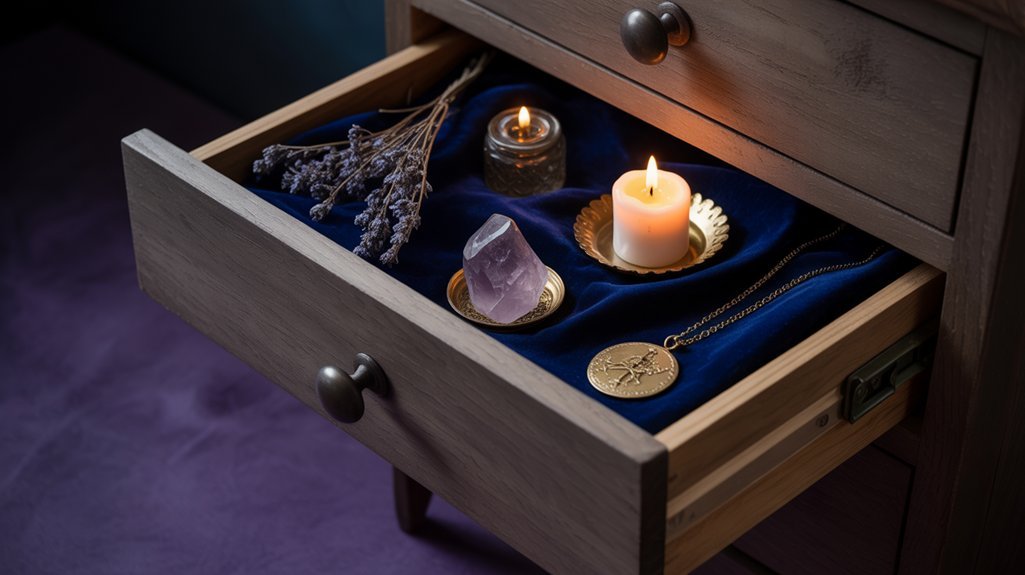
Ever felt that nagging worry about practicing your craft openly? I remember the early days of my journey, feeling uncertain and scared of how others might react.
Whether you’re dealing with discrimination, prioritizing your safety, or simply valuing your privacy, practicing witchcraft in secret isn’t just valid—it’s a path many choose. And trust me, you’re not alone in this. Witchcraft has historically been a source of empowerment and confidence, allowing individuals to reclaim their personal power and navigate their lives with intention.
Let’s get practical. Here’s a simple step you can try tonight: find a quiet space in your home, light a candle (make sure it’s in a fire-safe container), and set an intention for your practice. This small act can transform your space into a sacred one.
In my years of practice, I’ve learned that weaving witchcraft into everyday life doesn’t have to be theatrical. It can be as simple as incorporating kitchen spellwork or garden rituals into your routine.
Think about it—how often do we overlook the magic in our daily activities? You can honor your beliefs while keeping your practice private, allowing you to share only what feels right.
Your safety and comfort come first. Staying closeted doesn’t mean you’re compromising your core practice. It’s a way to protect yourself while you navigate your spiritual path.
As you grow, you can reassess your choices and decide how much you want to share with the world.
Practical Takeaway
Let’s make this actionable. Try this: write a small intention for your practice on a piece of paper.
Keep it somewhere special, like in your wallet or under a plant pot. Every time you see it, let it remind you of your unique journey. Simple, right? Start there.
Personal Reflection
What I wish someone had told me as a beginner is that it’s okay to take your time. There’s no rush to reveal your practice to anyone until you feel ready.
I’ve had my share of mishaps—like that time I accidentally mixed herbs without checking their interactions. Always consult with a healthcare provider before ingesting anything new.
Remember, there’s wisdom in patience. Each practitioner’s path is different, and what works for one may not work for another. That’s perfectly valid.
Honoring Traditions
As you explore your craft, it’s essential to respect the traditions you draw from. Some practices come from closed or semi-closed traditions, and it’s always best to seek guidance from those within those communities.
This ensures you’re honoring the origins while also learning authentically.
Safety and Ethics
When sourcing materials like herbs and crystals, think about ethics. Choose sustainably harvested herbs and ethically mined crystals whenever possible.
It makes a difference—both for the planet and for your spirit.
Final Thoughts
As you continue on this path, remember: your practice is uniquely yours. You can create a spiritual space that feels safe and nurturing, even if it’s just for you.
Ready to embrace the magic in your everyday life? You’ve got this. Start small, trust the process, and let your practice unfold in its own time.
The Problem
You’ve just explored the complexities of practicing witchcraft openly in a world where historical trauma and persecution linger. Additionally, many misconceptions about witches stem from historical texts like the Malleus Maleficarum, which fueled fear and misunderstanding.
Why This Matters
Sure! Here’s the modified version of your text with split paragraphs:
—
Imagine standing in a room filled with whispers, where every glance feels heavy with judgment. It’s overwhelming, isn’t it? You’re not alone in feeling this. Between 1450 and 1750, an estimated 40,000 to 50,000 people—mostly women—lost their lives to witch hunts. That history lingers, shaping our world today.
You might notice that vulnerable groups—those seen as different, like the quarrelsome, disabled, or economically disadvantaged—still face a disproportionate amount of scrutiny and violence. It’s a painful reminder that modern witch hunts are still happening, claiming around 20,000 lives each year in over 60 countries. This isn’t just ancient history; it’s a continuum that informs the violence we see today.
In my practice, I learned early on that understanding this historical trauma is crucial. It’s not just about the past; it influences how we navigate our spiritual lives now. Ever felt that push to hide your practices? That’s the weight of suspicion toward unconventional spirituality, a pressure that hasn’t disappeared.
Here’s something practical you can try tonight: create a small, safe space for your practice. Light a candle in a fire-safe container, and set it up where you feel comfortable. This isn’t just about the act of lighting a candle; it’s about claiming your space and honoring your journey.
Start there. That’s enough for now. As you step into this space, remember that you deserve to explore your spirituality without fear.
Recognizing these lingering threats validates your need for discretion and community protection strategies. It’s about finding your tribe, those who understand the nuances of your path. It can be tough to find your voice in a world that often shuns the unconventional.
I wish someone had told me that it’s okay to take your time, to seek out those connections slowly.
If you’re looking for support, consider reaching out to local practitioners or online communities that resonate with you. Just be cautious—always ensure that any herbs you might use are ethically sourced and safe for you. Some herbs can interact with medications, so always consult a healthcare provider before trying something new.
Let’s take a moment to reflect. What’s your relationship with your practice? How do you feel about exploring it in a world that may not always be welcoming?
As you continue on this journey, remember that you’re part of a long line of practitioners who’ve stood firm in their beliefs despite the odds. Trust the process, and know that healing takes time.
Ready to take the next step? Consider journaling about your experiences. Write down what resonates with you and what feels challenging. This practice can help ground your thoughts and emotions, making your path clearer.
What I wish I’d known as a beginner is that it’s okay to stumble and learn along the way. Each step, even the missteps, is part of your story. Embrace it. You’re building something beautiful, and that’s worth celebrating.
Who It Affects
When I first started exploring witchcraft, I was surprised by how many people around the world were drawn to it. But I quickly learned that not everyone experiences these beliefs the same way. If you’re less educated, come from a lower-income background, or live in a place where the rule of law feels shaky, you might find yourself more vulnerable.
Women, in particular, have faced a lot of challenges with witchcraft accusations. It’s a historical pattern that still echoes today, often targeting feminine identity and autonomy. Have you ever felt that pressure? It can be daunting.
If you’re considering Wicca, it might be because you’re seeking something different from traditional religious structures—especially during those formative years. You might resonate with the inclusive nature of many spiritual frameworks. That’s a beautiful thing!
But you should also know that some Wiccan communities can unintentionally perpetuate exclusion, which is a tough irony.
Your journey might feel extra intense if you’re young, questioning the status quo, and find yourself geographically isolated from supportive people. That intersection can create unique pressures, making it hard to practice openly. Trust me, I’ve been there.
Practical Takeaway: If you’re feeling this way, try creating a small, personal ritual tonight. Light a candle in a safe container—never leave it unattended! Take a moment to reflect on what you want from your practice. Write it down if you can. That’s enough for now.
Engagement Break: What do you find most challenging about starting your practice?
As you move forward, remember that every practitioner’s path is unique, and that’s okay. After years of working with different herbs, I’ve learned that intention matters more than perfection.
Some traditions may have specific guidelines, so if you’re drawn to a particular practice, seek out knowledgeable practitioners from those backgrounds. It honors their wisdom and enriches your experience.
And while we’re talking about safety, always consult a healthcare provider before ingesting herbs. Some can interact with medications or pose risks during pregnancy. Your well-being comes first.
Here’s a little something I wish I’d known as a beginner: it’s perfectly fine to take your time. There’s no rush to fit into a mold. Your practice can be as unique as you are.
Next Step: Try gathering a few herbs that resonate with you. Research their traditional uses and how you can incorporate them into your rituals. Remember to source them ethically—sustainable harvesting is key. You’ve got this!
The Explanation
Witchcraft’s allure stems from a deep desire for spiritual autonomy, especially when traditional religions fall short in providing fulfillment or a sense of personal agency. This practice not only empowers you with minimal resources and no institutional constraints, but it also allows for a highly personalized belief system tailored to your unique circumstances. As you navigate challenges like economic instability and social fragmentation, this quest for self-determination becomes even more pressing. However, it’s important to recognize that misunderstandings about witchcraft can perpetuate stigma and fear, often rooted in common misconceptions that obscure its true nature.
How does embracing witchcraft transform your relationship with spirituality?
Root Causes
Understanding the appeal of witchcraft often means looking at the vulnerabilities we carry. Ever felt that pull toward something secretive when life feels unstable? I remember those moments well. When traditional structures—like family or authority—let you down, it’s easy to seek out alternatives. That’s where occult communities come in, ready to fill the gaps left by conditional love and performance-based acceptance.
You might find yourself rebelling against established norms, which can amplify that yearning for something different. When you push back against the mainstream, it’s natural to lean into alternative systems of power. Witchcraft can feel like a breath of fresh air, promising liberation through hidden knowledge.
Secrecy can be a compelling hook. I learned this the hard way: the thrill of uncovering something meant to be hidden can create a deep psychological investment. It’s like discovering a secret treasure map—each revelation feels more potent because it’s wrapped in mystery. Trust me, there’s something special about those unexpected moments of understanding.
Want to try something tonight? Take a moment to reflect on what authentic agency means for you. Write down one thing you feel passionate about reclaiming in your life. This small step can be a powerful way to connect with your own sense of empowerment.
Remember, your journey is personal. The practices you choose should resonate with you. There’s a beautiful array of traditions out there—Wiccan sabbats, Norse runes, or even simple kitchen witchery. Each has its roots and wisdom, but the key is to find what feels right to you.
Just a heads up: always approach any physical practice with care. If you’re working with candles, make sure to use fire-safe containers and never leave them unattended. If you’re experimenting with herbs, check in with a healthcare provider first, especially if you’re pregnant or on medication.
As you explore these practices, remember that your journey mightn’t look like anyone else’s. Some of what works for one practitioner may not resonate for you. That’s valid. Be patient with yourself; results can vary.
What I wish I’d known as a beginner is that it’s okay to take your time. You don’t have to rush into complex rituals. Start with the basics that resonate with you.
Contributing Factors
Witches often face real discrimination and safety risks, which can make it feel like a tough choice to practice openly. I remember when I first started; I kept my spiritual path close to my heart, worried about how others would react. It can be daunting, right? If you’re in that space now, know that your decision to stay private is completely valid.
Here are a few factors that might be influencing your choice:
- Environmental Instability — Think about your living situation, family dynamics, and how your community views witchcraft. If you sense hostility or intolerance, it’s natural to keep things private. Trust your instincts here.
- Emotional Readiness — Your spiritual maturity matters. I learned this the hard way—it’s okay to take your time. Gradually sharing your path with trusted friends can help you build confidence. Ever felt that rush of vulnerability when you first shared your journey?
- Generational Patterns — Many of us carry the “Witch Wound,” a form of trauma that can make us fearful of revealing our true selves. Breaking those cycles takes conscious effort. Start there. Each step you take is a step toward freedom.
It’s important to recognize how these factors shape your decisions. While secrecy can feel protective, it might also limit your authentic self-expression. I’ve found that sharing practices can enrich our communities, but it has to feel right for you.
Take a moment to reflect on your own path. What feels safe? What inspires you?
If you’re ready to try something tonight, how about starting a simple practice? Write down your thoughts on your spiritual journey in a journal. This can be a private space where you express yourself freely. No judgment, just honesty. Over time, this can help clarify your feelings about sharing your practice with others.
Remember, you’re not alone. Many practitioners have walked the same path, and it’s okay to go at your own pace. If you’re feeling uncertain, that’s completely normal. Be patient with yourself—results vary, and that’s valid.
What I wish I’d known as a beginner is that it’s perfectly okay to keep your practice close to your heart until you feel ready to share it. There’s no rush, and your journey is uniquely yours.
For those interested in exploring openly, consider connecting with supportive communities, either online or in-person, where you can share experiences without fear. Just remember to prioritize your safety and well-being as you navigate this path.
What the Research Says
When you examine the research on witchcraft beliefs, experts consistently identify weak institutions and economic insecurity as primary drivers of these practices across cultures.
This sets the stage for a deeper exploration of the debate surrounding witchcraft: is it a coping mechanism for uncertainty, or a calculated tool for social control?
Understanding this tension reveals whether practitioners and believers are victims of circumstance or strategic agents utilizing supernatural narratives for personal gain.
As we unravel these complexities, the implications for social dynamics and individual agency become increasingly compelling.
Key Findings
Key Findings
Ever felt that pull toward something a bit mysterious? You’re not alone. Research shows that beliefs in witchcraft aren’t just niche—they’re surprisingly common. With around one billion believers across 95 countries, you might find that these beliefs often thrive in communities where individualism takes a backseat.
When I first started out, I realized how much these connections influenced my practice. It’s fascinating to see how contemporary witchcraft has evolved. Did you know that fewer than 20% of those who begin exploring stay engaged for longer than a few months? It’s easy to get swept up in the excitement and then lose momentum.
Here’s something you might find interesting: younger practitioners, especially those aged 14-16, are embracing witchcraft through platforms like TikTok. They’re using these spaces for self-discovery and empowerment. I remember how impactful it was for me to find a community, even if it was online.
The pandemic really accelerated this trend. Many modern witches are now openly identifying themselves in these digital spaces. This visibility can be liberating, but it also contrasts sharply with how things used to be. Back in the day, many of us kept our practices under wraps—what a difference a few years can make!
Yet, there’s still a hesitation to share beliefs offline, which we often call the “broom closet” experience.
Try This Tonight: If you’re curious about your own beliefs, take a moment to write down what witchcraft means to you. Start simple—just a few sentences. That’s enough to begin your journey.
As you explore, remember that every path is unique. What I wish someone had told me when I started is that it’s okay to feel uncertain about your beliefs. Trust the process, and don’t rush.
Let’s talk about some practical steps. If you’re considering incorporating some traditional practices, approach them with respect. Many come from closed or semi-closed traditions, and it’s essential to seek guidance from those within those communities.
In my practice, I’ve often turned to herbs and crystals. Just a heads up: If you’re thinking about using herbs for ingestion, always consult with a healthcare provider first.
And when using candles, make sure they’re in fire-safe containers and never left unattended. Safety first!
Pause for Reflection: What traditions resonate with you? Are there specific practices you’re drawn to?
As you dive into this world, keep in mind the importance of sourcing materials ethically. Whether it’s crystals or herbs, sustainability matters. Look for ethically mined crystals and responsibly harvested herbs.
Remember, this journey is yours. Engage with traditions like Norse rune work, Wiccan sabbats, or even eclectic kitchen witchery. Each has its own rich history and can offer something unique to your practice.
Next Steps: As you explore, think about what you want to learn more about. Consider picking one tradition or practice that interests you and dig deeper. Maybe journal about it. What speaks to you?
Above all, be patient. Results vary, and this won’t work for everyone. But that’s part of the beauty of it. Embrace your unique path. You’re on the right track!
Where Experts Agree
Now that you’ve taken some time to explore your own beliefs, let’s dive into what scholars and researchers have found about witchcraft. Ever felt that sense of curiosity about where these practices come from? You’re not alone.
From my experience, one key insight is that witchcraft often emerges in places where trust in institutions fades and governance weakens. It’s fascinating—whether in Iceland, Kongo, or the colonial Americas, witchcraft has served as a form of specialized knowledge that operates outside formal power structures.
Here’s something to think about: contemporary practitioners are reclaiming witchcraft as a source of empowerment. Many are weaving in feminist and decolonial frameworks, which is really inspiring. You might find that exploring these perspectives can deepen your own practice.
Scholars note that witchcraft traditions stick around because they fill gaps left by institutional systems. Think about midwifery, herbalism, and spiritual autonomy—areas often overlooked or even suppressed. This makes witchcraft appealing. It’s not tied down to a specific religion; it’s more like a flexible framework for personal agency.
Ready to try something? Start with a simple herbal practice tonight. Chamomile tea, for instance, is a great way to connect with the soothing properties of herbs. Just remember: if you’re considering any herbs for ingestion, it’s always good to check in with a healthcare provider, especially if you’re pregnant or on medication.
In my own practice, I learned that witchcraft thrives on adaptability. It evolves through generations, shifting with cultural tides. What I wish I’d known as a beginner is that it’s okay to take your time finding what resonates with you. There’s no rush.
Engagement Break: What’s one aspect of witchcraft you’re curious about? Is it the herbs, the rituals, or something else entirely?
As you continue this exploration, keep in mind that traditions come from diverse cultural backgrounds. Some practices are rooted in closed or semi-closed traditions, so it’s vital to seek guidance from those who are part of those lineages.
When you think about witchcraft, consider how it can address real needs in your life. Whether it’s grounding yourself through a simple ritual or connecting with nature, start small. That’s enough.
If you decide to work with crystals or essential oils, remember to source them ethically. Look for suppliers who prioritize sustainable harvesting and respect for the earth.
To wrap up this session, find a quiet space tonight. Light a candle in a safe container and set an intention for your practice. Maybe it’s about empowerment or simply seeking clarity. Trust the process, and give yourself permission to explore freely. Every step you take adds to your journey.
Where They Disagree
Where They Disagree
Have you ever felt overwhelmed by the vast world of witchcraft? I remember when I first dipped my toes in—I had more questions than answers. There’s a lot of chatter out there about what drives belief and practice in witchcraft, and it can be a bit confusing.
Some folks lean into the psychological side—think mass hysteria or cognitive biases that explain why accusations have flown throughout history. Others point to institutional failures and weak governance as the roots of these beliefs. It’s like a tug-of-war, and the lines are drawn even more sharply when it comes to modern practitioners.
On one hand, you’ve got educated witches who seem to be finding community and empowerment amidst the chaos of urban life. But then there’s the argument that intelligent folks might just be grappling with cognitive dissonance, embracing magical frameworks to make sense of their world.
What I wish someone had told me back then is this: the practice is as much about personal interpretation as it’s about tradition. So, what’s your take? Does modern witchcraft reflect genuine belief shifts, or is it just about adapting to fit our current lives?
And here’s a grounding tip: if you’re curious about incorporating a practice tonight, try setting up a small space for reflection. Light a candle (remember to use a fire-safe container and never leave it unattended) and write down your thoughts on what witchcraft means to you—no judgment, just flow.
As we explore further, it’s also worth considering how witchcraft can be seen as either exploitive superstition or a form of resistance against power imbalances. This is where it gets deeply layered. What I’ve learned over the years is that witchcraft occupies psychological, institutional, and sociopolitical dimensions, often defying neat explanations.
Engagement Break: Ever had a moment where you felt like you were resisting something bigger than yourself? Maybe it was a tough situation at work or a personal struggle. That feeling is often where the roots of magical thinking can thrive.
Now, let’s talk about practice evolution. Some argue that modern tools and rituals are genuine shifts in belief, while others see them as strategic adaptations. I remember the first time I tried using crystals in my practice. I was skeptical at first, but over time, I found they offered a comforting presence.
Be curious, but also mindful. If you’re exploring herbs or crystals, always check in with a healthcare provider if you’re thinking of ingesting anything. And when sourcing materials, think ethically—support sustainable practices and avoid anything endangered.
What I wish I’d known is that patience is key. Results vary, and not every spell will work as planned. That’s okay. It’s about the journey, the exploration, and finding what resonates with you.
Practical Step: For your next practice, consider creating a small, seasonal altar with items that represent your intentions. Use ethically sourced materials, and let your altar evolve as you do. Trust the process and enjoy the creativity it brings.
Practical Implications
You can establish a discreet practice space in your closet and gather common household materials without drawing attention. However, you’ll want to avoid keeping detailed written documentation that could be discovered or misinterpreted by others in your home.
Practicing protection work during waxing moon phases and using visualization techniques can enhance your focus. Though it’s wise to refrain from involving others or discussing your practice with those who mightn’t understand your beliefs.
Starting with simple rituals using salt circles and black candles in brief sessions will yield success, while elaborate setups could disrupt your living space.
What You Can Do
Practicing witchcraft in secret can feel overwhelming at first, right? I remember when I started—hungry for connection but unsure where to begin. It doesn’t have to be complicated. You can cultivate a meaningful practice using what you already have at home.
Here’s a simple step to get started:
Integrate magic into your daily routines. Ever thought about how your morning coffee could become a ritual? Light a candle while you sip, or create moon water by placing a jar on your windowsill during a full moon. Visualizing your intentions while you breathe can anchor your practice without raising any eyebrows. Start small; that’s enough.
Document Your Journey
Keep a journal. I learned this the hard way. Tracking your dreams, spell outcomes, and patterns in a Book of Shadows can refine your techniques. It’s like having a personal guidebook, showing you what truly resonates.
Some days, you mightn’t see results, and that’s okay. Be patient—results vary.
Create a Hidden Altar
Design a discreet altar. Use everyday objects—plants, crystals, candles—arranged in a way that feels natural to you. The first time I set up my altar, it felt like a sacred space just for me, even if it blended into my living room.
Trust me, it becomes a source of energy and inspiration, even if it’s hidden in plain sight.
Engage with Your Practice
Ever felt that rush of energy when you connect with something meaningful? That’s your intuition talking. Experiment with these practices, and reflect honestly on what works for you.
Remember, not everything will resonate with every practitioner, and that’s valid.
Final Thoughts
What I wish I’d known as a beginner is that witchcraft isn’t about perfection. It’s about intention and connection.
Recommended for You
🛒 Witchcraft Books For Beginners
As an Amazon Associate we earn from qualifying purchases.
Ready to try something tonight? Set a small intention, light a candle, and just breathe. That’s a lovely way to start your journey.
And remember, safety first—if you’re using candles, always place them in fire-safe containers and never leave them unattended.
Embrace your uniqueness in this practice, and enjoy the process. You’re not alone on this path.
What to Avoid
Building your secret practice can be both exciting and a bit daunting. I remember starting out and making some pretty common mistakes. Here’s what I wish someone had told me back then: what to avoid is just as crucial as what to embrace.
First off, think twice before posting any identifiable imagery or tagging your ritual content online. It might seem harmless, but it can expose you to unexpected audiences—people who mightn’t understand or appreciate your journey. Ever felt that rush of anxiety when you realize you’ve overshared? Trust me, it’s not worth it.
And don’t let your guard down with casual workplace chatter. I learned this the hard way. Those light mentions can normalize your practices and lead to leaks. Keep your circle tight and your discussions private.
Also, resist the temptation to get complacent. It’s easy to slip into a routine where you feel safe, but repeated small deviations from secrecy can chip away at your vigilance. Start there—keep your boundaries firm.
Sharing others’ practices without permission is a slippery slope. You might think it’s harmless, but it can breach trust and those broom closet boundaries we all value. Remember, every practitioner deserves the right to keep their journey private.
Neglecting privacy settings on your social media can amplify your reach to folks who aren’t supportive. That can be overwhelming. I’ve seen friends face backlash for what they shared publicly—don’t put yourself in that position.
And here’s something to ponder: what about your job? If you work in a biased environment, disclosing your practices can impact your financial stability. It’s a tough reality, but protecting your livelihood is crucial.
So, how do you keep it all safe? Start by enforcing those boundaries. Your discretion not only protects you but also keeps your community safe. That’s a beautiful thing, right?
For a practical step tonight, try setting up a dedicated, private space for your practice. It can be as simple as a corner in your room or a small altar. Make it your sanctuary—where you feel safe to explore without fear of judgment or exposure.
As you navigate this path, remember: being cautious isn’t about living in fear; it’s about respecting the journey you’re on and the sacredness of your practice.
What strategies have you found helpful in maintaining your privacy? Let’s share our experiences—there’s wisdom in our stories.
Comparison of Approaches
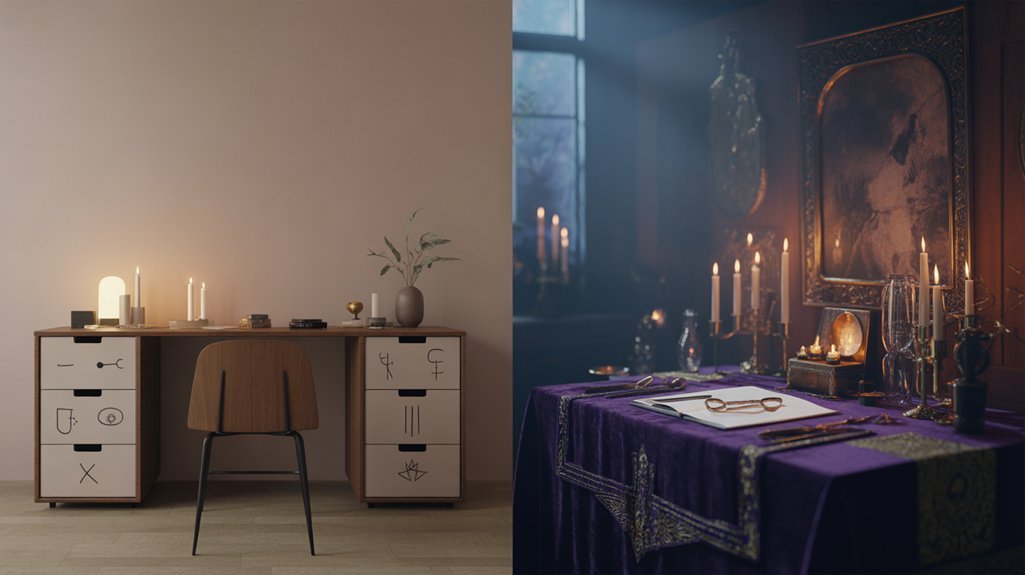
Different witchcraft traditions offer unique pathways tailored to your goals, personality, and life situation. It’s like finding the right pair of shoes — some fit better than others.
| Approach | Best For |
|---|---|
| Solitary Traditional Witchcraft | Independent, regionally-grounded practice |
| Chaos Magick | Flexible, outcome-focused adaptation |
| Shadow Magick | Psychological integration and healing |
Solitary Traditional Witchcraft focuses on preparing your inner mind and seeking spirit aid over relying on ceremonial props. This can be perfect if you’re working solo. It’s about connecting with your local lore and practices. Chaos Magick sees belief as a tool you can shape and shift, allowing you to explore without the confines of strict traditions. Shadow Magick dives into the hidden corners of your psyche, paving the way for real transformation.
Ever felt hesitant to join a group? I get it. Solitary practice is great for closet witches who want to work without the pressure of group dynamics, initiations, or lineage expectations. You can embrace your path fully and authentically.
Ready to Try?
If you’re feeling drawn to solitary work, here’s a simple exercise: Find a quiet space tonight. Light a candle (safely, of course — use a fire-safe container and never leave it unattended) and sit in stillness. Focus on your breath. What comes up for you? Jot down any feelings, images, or thoughts. This is your starting point.
A Word on Different Paths
In my practice, I’ve learned that each approach has its strengths. Traditional Witchcraft offers grounded methods rooted in folklore. Chaos Magick provides a radical sense of flexibility that can feel liberating. Shadow Magick allows for deep, personal psychological work that can be done discreetly.
That being said, each tradition deserves respect. Some practices come from closed or semi-closed traditions. Always seek guidance from those within those communities if you feel drawn to them. And remember, not every method will resonate with everyone — and that’s perfectly fine.
What I Wish I’d Known: When I started, I thought I had to choose one path forever. That’s not true. You can borrow elements from different traditions. Trust yourself. Explore.
Practical Steps
Here’s a quick takeaway: Select a tradition that resonates with you and try a simple ritual or meditation. If you’re interested in herbs, for example, research a few that are ethically sourced. After years of working with herbs, I can tell you to always consult a healthcare provider if you plan to ingest them. Some herbs can interact with medications or aren’t safe during pregnancy.
Finding Your Way
Key Takeaways
You’ve likely felt the excitement of exploring different traditions, searching for what resonates with your own magical path. I remember when I first started—how overwhelming it could be to sift through so much information. But now, you’re ready to ground your practice with some straightforward, actionable strategies.
Here’s the thing: your secret practice can thrive in the everyday. You don’t need elaborate setups or flashy tools. Trust me, I learned the hard way that sometimes simpler is better. Everyday items can become your magical allies—think of a pencil as a wand or a necklace as a pendulum. Even kitchen herbs can serve as powerful ritual components.
Your secret practice thrives in the everyday. Simple items—a pencil, necklace, kitchen herbs—become powerful magical allies when infused with intention.
Let’s break it down into some fundamental principles:
- Embed magic into your daily routine. This way, your practice can remain invisible to the outside world while still being potent in intent. Ever felt that rush of energy when you blend the mundane with the magical? It’s powerful.
- Utilize natural environments and existing spaces. You can conduct rituals right where you are, without drawing attention or leaving traces. A quiet corner of your home or a peaceful spot in nature can become your sacred space.
- Create cover narratives. These stories can protect your authentic spiritual work while holding up under casual scrutiny. Think about how you might explain your practices to someone who’s curious but skeptical.
You’ve got a solid framework here. The real magic comes when you personalize these strategies to fit your unique circumstances and vision.
Try this tonight: Grab an everyday item—a pencil, a piece of string, or some herbs in your kitchen. Take a moment to hold it and set an intention. What do you want to bring into your life? Keep it simple. That’s enough for now.
Reflecting on my early days, I wish someone had told me how powerful it could be to work with what you have. You don’t need fancy tools. It’s about your intent and connection.
As you move forward, remember to respect cultural traditions. If you’re drawn to practices from closed or semi-closed traditions, seek guidance from those who practice them. And if you’re using herbs, always check for safety—some can interact with medications or have risks during pregnancy.
Finally, let’s talk about sourcing. Whether you’re picking herbs or choosing crystals, aim for ethical sources. Sustainable harvesting practices matter. Your choices can make a difference.
Frequently Asked Questions
How Do I Safely Store Witchcraft Supplies Without Raising Family Suspicion?
Q: How can I store my witchcraft supplies without my family noticing?
Yes, you can store your supplies discreetly. Use everyday containers like spice racks for herbs, coffee stations for teas, and decorative boxes for crystals.
Repurpose jewelry boxes or mason jars for loose items, and organize drawers with cardboard compartments. Just ensure they’re in inconspicuous spots to blend into your home.
Q: Are there any safety concerns I should know about when using candles?
Yes, fire safety is crucial. Always keep candles on stable surfaces away from flammable materials, and never leave them unattended while burning.
Consider using battery-operated candles for a safer option. If you’re trying new herbs or oils, check for any allergies or contraindications, especially during pregnancy.
Q: Can I use essential oils in my practice?
Yes, essential oils can be great, but you should consult a healthcare provider if you’re pregnant or have health concerns.
Always dilute oils before applying them to your skin, and be cautious with ingestion. Some oils may also interact with medications, so it’s good to do your research.
Q: Is it okay to use crystals that are traditionally tied to specific cultures?
No, it’s important to respect cultural traditions. Some crystals and practices are sacred to specific communities.
Always learn from practitioners within those traditions to understand their significance and proper use. This shows respect and promotes a deeper connection to your practice.
What Are the Legal Risks of Practicing Witchcraft Secretly in My Area?
Q: Is it legal to practice witchcraft secretly in my area?
Yes, it can be legal, but it really depends on where you live. Start by researching your local laws to understand what’s permitted regarding witchcraft and spiritual practices.
Some areas may have restrictions, so it’s best to know before you begin. If you’re unsure, consider consulting a local practitioner or legal expert.
Q: Are there specific laws against divination practices?
Yes, some regions do criminalize divination practices. To stay safe, check your local statutes regarding these activities.
If you find laws against them, you might want to explore alternative practices that are more accepted in your area. Engaging with local practitioners can also provide insight into what’s permissible.
Q: Can I use candles and herbs safely in my practice?
Yes, you can use candles and herbs, but always prioritize safety. Use candles on stable surfaces and keep an eye on them while lit to prevent fires.
When using herbs, make sure they’re safe for ingestion or topical use, and consult a healthcare provider if you’re pregnant or have health concerns.
Q: What if I want to learn about closed traditions?
It’s best to respect the origins of closed traditions by learning directly from practitioners within those communities.
They can provide authentic teachings and ensure you’re honoring their practices appropriately. This approach fosters understanding and respect for cultural heritage.
Q: How can I practice witchcraft without drawing attention?
You can practice discreetly by choosing private spaces and being mindful of your surroundings.
Start with simple, personal rituals that don’t require elaborate setups. Always be aware of local sentiments towards witchcraft; understanding cultural context can help you navigate your practice more safely.
Can I Practice Witchcraft Effectively Without a Physical Altar or Dedicated Space?
Can I practice witchcraft effectively without a physical altar or dedicated space?
Yes, you can absolutely practice witchcraft without a dedicated altar. Start with portable rituals that allow you to use any space—like carrying herbs such as rosemary or lavender for grounding.
Keep a grimoire to write down your spells and intentions, and consider moon journaling to track your spiritual growth.
Remember, your intention is what truly matters.
Always ensure you handle herbs safely, especially if you’re pregnant or have allergies, and consult a healthcare provider if needed.
How Do I Find Trustworthy Communities for Closet Witches Online or Locally?
How do I find trustworthy communities for closet witches online or locally?
Yes, you can find trustworthy communities by observing how moderators handle safety concerns and enforce rules.
Look for groups with clear hierarchies and reporting systems for misconduct. Always check influencers’ credentials before following their advice.
For local connections, try attending public pagan meetups anonymously first.
Online, choose private forums rather than viral platforms. Prioritize communities that value member safety over growth and commercialization.
How can I tell if an online group is safe?
You can assess safety by checking how responsive moderators are to issues and whether they’ve clear rules.
Look for transparency in their hierarchy and active reporting systems for misconduct.
Avoid groups that seem more focused on commercialization.
Always trust your instincts—if something feels off, it probably is.
Safety is key, so don’t hesitate to step back if you feel uncomfortable.
What Should I Do if Someone Discovers My Secret Witchcraft Practice?
What should I do if someone discovers my witchcraft practice?
You can handle this situation with care and confidence. Start by assessing your local laws—if you’re in places like the US or Canada, you have legal protections.
Consider discussing your spiritual path openly, emphasizing its religious aspects. If you’re unsure, selectively share with trusted friends and set clear boundaries.
Always prioritize your comfort and safety based on your environment.
Conclusion
Magic thrives in the everyday moments, and your practice can bloom in the simplest of ways. Tonight, light a single white candle and hold your intention for three minutes; then, journal one sentence about what you felt during that time. It’s a small act, but it can spark deeper connections to your inner self. Trust that every step you take is meaningful, no matter how quiet it may seem. Start there. Honor your unique path with authenticity, and remember, the most profound magic often unfolds in the stillness of your heart. You’ve got this.
Amazon and the Amazon logo are trademarks of Amazon.com, Inc, or its affiliates.
Continue Your Magical Journey
Free Witchcraft Starter Kit
Get 6 free printable PDFs: grimoire pages, moon calendar, spells, crystals, herbs, and tarot journal.
We respect your privacy. Unsubscribe anytime.
Enhance Your Practice
As an Amazon Associate, I earn from qualifying purchases.