


As an Amazon Associate I earn from qualifying purchases.
As you settle in with your cup of tea, have you ever felt a flutter of excitement mixed with uncertainty? I remember my first time trying to read tea leaves; I was convinced I’d see my future, only to be met with a swirl of confusion. Tonight, I’ll guide you through how to trust your intuition and find meaning in those leaves. After 10 years of practice, I can tell you the magic isn’t in predictions but in the insights you uncover about yourself. Just start with a simple brew and watch what unfolds. That’s enough.
Key Takeaways
- Brew 1-2 tablespoons of loose black tea for optimal residue — this ensures enough shapes form for accurate interpretation.
- Swirl your cup three times before inverting it onto a saucer — this action energizes the tea leaves and enhances your intuitive reading.
- Keep a dedicated journal for 5-10 readings to track patterns — noting your insights sharpens your skills and reveals recurring themes in your interpretations.
- Use white ceramic cups with flat bottoms to minimize distractions — this design highlights the shapes in the tea leaves, making them easier to interpret.
- Set a calming atmosphere with a candle for 30 minutes before reading — a peaceful space helps you focus and connect with your intuition effectively.
Introduction
Introduction to Tea Leaf Reading
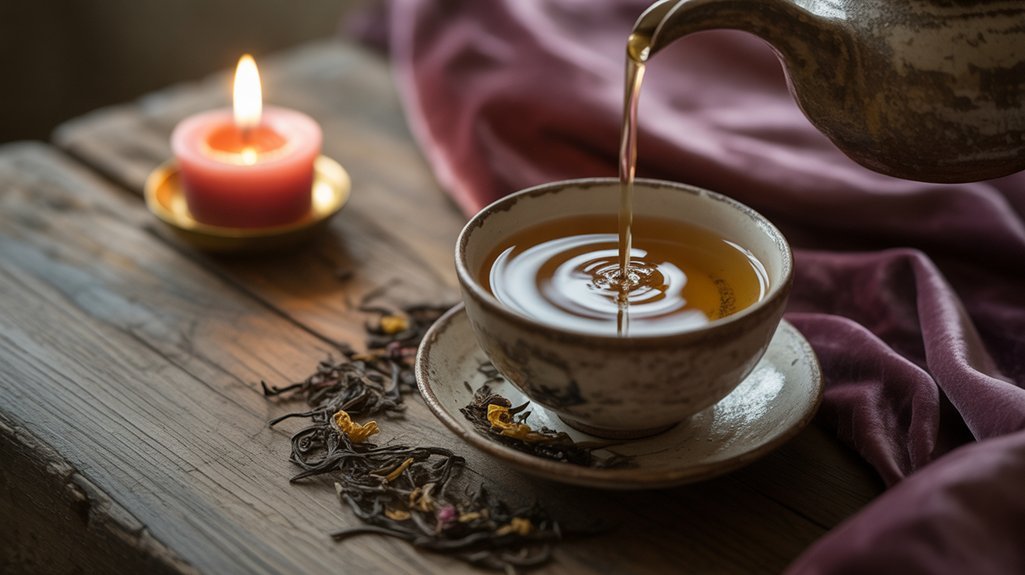
Ever found yourself staring into a cup of tea, wondering what those leaves might be trying to tell you? I remember when I first started my journey with tea leaf reading, feeling both excited and a bit lost. It’s a beautiful practice, steeped in history, and it’s more accessible than you might think.
Tea leaf reading, or tasseography, has roots that trace back to ancient China. Emperors and everyday folks alike would gaze into their cups, captivated by the swirling patterns. As tea and coffee made their way to Europe in the 17th century, the practice evolved. Victorian England turned it into a popular parlor game, while Roma practitioners brought it into homes across the continent. You’ll even find coffee fortune-telling in Ottoman palaces, which shows just how far-reaching this practice has been.
Tea leaf reading’s journey spans from ancient Chinese emperors to Victorian parlors, showing how deeply this practice has woven through cultures worldwide.
Ready to give it a try? Here’s a simple way to start tonight: Brew a cup of loose tea—preferably a black tea, as it leaves clear patterns. After you finish drinking, look at the leaves remaining in the bottom of the cup. What shapes do you see? Trust your intuition; it’s often more accurate than you think.
As you explore this, remember it’s about personal interpretation. What I wish I’d known as a beginner is that there’s no right or wrong answer. Start there. The leaves might form a heart, a tree, or something else entirely. Each shape can hold different meanings, but what resonates with you is what truly matters.
A Practical Approach****
After years of working with this practice, I’ve found a few tips that can help you connect more deeply with your readings. First, always set your intention before you brew the tea. Ask yourself what you want to gain from the reading. This simple act can ground your session, making it more meaningful.
Once you’ve brewed your tea and taken a moment to reflect, look closely at the leaves. You might want to have a notebook handy to jot down your impressions. Here’s a quick guide on interpreting common shapes:
- Circle: Completeness or wholeness.
- Line: A journey or path.
- Star: Inspiration or guidance.
- Animal shapes: Could symbolize traits or messages related to that animal.
Engagement Break
What shape have you seen in your tea leaves? Ever felt that moment of clarity when you realized it reflected something about your life? Share your experiences; they can be so enlightening!
Cultural Considerations
It’s essential to respect the origins of this practice. Tasseography is rooted in various cultures, and if you’re exploring other divination methods, consider seeking guidance from practitioners within those traditions. Each approach has its own history and significance, and it’s important to honor that.
Safety First
A quick note on safety: If you’re using candles during your practice, make sure they’re in fire-safe containers and never leave them unattended. If you’re experimenting with herbs for ingestion, always consult with a healthcare provider to check for any interactions, especially if you’re pregnant.
Next Steps
As you continue your journey with tea leaf reading, remember to be patient. This won’t work for everyone right away, and that’s okay. Results vary, and sometimes, it takes a bit of practice to find your rhythm. Each reading is an opportunity to deepen your understanding of yourself and the world around you.
What I learned this the hard way is that the more you practice, the clearer your intuition becomes. So brew a cup, sit with the leaves, and enjoy the process. That’s enough for now. You’ve got this!
The Problem
You’re likely drawn to tea leaf reading because you want meaningful insights, but you’ll quickly discover that most beginners struggle with selecting the right tea, preparing it correctly, and interpreting the patterns that emerge.
Without proper guidance, you’ll waste time with unsuitable teas, unclear cups, and misread symbols that lead to frustration rather than clarity.
So what happens when you actually try this? By understanding these common pitfalls, you’ll not only avoid costly mistakes but also pave the way for developing genuine reading skills.
Now, let’s explore how to navigate these challenges effectively.
Why This Matters
Have you ever felt a sense of wonder when watching tea leaves swirl in your cup? I remember my first time, sitting with a friend who guided me through the process. It felt magical, yet grounded.
Tea leaf reading isn’t just a charming relic from the past—it’s a practice that’s helped countless people find meaning and guidance over centuries. From ancient China to Victorian Europe and now in our modern lives, this tradition is accessible to everyone.
What I love about it? You don’t need anything fancy—just tea and a cup. That’s enough to start your journey into self-discovery. Historically, this practice opened doors for many, allowing people from all walks of life to explore their fortunes without breaking the bank.
Whether you see tasseography as a fun activity or something deeper, it connects you to a rich cultural heritage.
Ready to give it a try tonight? Grab a cup of your favorite tea, and let’s explore together.
As you begin, remember that it’s normal to feel a bit lost. I learned this the hard way—my first attempts were more confusing than enlightening. The key is to embrace your personal interpretations. You mightn’t see a dragon or a heart in your leaves right away, and that’s perfectly okay. Trust the process.
Getting Started with Tea Leaf Reading
- Choose Your Tea: Black tea is traditional for reading, but any loose leaf will work. Just make sure it’s not flavored, as that can cloud the symbols in the leaves.
- Brewing: Prepare your tea and focus on your question or intention while it steeps. Use boiling water and let it steep for about 3-5 minutes. I often find that being present during this time helps shape the reading.
- Drinking: Sip your tea, but leave a little at the bottom—this is where the magic happens. Think about your question as you drink.
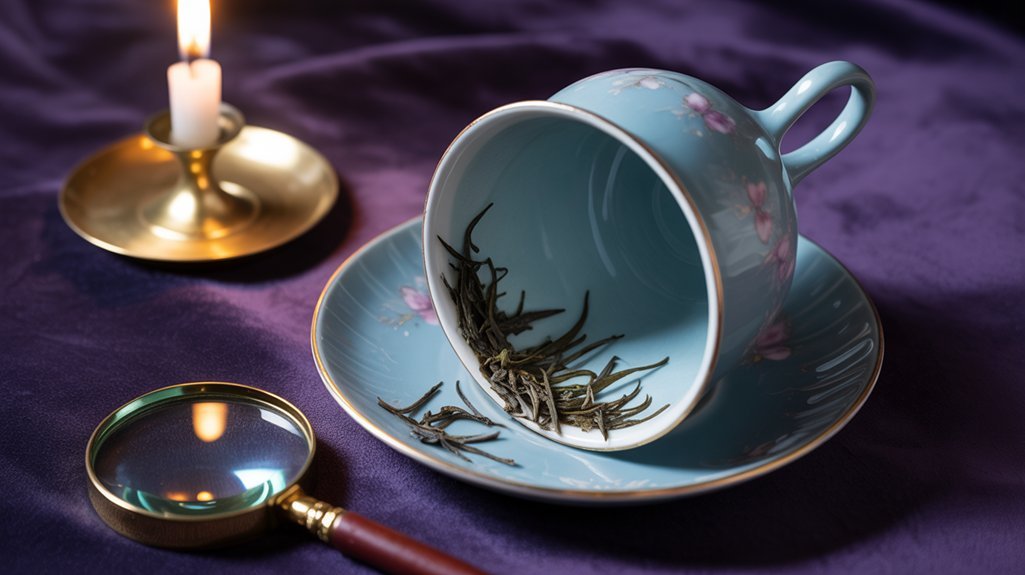
- The Reading: Once you’ve left a small amount of liquid, swirl the cup three times to mix the leaves. Invert the cup onto a saucer and let it sit for a moment. Turn it back over and take a look at the patterns formed by the leaves.
- Interpreting the Leaves: Look for shapes or symbols. This part is personal. What do they remind you of? Trust your intuition here.
And here’s something I wish I’d known when I started: Don’t rush it. Take your time with the symbols, and let your mind wander. You might be surprised at what comes up.
Reflecting on Your Experience
This practice can feel strange at first. You might think, “Am I just making this up?” That’s normal! Some practitioners will tell you it’s about the narrative you create. Others may stress a more traditional interpretation. Both views are valid.
As you read, keep a journal. Note down what you see and how it feels. Over time, you’ll notice patterns in your readings and your life.
What I’ve found is that tea leaf reading offers a unique blend of introspection and fun. It’s a ritual that respects its roots while allowing for personal growth and exploration.
Just remember: this won’t work for everyone, and that’s okay. Be patient with yourself—results vary.
Next Steps
If you’re feeling inspired, why not try this tonight? Pour yourself a cup, set an intention, and see what the leaves reveal.
It’s a simple practice, but it can spark profound insights.
And remember, the journey of tea leaf reading is yours to shape. Don’t be afraid to explore and have fun with it. You’ll find your way.
Who It Affects
Starting out in tea leaf reading can feel like stepping into a warm, inviting space, but it’s not always easy for everyone to join in. I remember my early days, excited but unsure. If you’re under 16 or 18, you might find yourself on the outside looking in. That can be frustrating, right?
Cultural differences also come into play. For instance, in Turkey, Greece, and the Balkans, coffee reading is a cherished tradition, while tea reading in the West often feels more like a fun novelty than a deep-rooted practice. If you’re part of a diaspora community, you might celebrate these traditions at festivals in the US, Europe, or Australia. That sense of community can be so enriching.
But let’s be real: not everyone has access to these traditions. Some folks are relying on YouTube tutorials or commercial courses, which can feel isolating. And then there are socioeconomic factors that can shape your experience. If you’re drawn to loose-leaf tea and cozy kitchen witch aesthetics, it often appeals more to those with the means to explore it. Trust me, I’ve been there, navigating my own resources and experiences.
What I wish I’d known as a beginner is that your background, location, and resources can shape how you engage with tea leaf reading. It’s okay if it feels casual at first. Start where you are. That’s enough.
Ready to try something tonight? Grab a cup of your favorite loose-leaf tea and some paper. As you sip, jot down your thoughts and feelings. What do you notice? This simple practice can deepen your connection to tea reading, no matter your background or experience.
Remember, this journey is personal. Some traditions are more closed or semi-closed, so if you’re curious about a specific cultural practice, reaching out to practitioners from that tradition can enrich your understanding.
And always be mindful about safety—if you’re using herbs, check with a healthcare provider, especially if you’re pregnant or on medication.
As you explore, you’ll find that your unique perspective will add to the richness of this practice. What do you think? Are you ready to dive in?
The Explanation
The effectiveness of tea leaf reading is rooted in several interconnected factors.
As we’ve seen, the clarity of loose-leaf tea’s larger leaves plays a crucial role in revealing meaningful patterns.
But what happens when we take this foundation and apply the right techniques, like selecting the ideal cup and mastering steeping methods?
These elements combine to ensure that you’re interpreting genuine symbols, not just visual noise.
Root Causes
Root Causes of Tasseography: A Beginner’s Guide****
Have you ever looked at a cup of tea and wondered what those leaves might be trying to tell you? I remember my first attempts at tasseography—it felt both magical and completely baffling. Like many beginners, I was eager for answers but often left feeling lost. Here’s the thing: tasseography is more about personal interpretation than mystical predictions.
When you look at those leaf patterns, you’re not just passively waiting for a message. You’re actively engaging with your own thoughts and feelings. This practice can be a mirror for your subconscious. Start there. Think about what’s currently on your mind. You might be surprised at what reveals itself.
Here’s a simple way to begin: brew your favorite loose leaf tea. As you sip, focus on your intention—what are you hoping to explore? After finishing your tea, tilt the cup to let the leaves settle. Take a moment to observe the patterns formed. What do you see?
In my practice, I learned that every mark and swirl can hold personal significance. Maybe a shape reminds you of a loved one or a situation you’re navigating. Trust your instincts here. You’re creating your own narrative.
The Ritual: Connecting with Your Subconscious
As you engage in the ritual—moving the cup, asking yourself focused questions, mapping out symbols—you’re activating your inherent pattern-recognition skills. This isn’t just about the leaves; it’s about you.
The first time I did this, I felt overwhelmed. I wanted to find deep meanings right away. But what I wish someone had told me then is that it takes time. Be patient—results vary. The more you practice, the more you’ll understand your personal symbols and how they connect to your life.
Remember to approach this with an open heart. Some practitioners find that certain shapes mean one thing, while others might interpret them entirely differently. That’s valid. The beauty of tasseography is that it’s uniquely yours.
Practical Steps for Tonight’s Practice
- Brew Your Tea: Choose loose leaf tea that resonates with you. Green or herbal teas work wonderfully.
- Set Your Intention: Before you sip, take a moment to focus on what you wish to gain from this process.
- Observe the Leaves: After drinking, tilt your cup and notice the patterns. What catches your eye?
- Journal Your Thoughts: Write down what you see. Don’t overthink it—just let it flow.
- Reflect: Later, revisit your notes. How do these patterns relate to your current concerns or aspirations?
Engage with the Process
Have you ever had a moment where something just clicked? That’s often how it goes with tasseography. The more you engage, the deeper the connections become.
As you explore, keep in mind that this practice is influenced by personal and cultural traditions. I encourage you to seek out resources or practitioners from those traditions if you’re curious about their historical context.
Final Thoughts
Tasseography is a journey of self-discovery. Some days, you might feel like you’re just seeing random shapes, and that’s okay. Other times, you might connect deeply with the patterns. Trust the process.
What I wish I’d known as a beginner is that there’s no right or wrong way to interpret what you see. You’re the expert of your own experience. Ready to try this tonight? Enjoy the journey!
Contributing Factors
Success in tasseography isn’t just about reading tea leaves; it starts with how you prepare your tea and create your space. I remember my early days, filled with uncertainty and a few missteps. But the beauty of this practice is that each step matters—and you can shape your own path.
1. Preparation quality** is key. I learned the hard way that using loose leaves without additives gives you the best movement and visibility. Your intention**? It’s essential. When you focus on what you want to uncover, your subconscious aligns with the symbols that emerge. Trust me, you’ll notice the difference.
2. Environmental conditions** can make or break your reading. Find a quiet spot with soft lighting. Distractions? They’ll cloud your vision. When I first started, I found a cozy nook in my home that became my sacred space**. It helped me tune in, and I bet you’ll find yours too.
3. Interpretive mindset** is everything. Patience and creativity are your best friends here. Ever felt that rush of intuition when you see a symbol? Holding onto that first impression** can guide your interpretation. It’s like a whisper from your inner self.
Regular practice is where the magic happens. The more you engage with the leaves, the better you become at spotting those meaningful patterns. What I wish someone had told me as a beginner? It’s okay to stumble. Each cup of tea is a new lesson.
Try this tonight: Brew a cup of your favorite tea, using loose leaves if possible. As you sip, focus on your intention for the reading. Once you’re ready, pour the remaining tea into a cup, leaving the leaves at the bottom. Take a moment to observe the shapes they form. What do you see?
Remember, this journey is personal. Some practitioners may interpret symbols differently, and that’s valid. Be patient with yourself; results vary, and that’s part of the process.
As you dive deeper, think about what resonates with you. If you feel drawn to a specific symbol, explore its traditional meanings. Many cultures have rich histories with tasseography, and each can offer you unique insights.
After years of practice, I’ve come to appreciate the interconnectedness of preparation, environment, and mindset. Each reading is an opportunity to connect with something greater. So, embrace it! Start where you are, and allow your unique voice to shine through the leaves.
What’s your next step? Set up your space tonight, brew that tea, and let your intuition guide you. Trust the process, and remember: it’s all part of your personal journey.
What the Research Says
When exploring the scientific literature on tasseography, you’ll find that researchers haven’t conducted rigorous studies validating tea leaf reading as a predictive tool.
Experts generally agree that it lacks empirical support for its claims about future events, though opinions vary on its cultural or meditative value.
With this understanding, consider how this historical practice fits into contemporary discussions about divination and intuition.
Key Findings
Have you ever felt a deep connection with nature while sipping your tea? It’s amazing how something as simple as tea leaves can carry stories and insights. While tasseography, or reading tea leaves, is often seen as a whimsical practice, I want to share how scientists are using tea leaves in serious studies about our climate and ecosystems.
Researchers at Northern Arizona University and the Smithsonian are finding that dead leaves reflect more solar energy than we thought. This hints that tropical forests might be more resilient to climate change than models suggest. Pretty fascinating, right?
You can also think about how tea bags are being used in decomposition research across 49 global sites. Here’s a fun takeaway: green tea breaks down quickly because it has compounds that microbes love. On the other hand, rooibos takes its time because of its tougher carbon content. This research gives us valuable insights into how different climates affect microbial communities.
What I wish I’d known as a beginner is how even everyday items can become tools for deeper understanding. You don’t need fancy equipment; just be curious and open to learning.
Ready to try something practical? Here’s a simple experiment you can do tonight:
- Grab a couple of different tea bags — maybe green tea and rooibos.
- Fill two small containers with soil from your garden or a nearby park.
- Bury one tea bag in each container, marking them clearly.
- Water them lightly, then place them in a sunny spot.
- Check back in a week to see how they’re breaking down.
This hands-on activity not only connects you to nature but also teaches a bit about decomposition. Remember, the process might vary, and that’s perfectly okay. Just trust it.
You’ll find that engaging with nature like this can deepen your understanding of the world around you. Keep exploring, and don’t hesitate to share your findings with me!
Where Experts Agree
Tasseography: Your Journey Begins
Ever sat down with a cup of tea, feeling that little spark of curiosity? I remember my first attempt at tasseography—my leaves turned into a muddled mess, and I wasn’t sure what to make of it. But that’s part of the beauty of this practice. It’s about exploration and connection.
Here’s a practical tip to get you started tonight: choose loose-leaf tea. Trust me on this one. The larger leaves create clearer patterns than those dusty tea bags. I learned this the hard way, and it made a world of difference in my readings. Stick with plain black tea; it provides a cleaner canvas for your interpretations. Ever tried oolong? Its broad leaves can form some beautiful symbols, adding depth to your experience.
What you mightn’t expect is how your intention while sipping influences your results. Focus on what you want to explore, and allow your intuition to guide you. Trust those initial impressions. They often resonate more than memorizing traditional meanings. This is your practice—make it personal.
Engaging with the Tradition
As you dive deeper, remember that many practitioners pass down their knowledge through family lineages. There’s something special about connecting to that history, but don’t feel pressured to stick rigidly to traditional interpretations. This practice is about your unique journey. Don’t be afraid to explore what the shapes mean to you.
That said, it’s wise to approach it with respect. Some traditions are closed or semi-closed, so if you’re drawn to a specific cultural practice, seek guidance from those within that tradition.
Here’s a grounding thought: this practice is accessible. You don’t need fancy tools—just a cup, tea, and an open heart.
Personal Insights
After a decade of practice, I can tell you that patience is key. Results can vary, and that’s perfectly okay. Some folks find immediate clarity, while others take time to develop their skills. That’s part of the journey, and it’s valid.
When I first started, I’d get frustrated if I didn’t see clear shapes right away. What I wish someone told me then is that it’s about the process, not just the outcome. Start there. Engage with your tea, and let the leaves unfold their stories at their own pace.
Next Steps
So, ready to try this tonight? Brew yourself a cup of loose-leaf tea, focus on your intention, and observe the patterns as you sip.
Take a moment to jot down your impressions—what do you see? What feelings arise?
And remember, safety first. If you’re using any herbs for ingestion, check with a healthcare provider, especially if you’re pregnant or on medication.
This practice can be a beautiful way to connect with yourself and the world around you. Trust the process, and let your tea guide you. You’ll find there’s so much more to discover than you might think.
Where They Disagree
If you’ve ever found yourself staring at tea leaves, wondering what secrets they hold, you’re not alone. I remember the first time I tried tasseography. I was excited, but also a bit overwhelmed. There’s so much to explore! Here’s a practical tip: before diving into the details, brew yourself a nice cup of loose-leaf tea. Let it steep, and as you do, take a moment to breathe and set an intention for your reading. That’s a good starting point.
Now, let’s talk about what you might hear. Some folks say tea leaf reading is just coincidence or a trick of the mind—like a Rorschach test for your thoughts. They argue that our brains are wired to find patterns, even in the most random shapes. And they’re not entirely wrong. In my practice, I’ve learned that while our interpretations can be deeply personal, they often mirror our own experiences and emotions rather than predict the future.
What I wish someone had told me as a beginner is that your readings won’t always be crystal clear. Sometimes, the leaves might look like a jumble of shapes, and that’s okay. Trust your intuition. The beauty lies in personal interpretation—what do those shapes mean to you right now? This is where the magic really happens.
Now, if you’re curious about the traditionalists, they’ve a different viewpoint. They emphasize that genuine tea leaf reading involves a deeper connection, often shared between practitioners. There’s something special about the energy exchanged in person that can’t be replicated through digital platforms. Have you ever felt that connection in another practice?
As you explore this art, remember that not everyone agrees on its purpose. Some see it as a form of entertainment, while others view it as a tool for self-discovery. And that’s perfectly valid.
Here’s a simple practice you can try tonight: After your tea has steeped, pour it into a cup, leaving a bit of water and the leaves at the bottom. Swirl it gently and think about your question or intention. Then, turn the cup upside down on a saucer to let the leaves settle. When you lift it, look at the shapes that have formed. Ask yourself what those shapes might reflect about your current situation. Write down your impressions.
Remember, there are no right or wrong answers here. The process is about exploration. Some practitioners might feel differently about what the leaves reveal, and that’s valid too. Be patient—your understanding will grow over time.
And as you practice, always keep ethical considerations in mind. If you’re using herbs or crystals, source them responsibly. Look for ethically mined crystals and sustainably harvested herbs. It aligns the practice with respect for nature, which is crucial.
Practical Implications
Integrating tea leaf reading into your daily routine offers a practical way to deepen your mindfulness practice.
So how can you make the most of this ritual? By brewing loose-leaf tea each morning, you can reflect on the symbols that emerge, using them as prompts for personal intuition and self-guidance.
Instead of viewing these readings as fixed predictions, focus your questions on immediate decisions regarding relationships, finances, or career paths, setting the stage for deeper insights into your daily life.
What You Can Do
Discovering Yourself Through Tea Leaf Reading
Ever felt like you’re standing at a crossroads, unsure of which path to take? I remember those moments vividly from my early days of practice. That’s where tea leaf reading can really shine. It’s not just about the leaves; it’s about uncovering insights that resonate with your life right now. Want to give it a try tonight? Grab your favorite tea and let’s get started.
Here’s how you can incorporate tea leaf reading into your life:
- Personal Development – Daily readings can help you sort through career choices, financial decisions, and relationship dynamics. It’s about gaining clarity and setting intentions. I learned this the hard way; a simple question while sipping tea can lead to profound insights.
- Strategic Planning – Look for patterns in the leaves. They might reveal immediate opportunities or potential pitfalls in your business ventures or life changes. After years of practicing, I’ve found that the symbols can really guide your choices.
- Community Engagement – Gather some friends for a group reading. Sharing insights can enrich your understanding and strengthen connections. It’s a wonderful way to explore future plans together.
Start small. Maybe just with one reading a week. Track what you notice—patterns will emerge, and your intuition will grow. Trust the process.
Take a Moment
What I wish I’d known as a beginner is that there’s no right or wrong way to interpret the leaves. Every reading is unique, like you. So, if you see something that resonates, go with it. Be patient—results vary, and that’s perfectly okay.
Before you begin, remember safety first! If you’re using candles, make sure they’re in fire-safe containers and never leave them unattended. And if you’re incorporating any herbs for tea, check with a healthcare provider for any interactions.
Recommended for You
🛒 Dried Herbs For Rituals
As an Amazon Associate we earn from qualifying purchases.
A Practical Step for Tonight
Ready to start your first reading? Here’s a simple step-by-step guide:
- Brew a cup of loose leaf tea (I love using green or herbal blends).
- Once you’ve enjoyed the tea, leave a small amount at the bottom of the cup.
- Swirl the cup three times, then turn it upside down on a saucer to drain any excess liquid.
- After a moment, turn it back and observe the leaf patterns. What shapes do you see?
Ask yourself a question as you look. It could be about a decision you’re facing or something you’re curious about. Write down what you observe.
What to Avoid
Common mistakes in tea leaf reading can really throw you off before you even start interpreting those leaves. I remember my early days, fumbling around with all kinds of blends and tricks—trust me, you don’t want to go down that road! Here’s what I learned: skip the tea bags and flavored blends. They create a jumbled mess that hides any meaningful patterns.
Also, avoid adding milk or sugar. They can cloud your view and disrupt how the leaves settle. Stick to plain tea for clear insights.
When you’re ready to read, resist the urge to force interpretations onto every little clump. Start by spotting the larger, more obvious shapes first. Work your way through those symbols methodically. Keep your intuition close; it’s just as important as any memorized definitions. I’ve found that blending both approaches yields the best results.
After brewing, don’t over-stir or swirl incorrectly. That’s a quick way to displace those precious leaves! Give your tea enough time to drain properly, and try looking at your cup from different angles. You might catch shifts in the shapes that you didn’t see before. Trust those initial impressions—they often hold more truth than you think.
Ever felt that moment of doubt after a reading? I’ve been there, too. It’s easy to second-guess yourself. Remember, this process is as much about your personal interpretation as it’s about traditional symbols. So, start there. That’s enough for now, right?
If you’re ready to dive in tonight, brew a simple cup of plain loose-leaf tea. Take a moment to breathe, focus your thoughts, and trust the process. You might just surprise yourself with what you see.
What I wish someone told me as a beginner? Be gentle with yourself and enjoy the journey. Reading tea leaves is a practice, not a performance.
Comparison of Approaches
Finding Your Unique Tea Leaf Reading Approach
Ever felt a little lost when diving into tea leaf reading? I remember those early days — the excitement mixed with confusion. Trust me, you’re not alone. Each practitioner has their own flavor, and that’s the beauty of it.
When I first started, I followed the traditional frameworks to a tee. But over time, I learned that it’s not just about following rules; it’s about what resonates with you. So, let’s explore some approaches you might consider. Here’s a quick takeaway: start with what feels right to you, and evolve from there.
Your Approach Matters
You’ll find that personal preference and spiritual alignment play huge roles in how you read tea leaves. Some folks lean toward a clockwise interpretation, starting from the handle of the cup, while others might feel the pull of counter-clockwise energy.
Your choice of tea can also influence the patterns you see. For instance, loose-leaf black teas often offer clearer shapes, while pu erh brings in a layer of mystique. After years of working with different teas, I’ve found that the right combination can really enhance your experience.
| Approach | Tea Choice | Cup Orientation | Best For |
|---|---|---|---|
| Traditional | Assam/Ceylon | Handle-forward | Structured readings |
| Intuitive | Oolong | Personal positioning | Creative interpretation |
| Detailed | Green tea | Multiple angles | Nuanced symbolism |
| Mystical | Pu erh | Dregs-focused | Deep spiritual work |
Experiment and Trust Your Instincts
Start where you feel comfortable. If you’re drawn to a particular tea or method, give it a try. I learned this the hard way: the more I forced myself into strict frameworks, the less I enjoyed the practice.
Experimentation is key. Maybe you’ll find that a certain tea sparks creativity, while another feels more grounded. Remember, this journey is yours.
Ready to try? Grab a cup of your favorite tea tonight, sit comfortably, and let yourself flow into the reading.
Engage with Your Practice
As you develop your methodology, pay attention to the symbols that speak to you. What do you see? What feelings arise? Trust those instincts. Some readings might feel straightforward, while others could open up deeper questions or themes.
Also, keep in mind that not every method will resonate with everyone. That’s perfectly okay. Be patient — results vary, and that’s part of the learning process.
What I Wish I Knew as a Beginner
I wish someone had told me to embrace my unique style from the start. It’s easy to get caught up in what “should” be done instead of exploring what feels authentic. Your unique approach matters more than strict adherence to conventions.
So, as you sip your tea tonight, consider how you want to interpret the leaves. What stories do they tell you?
Next Steps
Now, let’s get practical. Find a quiet space where you won’t be disturbed. Brew a cup of tea, focusing on your intentions. After you’ve finished drinking, take a moment to examine the leaves left in the cup. What shapes do you see? Jot down your impressions.
This simple practice can be a great way to kick off your tea leaf reading journey. Trust the process, and remember: you’re building a relationship with the tea, the leaves, and ultimately, yourself. Enjoy every step of the way!
Key Takeaways
Now that you’ve discovered your reading style and why personal preference matters, let’s get down to what really works. I remember when I first started; it felt overwhelming at times. But trust me, grounding yourself in these fundamentals will help you access those accurate readings you’re aiming for.
1. Equipment precision** — I can’t stress enough how vital your setup is. Using white ceramic cups** with flat bottoms and clean interiors really helps eliminate distractions. I learned this the hard way—cluttered cups can muddy your interpretations. So, keep it simple. Start there.
2. Tea selection strategy** — Choose black or oolong teas** for the best residue patterns. I’ve found that flavored blends and long-leaf varieties just complicate things. Ever felt that frustration when the symbols are hard to read? Stick to what works, and your analysis will flow more smoothly.
3. Procedural consistency** — Here’s where you can really build your confidence. Steep your tea for three minutes, swirl it three times in a clockwise direction, and interpret in that same direction**. This consistency not only creates reproducible conditions but also strengthens your intuitive recognition. I practiced this routine until it felt second nature. You can too.
These straightforward protocols can turn tea leaf reading from a mystical guessing game into a skill you can cultivate with intention. Remember, it’s okay to make mistakes along the way. Each reading teaches you something new.
Ready to give it a try tonight? Set up your space, choose your tea, and follow those steps. Just trust the process—it’s all part of the journey.
And here’s something I wish someone had told me when I started: don’t be too hard on yourself. Each reading is a chance to learn, and not every cup will yield clear answers. That’s perfectly normal.
As you embark on this path, remember to respect the traditions behind these practices. If you’re exploring techniques from specific cultures, seek guidance from experienced practitioners within those traditions.
And always keep safety in mind—ensure your workspace is clear and your materials are ethically sourced.
Frequently Asked Questions
What Type of Tea Leaves Work Best for Accurate Readings and Divination?
Q: What type of tea leaves should I use for accurate readings and divination?
You’ll want to use loose-leaf teas with larger leaves for clearer patterns. Black teas like Assam are excellent for their robust symbols, while oolongs offer balanced complexity and white teas provide subtle nuances.
Avoid finely cut leaves, as they can muddy your interpretations. Always ensure you’re using high-quality, whole-leaf varieties to enhance your connection.
Q: Are there specific tea types that are better for beginners?
Yes, starting with black teas like Assam is a great choice for beginners due to their strong, clear symbols.
As you gain confidence, you can explore oolongs and white teas for more complexity. Just remember to respect the cultural origins of these teas and consider learning from experienced practitioners to deepen your understanding.
Q: Can I use bagged tea for readings?
No, bagged teas aren’t ideal for readings because they typically contain finely cut leaves that don’t form clear patterns.
Stick with loose-leaf varieties for the best experience. If you’re ever unsure, consult with a more experienced practitioner to guide you in selecting the right teas for your practice.
How Long Does It Typically Take to Become Proficient at Tea Leaf Reading?
Q: How long does it take to get good at tea leaf reading?
Yes, you can develop basic skills within a few months of regular practice. Start by learning the foundational symbols and practicing with different tea cups.
Remember to seek feedback from those you read for to improve your interpretations. Tasseography is rooted in specific cultures, so consider learning from experienced practitioners to honor those traditions.
Q: Will I master tea leaf reading quickly?
No, mastering advanced techniques and over 50 symbols usually takes 1-2 years of dedicated study. Focus on consistent practice and gradually expand your knowledge.
Engage with communities or classes that specialize in tea leaf reading for guidance. Always be respectful of the cultural origins of this practice, as each tradition has its unique nuances.
Can Tea Leaf Readings Predict Specific Dates or Future Events Accurately?
Q: Can tea leaf readings predict specific dates or future events accurately?
No — this is a common misconception.
Tea leaf readings offer ambiguous patterns open to interpretation, which can lead to confirmation bias. If you want to explore this practice, focus on gaining personal insights rather than specific predictions.
Remember, it’s best to consult data-driven methods for reliable forecasting.
Always respect the cultural origins of tasseography and learn from experienced practitioners within those traditions.
What’s the Difference Between Tea Leaf Reading and Other Divination Methods?
Q: How is tea leaf reading different from tarot?
Tea leaf reading is more flexible than tarot. In tarot, cards have fixed meanings and follow structured spreads, while in tea leaf reading, you interpret patterns subjectively.
To get started, brew a cup of loose-leaf tea and focus on the shapes as you sip. This practice is rooted in various cultures, so consider learning from experienced practitioners for deeper insights.
Q: Can I get quick answers with tea leaf reading?
Yes, tea leaf reading is great for quick insights. As you meditate over the tea leaves, you’ll access your intuition faster than flipping through tarot guidebooks.
To begin, find a quiet space, brew your tea, and trust your instincts as you observe the shapes. Remember, it’s a personal interpretation, so don’t worry about being “correct.”
Q: Is tea leaf reading safe?
Yes, tea leaf reading is generally safe, but be mindful of the type of tea you use. Avoid herbs that may cause allergic reactions or interact with medications, and consult a healthcare provider if you’re unsure.
Always ensure your tea leaves are from a reputable source to avoid contaminants. Enjoy the process and stay present!
Are There Cultural or Spiritual Requirements Before Attempting to Read Tea Leaves?
Q: Do I need special training to read tea leaves?
No, you don’t need special training to start reading tea leaves. Just focus on your intention and clear your mind before you begin.
It’s helpful to familiarize yourself with common symbols but remember, your unique perspective shapes the reading. If you’re drawn to a specific tradition, consider learning from practitioners within that culture for deeper insights.
Q: Is there a specific ritual I need to follow?
No, rituals aren’t mandatory, but a simple preparation can enhance your practice.
Try to create a calm environment and take a moment to center yourself. Respect the traditions you may encounter, and if you’re interested in a particular cultural method, seek guidance from someone knowledgeable in that area for a more authentic experience.
Q: Can I read tea leaves anywhere?
Yes, you can read tea leaves anywhere that feels comfortable to you!
Just ensure it’s a quiet space where you won’t be disturbed. If using candles, practice fire safety by keeping them away from flammable materials.
And remember, your personal energy will influence the reading, so choose a setting that feels right for you.
Q: What if I don’t understand the symbols?
That’s completely normal! Start by trusting your intuition and interpreting the symbols in a way that resonates with you.
You can also refer to guides or books about tea leaf symbolism, but remember, your perspective is valid.
If you’re drawn to specific cultural symbols, consider connecting with a practitioner from that tradition for deeper understanding.
Conclusion
Tasseography invites you to connect deeply with your intuition and the whispers of your mind. Tonight, brew a cup of your favorite tea, allowing the steam to rise as you set your intention for clarity. Sip slowly, then turn your cup upside down on a saucer for a minute. Once the tea leaves settle, take a moment to observe the patterns formed. Afterward, jot down a single sentence about what you see or feel. Start there. Trust the process, and remember, it’s about the journey of discovery, not perfection. You’ve got this!
Amazon and the Amazon logo are trademarks of Amazon.com, Inc, or its affiliates.
Continue Your Magical Journey
Free Witchcraft Starter Kit
Get 6 free printable PDFs: grimoire pages, moon calendar, spells, crystals, herbs, and tarot journal.
We respect your privacy. Unsubscribe anytime.
Enhance Your Practice
As an Amazon Associate, I earn from qualifying purchases.