

- Key Takeaways
- Introduction
- The Problem
- Why This Matters
- DIY Witch Bottle
- Reflecting on the Tradition
- Who It Affects
- The Explanation
- Root Causes
- Contributing Factors
- What the Research Says
- Key Findings
- Key Findings
- Ready to Explore?
- Engaging with Tradition
- Next Steps
- Where Experts Agree
- Understanding Witch Bottles: A Beginner’s Guide
- The Historical Context
- Creating Your Own Witch Bottle
- A Final Thought
- Where They Disagree
- Practical Implications
- What You Can Do
- What to Avoid
- Comparison of Approaches
- Key Takeaways
- Key Takeaways
- Let’s Create Your Witch Bottle
- Reflect on Your Experience
- Frequently Asked Questions
- How Do I Create My Own Witch Bottle for Home Protection Today?
- Where Can I Purchase Authentic Historical Witch Bottles or Replicas?
- Are Witch Bottles Associated With Specific Cultural Traditions Beyond European Folklore?
- Do Modern Practitioners Report Experiencing Measurable Effects From Witch Bottles?
- What Legal Considerations Exist When Burying Witch Bottles on Property?
- Conclusion
- Related Posts
- Related Posts
- Related Reading
- Related Posts
- Related Posts
- Awaken Your Inner Witch
Have you ever felt a rush of anxiety while trying to protect your space? I remember the first time I crafted a witch bottle—it was a bit chaotic, but it felt like I was reclaiming my safety. Tonight, I want to share how you can create your own protective vessel, just like those used centuries ago when fear was high and medicine often fell short. After 10 years of practice, I can tell you there’s something deeply grounding about this ritual. Start there. You’ll learn not just the steps, but also the heart behind why our ancestors buried these magical bottles.
Key Takeaways
- Create a witch bottle using a glass vessel and fill it with protective herbs and personal items, like hair, to trap negative energy effectively.
- Explore nearly 200 documented witch bottles from Southern and Eastern England to understand local historical practices and enhance your own protective rituals.
- Incorporate nails and pins into your witch bottle mix; these sharp objects symbolize protection, reinforcing your intention against harmful spells.
- Address personal anxieties by crafting your own witch bottle, turning fears into a tangible object that empowers you and builds resilience.
- Use witch bottles as a creative outlet; the process of assembling one can provide emotional relief during distressing times.
Introduction
Have you ever felt a twinge of unease in your home, wondering if negative energy is lurking around? I know I have. One of the most fascinating tools in folk magic that can help you with this is the witch bottle. These aren’t just relics from the past; they’re practical protective measures that you can connect with today.
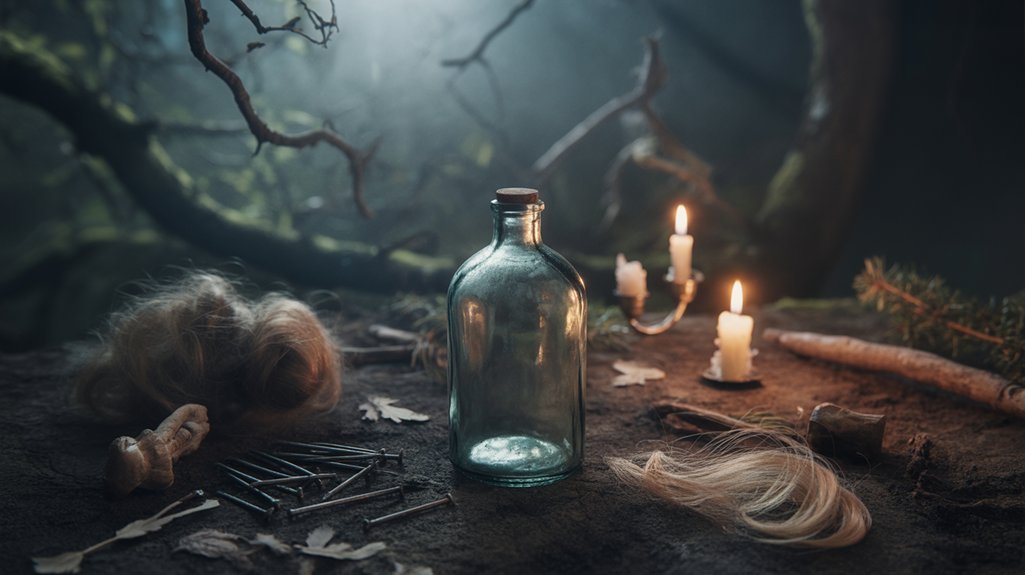
Witch bottles were crafted and buried by householders to trap harmful spells. Picture this: a glass or ceramic vessel filled with items like herbs, nails, and sometimes even urine—yes, it sounds strange, but it was all about creating a barrier against malevolent forces. In my practice, I’ve come to appreciate how these bottles served not just as safeguards, but as a way for communities to channel their anxieties into tangible actions. Understanding the common misconceptions about witchcraft can also deepen your appreciation for these practices.
If you’re curious about trying this out, here’s a simple way to start tonight:
- Gather Your Materials: You’ll need a small bottle (glass is traditional), herbs that resonate with protection (like rosemary or salt), and personal items that symbolize what you want to keep away.
- Set Your Intention: Before you fill the bottle, take a moment to ground yourself. What’re you trying to protect yourself from? Write it down or say it out loud.
- Fill the Bottle: As you add each item, visualize what you want to trap inside.
- Seal It Up: Once it’s filled, seal the bottle tightly.
- Bury It: Find a spot near your home where it can be buried, preferably under the hearth or a threshold.
That’s enough for one night. Trust the process.
It’s easy to romanticize these practices, but I learned this the hard way: witch bottles are as much about intention as they’re about the materials. Some practitioners might say it’s all in the ingredients, but honestly? It’s about what feels right for you.
Now, let’s take a moment to reflect. Have you ever tried creating a protective charm or talisman? What was your experience like?
As you explore this practice, keep in mind that not every method works for everyone. Some practitioners have different interpretations, and that’s valid. It’s okay if this doesn’t feel like the right fit for you right away. Be patient—results vary, and that’s part of the journey.
What I wish I’d known as a beginner is that it’s perfectly acceptable to experiment. If you feel drawn to different herbs or symbols, trust that instinct. This is your practice.
So, here’s your next step: after you’ve buried your witch bottle, take a moment to sit quietly and visualize your home filled with protective energy. You might even want to light a candle nearby (in a fire-safe container, of course) and reflect on your intentions.
The Problem
In an era where accusations of witchcraft could shatter lives, the fear of malevolent magic loomed large over families grappling with illnesses like urinary ailments and bladder stones.
This widespread anxiety drove the need for effective protective measures, leading to the creation of witch bottles. Understanding these historical remedies reveals how people across social classes sought to reclaim their safety amidst a backdrop of fear and superstition.
Why This Matters
In 17th- and 18th-century England and America, if you were dealing with unexplained urinary issues, you’d likely feel a mix of frustration and desperation. Conventional medicine often left people in the lurch, with remedies that just didn’t cut it. Ever felt that? It’s tough when you’re searching for answers.
This is where witch bottles came into play. They were a practical response—a way to take control when doctors could only offer limited solutions. You’d gather materials, maybe some herbs or personal items, and create a bottle filled with your intentions, then bury it beneath your fireplace or walls. It wasn’t just an act of superstition; it was a way to actively defend yourself against the unknown.
In my practice, I’ve seen how these folk remedies demonstrate resilience and creativity. Communities adapted what they had, using local materials and their own knowledge to tackle health challenges.
Ready to try something like this tonight? Here’s a simple way to create your own protective charm.
DIY Witch Bottle
What You’ll Need:
- A small glass bottle (ensure it’s clean)
- Salt (for purification)
- Water (can be spring or moon water)
- A few herbs (like rosemary for protection or lavender for calm)
- Personal items (a small nail, a hair, or a written intention)
Steps:
- Start by grounding yourself. Take a few deep breaths. Set your intention for what you want the bottle to protect against.
- Layer your ingredients. Begin with a layer of salt at the bottom for purification. Then add your herbs, followed by any personal items you’ve chosen.
- Pour in the water. As you do, visualize the protective energy surrounding you.
- Seal the bottle. You can add a piece of wax or a cork to ensure it stays closed.
- Bury it. Find a spot in your home, maybe near the fireplace, and bury it with reverence.
Safety Note: If you’re using herbs, make sure they’re safe for your intended use. Consult a healthcare provider if you’re unsure about interactions or risks.
Reflecting on the Tradition
What I wish I’d known as a beginner is that it’s not just about the ingredients; it’s about the energy and intention you put into your practice. It’s okay if it doesn’t feel perfect the first time. This won’t work for everyone, and that’s perfectly valid. Be patient with yourself.
As you explore these practices, remember that they’re rooted in tradition and community. Respect the origins of what you’re using. If you’re drawn to specific cultural practices, consider seeking guidance from practitioners within those traditions.
Take a moment to think: how does creating something with your own hands make you feel? Trust the process. Start there. You’re not just following steps; you’re engaging with a rich history of healing and protection.
Who It Affects

Desperate households in 17th- and 18th-century England and America faced challenges we can hardly imagine today. When conventional medicine failed, many turned to witch bottles for help. Ever felt that feeling of frustration when nothing seems to work? You might’ve been grappling with urinary ailments or mysterious physical symptoms that left you seeking alternatives.
In places like East Anglia and colonial New England, the air was thick with fears of witchcraft. You’d have felt the need to actively defend your space against those unseen threats. So, you’d bury bottles beneath fireplaces or tuck them away in walls, seeing these simple objects as crucial protection against malevolent forces.
Whether you identified as a devout Puritan or a practitioner of folk magic, you’d have instinctively positioned those bottles at entry points, turning your home into a sanctuary. This wasn’t just superstition; it was a practical response to something deeply unsettling.
Ready to try this tonight? You don’t need to wait for a crisis. You can create your own protective charm using a simple bottle. Grab a small glass container and fill it with salt and herbs like rosemary or sage—both traditionally known for their protective properties. Seal it tightly and place it by your front door or in a hidden corner of your home.
In my practice, I learned the hard way that intention matters. What I wish someone had told me is that it’s not just about the items you use but the energy you put into them. So, as you create your bottle, focus on your intentions. Picture it shielding you from negativity and harm.
Now, let’s pause for a moment. Think about your space. What makes you feel safe? How can you enhance that feeling?
After years of working with protective practices, I can tell you this: results can vary. Some folks may feel an immediate shift, while others may take time to notice any changes. And that’s completely valid. It’s all part of the journey.
As you continue your practice, remember to respect the origins of the materials you use. If you’re sourcing herbs, aim for sustainable options. For crystals, look for ethically mined stones. This not only honors the tradition but also aligns your practice with a greater sense of responsibility.
What’s next? Try incorporating a short daily ritual where you hold your witch bottle and visualize its protective energy surrounding you and your home. It doesn’t have to be elaborate. Just a few moments of focused intention can make a world of difference.
And remember, this journey is yours. Trust the process, and don’t hesitate to adapt any tradition to fit your personal beliefs. Your practice should feel right for you, and that’s what truly matters.
The Explanation
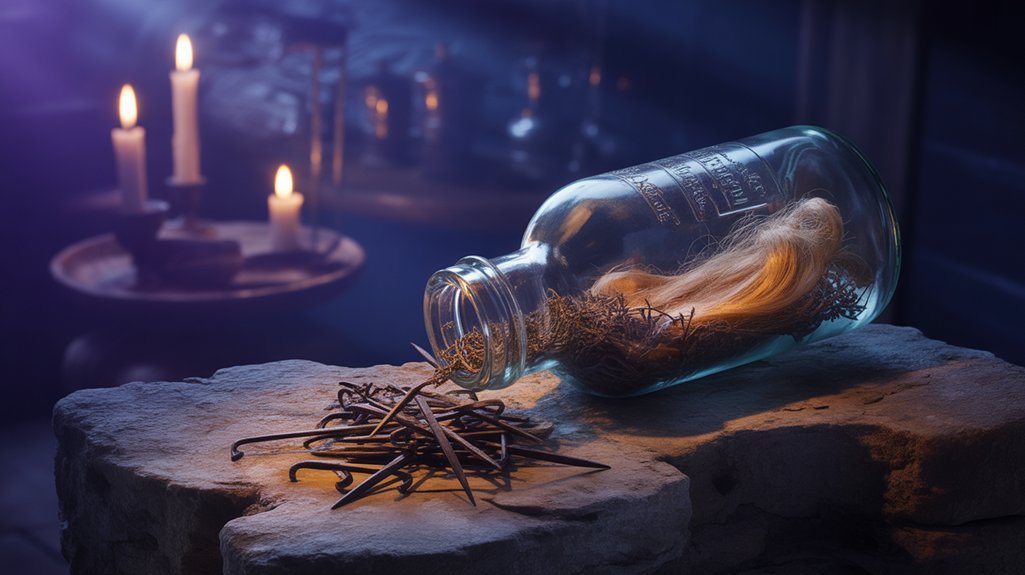
To grasp the significance of creating and using a witch bottle, it’s essential to appreciate the complex fears that early modern communities faced.
With beliefs in witchcraft’s real dangers, limited medical knowledge to explain illness, and a profound desire for control amid uncertainty, burying a bottle wasn’t merely an act of superstition.
Instead, it reflected a rational response to genuine anxieties in a world where natural and supernatural threats blurred together. The practice of witchcraft, often tied to healing rituals, provided a means for individuals to reclaim a sense of agency over their lives amidst chaos.
With this context established, we can explore the intriguing methods and rituals associated with these protective charms.
Root Causes
When I first started exploring the world of magical remedies, I often felt overwhelmed by the complexity of it all. I remember the confusion surrounding ailments like urinary issues. Back then, I didn’t have the scientific understanding we’ve now, so I found myself drawn to the practices of the early modern people—using witch bottles and other folk remedies.
Can you imagine thinking of a bladder infection as a curse instead of a biological issue? It’s a perspective shift that helps us understand why they turned to magical solutions. They mixed urine with pins, nails, and heart-shaped felt to craft counter-spells, believing they could ward off invisible threats. This was a practical response to very real suffering.
Ready to try something grounded? Here’s a simple ritual for your own witch bottle. Start with a small glass container—something that feels right to you. Fill it with a bit of your own urine, if you’re comfortable, or use water as a stand-in. Add a few pins or nails. These items hold power in sympathetic magic; they represent your intent to pierce through negativity.
Seal it tightly and keep it somewhere you feel is safe, perhaps under your bed or in a special place in your home.
As you work with this, remember: Trust the process. It mightn’t yield immediate results, and that’s okay. Some practitioners swear by these methods, while others may not feel the same connection. That’s valid.
What I wish I’d known: Not every ritual works for everyone, and that’s part of the journey. It’s important to explore what resonates with you. After years of making my own witch bottles, I found that the intention behind the process often mattered more than the specific ingredients I used.
As you dive into this, keep in mind the cultural roots of these practices. They’re rich with history, so approach them with respect. If you’re curious about the traditional meanings of the items you choose, seek out reliable sources or talk to experienced practitioners.
And a quick safety note: if you’re using any herbs or other materials, make sure to check for any personal allergies or interactions with medications. Always prioritize your well-being.
Contributing Factors
The witch bottles you might’ve heard about from early modern England aren’t just quirky artifacts. They sprang from a mix of community beliefs, medical struggles, and real fears. If you take a closer look, they really came alive during tough times:
- Political instability made people anxious, leading them to seek supernatural reasons for their troubles.
- Agricultural failures left many communities reeling, searching for scapegoats and magical answers.
- Medical inadequacies pushed both doctors and patients to look for explanations that felt out of reach.
- Immigration patterns carried East Anglian folk practices to new places, blending traditions.
These factors didn’t just exist side by side. They connected to make the idea of protective magic feel reasonable, even comforting. I remember the first time I created a protective charm—it was more than just a ritual; it felt like a shield when everything else seemed unreliable.
So, what can you take from this? If you’re feeling overwhelmed or lost, consider making your own witch bottle. Start simple. Gather a small jar, some salt for protection, herbs that resonate with you, maybe even a personal item like a hair or a small note. Bury it somewhere meaningful. It’s a straightforward practice that can offer a sense of security.
Remember, there’s no one right way to do this. Trust your instincts. That’s enough for now.
As you explore this tradition, keep in mind that the witch bottle’s purpose was to provide psychological relief in times of distress. When conventional methods fall short, these tangible defenses can feel empowering. Just as I’d to learn, this won’t work for everyone, and that’s perfectly okay.
Try this tonight: Find a quiet spot, gather your materials, and create your own protective charm. Feel the intention behind each item you choose. What do you want to protect? What energy do you want to invite into your space?
And a little tip from my experience: I wish someone had told me to be patient with myself. Magic can take time, and you mightn’t see immediate results. That’s part of the journey.
As you continue, remember the rich history behind these practices. Witch bottles were born from a time when people needed something tangible to hold onto. They served as a bridge between fear and comfort, a way to reclaim some power in uncertain circumstances.
What do you think? Ready to explore this further?
What the Research Says
Scholars largely agree on the geographic distribution and basic function of witch bottles as protective talismans, with nearly 200 documented British examples compared to fewer than 12 in America.
However, the uneven persistence of these practices across regions and social classes raises intriguing questions. Did colonial practitioners see them as genuine folk magic or merely as remnants of superstition?
As we explore the significance of witch bottles, consider whether they served primarily as psychological comfort objects or as serious spiritual defenses believed to counteract witchcraft’s harmful effects.
Key Findings
Key Findings
Ever felt that nagging worry about unseen forces when illness strikes? I remember those moments all too well. Archaeological and historical research shows that witch bottles were more than just curious relics. They were once genuine protective artifacts, born from the real anxieties of the 17th and 18th centuries surrounding witchcraft and health. You can find nearly 200 authenticated examples throughout Great Britain, especially in Southern and Eastern England.
What’s fascinating is that physicians of the time endorsed these sympathetic counter-spells, treating them as legitimate medical interventions. The contents of these bottles—bent pins, nails, urine, and thorns—were cleverly placed beneath house floors and hearths, intended to redirect harm back to those suspected of witchcraft.
In my practice, I see this blend of folk wisdom and formal medicine a lot. It reminds us that when conventional treatments fall short, communities often craft their own protective measures. This isn’t just superstition; it’s a calculated response to very real health concerns.
Ready to Explore?
If you’re curious about creating your own protective charm, let’s dive into a simple practice you can try tonight. Gather a small container—something like an old jar or a small pouch—and fill it with items that resonate with your intention.
Think about what you want to protect yourself from. Maybe it’s negative energy, stress, or even just the chaos of daily life.
Fill your container with a few grounding items: a pinch of salt for purification, a sprig of rosemary for protection, and perhaps a small piece of black tourmaline or another protective crystal. As you do this, focus on your intention.
What I wish I’d known as a beginner is that it’s all about your personal connection to these items. Trust your instincts. Start there.
Engaging with Tradition
These witch bottles serve as a bridge between folk practices and what we might consider formal medicine today. They’re tangible reminders that human beings have always sought ways to protect themselves.
Some practitioners might dismiss these practices as mere superstition, but I’ve found that they often hold deep historical significance.
As you explore this, remember: not every tradition will resonate with you, and that’s perfectly okay. Be patient; results can vary. Some practitioners have differing opinions, and that diversity is part of the beauty of our paths.
Next Steps
As you reflect on your own protective practices, consider sourcing your materials ethically. Look for herbs that are sustainably harvested and crystals that come from ethical mines. It’s an important part of honoring the traditions we engage with.
Try crafting your protective charm tonight. Set aside a moment to focus on your intention, and don’t rush it. Remember, this practice is about connection—not just to the items, but to your own intuition.
What’s your first step going to be?
Where Experts Agree
Understanding Witch Bottles: A Beginner’s Guide
Ever stumbled upon something in folklore that made you pause? Witch bottles might just be one of those intriguing bits of history that blend the mystical with the practical. After years of working with traditional practices, I can tell you this: witch bottles aren’t just relics of the past. They come from a rich tapestry of 17th-century England, especially in places like East Anglia, and carried over to colonial America.
These bottles weren’t merely superstitious oddities. They were heartfelt responses to the medical challenges of their time. When doctors couldn’t explain ailments—like bladder stones or urinary troubles—people turned to community-crafted counter-spells. They’d gather symbolic materials like nails, urine, and thorns, believing that heat could redirect those pesky symptoms back to the accused witches. It’s a fascinating intersection of belief and health concerns, don’t you think?
If you’re curious to explore this further, try creating your own simple witch bottle tonight. Gather a small glass bottle, some salt, a few nails, and a piece of paper where you write down your intention or a protective spell. Seal it tight. Place it somewhere safe in your home. Start there. It’s a grounding way to connect with this ancient practice.
The Historical Context
In my practice, I often reflect on how these bottles represent a sophisticated folk-medical system. They illustrate a time when the line between the supernatural and the tangible was much blurrier.
Archaeological finds have confirmed this narrative, with bottles discovered in hearths and hidden beneath floors or near doorways. Each find tells a story, showing that communities sought to reclaim their health through these meaningful rituals.
This won’t work for everyone, and that’s completely okay. Some practitioners might have different interpretations based on their backgrounds or experiences, and that’s valid. What I wish someone had told me early on is that it’s perfectly fine to blend your personal insights with traditional knowledge.
Creating Your Own Witch Bottle
Ready to try? Here’s a quick step-by-step guide for crafting your own witch bottle:
- Gather Your Materials: You’ll need a small glass bottle, salt (for protection), nails or pins (to symbolize binding), and a piece of paper.
- Set Your Intention: Write down what you want to protect against or manifest. This could be something personal or a general protective spell.
- Layer Your Ingredients: Start with a layer of salt, add your nails or pins, then fold your intention paper and place it inside.
- Seal It Up: Close the bottle tightly. If you want, you can add a few drops of essential oil or herbs that resonate with your intention.
- Find a Safe Spot: Place your bottle somewhere meaningful in your home, like by the front door or on an altar.
Take a moment to sit with it. Ever felt that sense of connection to history? Trust the process, and know that every step you take is part of your own journey in this practice.
A Final Thought
As you explore witch bottles and their rich history, remember that this practice comes from a deep tradition. Be mindful of sourcing materials ethically—look for sustainably harvested herbs or ethically mined crystals.
And always consult a healthcare provider before ingesting any herbs or making significant changes to your wellness routine.
Embrace this beautiful blend of past and present. You’re not just creating a bottle; you’re connecting with a lineage of practitioners who sought to bridge the gap between the seen and unseen. Happy crafting!
Where They Disagree
As I navigated my early days in witchcraft, I often found myself puzzled by the artifacts and traditions that surrounded me. Ever felt that? It’s easy to get overwhelmed when you start digging into the history of things like witch bottles. You’ll discover that even seasoned practitioners and scholars can’t agree on what they really are.
The term “witch bottle” is a modern label, and that’s a crucial point to grasp. Back in the day, these vessels weren’t called that—they served various purposes, which can make understanding their true intent tricky. Some folks see them as healing tools for those who’ve been bewitched, while others argue they were used to counteract witches. What’s your take on it?
The origins are all over the place, ranging from the sixteenth to the eighteenth century, depending on where you look. Evidence varies dramatically, and that can lead to confusion. As you explore, keep in mind that what one person sees as a healing object, another might interpret as an offensive tool.
And what about the contents? You might come across debates about what’s considered authentic versus what’s misidentified. This is where it gets personal. I’ve learned the hard way that relying solely on physical evidence can skew our understanding. Pairing material findings with thorough textual analysis gives you a more rounded view.
If you’re eager to explore this further, here’s a simple practice to try tonight: gather a small jar, some herbs, and a few personal items that represent your intentions—maybe a pinch of salt for protection or a sprig of rosemary for healing. As you fill the jar, think about what you want to manifest or protect against. Seal it with a candle, but make sure it’s in a fire-safe container and never leave it unattended.
Trust the process. It’s all about your interpretation and connection to these practices. What I wish I’d known as a beginner is that it’s okay to question everything and find your own path.
As you dive into these traditions, remember to approach them with respect and curiosity. Some practices come from closed or semi-closed traditions, so if you’re unsure, seek guidance from practitioners within those communities.
And if you’re using herbs or crystals, always consider where they come from—ethical sourcing is key.
Practical Implications
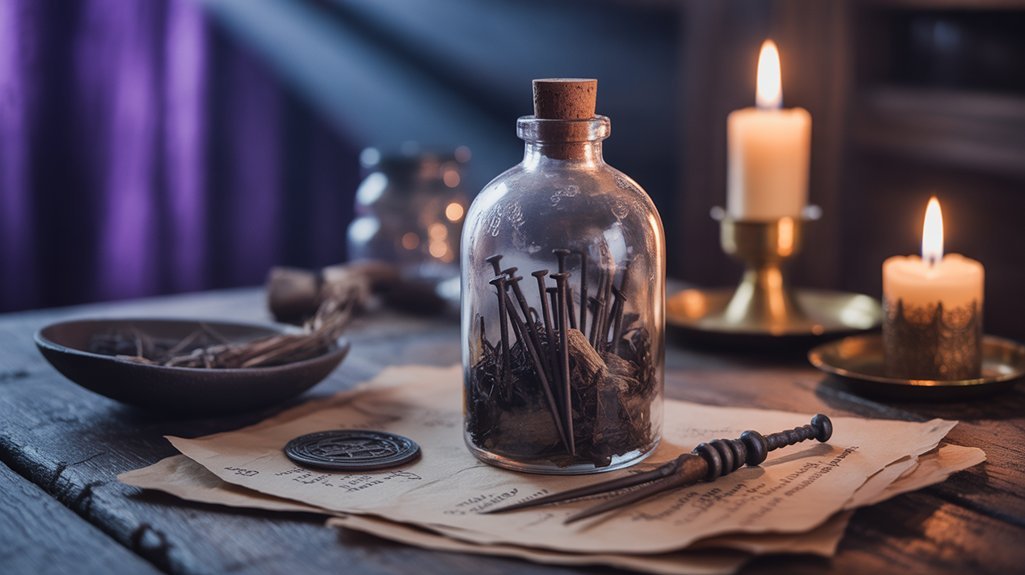
If you’re interested in creating a witch bottle based on historical practices, you’ll want to gather personal items like hair and nail clippings, then seal them in a ceramic vessel before burying it near your home’s threshold or hearth.
Remember, these bottles weren’t meant for display; their protective power historically relied on concealment, with the belief that a sealed container could trap or reverse harmful spells.
With that understanding of their purpose, consider what challenges or fears you might be facing today that this folk magic could address.
While witch bottles served a genuine remedial function for those grappling with bewitchment fears in early modern communities, they embody a rich tapestry of folk magic traditions rather than scientifically validated solutions. Additionally, the healing practices of witchcraft have often been interwoven with personal items to enhance their effectiveness.
What You Can Do
You know, when I first started exploring protective magic, I was overwhelmed by all the rules and ancient traditions. I remember feeling unsure about how to adapt these practices to my own space. If you’ve ever felt that way, you’re not alone.
Let’s talk about creating witch bottles in a way that honors history but feels right for you today.
Here’s a simple way to dive in tonight: start with a sustainable container. Think about using a recycled glass jar or eco-friendly stoneware. It’s a small step that reduces waste while keeping the essence of your practice intact. Start there.
Next, let’s curate the contents. Layer protective herbs—like rosemary or sage—with items that personally resonate with you. Maybe it’s a piece of jewelry or a handwritten note with your intentions.
What’re you hoping to protect? Make it personal. It’s not about following a strict formula; it’s about your unique energy.
When you’re ready to place your bottle, think strategically. Try positioning it at the boundaries of your property or near thresholds where you feel vulnerable. This can be a powerful way to create a protective barrier.
Now, here’s something I wish I’d known as a beginner: document your practice. Keep a journal of when you create each bottle, what you included, and where you placed it. This isn’t just for you; it bridges the gap between ancient practices and our modern lives.
Plus, it can be fascinating to look back on your journey.
As you work on this, remember: not every method will resonate with you, and that’s okay. Some practitioners might’ve differing opinions, and that’s valid.
Be patient with yourself—results can vary.
Ready to give it a go? Let me know how it feels!
What to Avoid
When I first started my practice, I was eager to dive in, but I stumbled a few times along the way. One thing I learned pretty quickly is that while personalizing your approach is essential, it’s equally crucial to understand the lessons of the past.
Ever heard about the 1804 Hepworth incident? It’s a grim reminder of what can go wrong—an iron witch-bottle exploded over an open flame, tragically taking the life of its user. That kind of mistake can happen to anyone, so let’s avoid it together.
If you’ve got sealed containers lying around, think twice before burying them. You don’t want to be surprised by what you dig up later—disturbed bottles from places like 2004 Greenwich and the 1670s Holywell can still rattle with their original contents. That’s a lot to deal with!
And please, don’t mishandle hazardous materials. Trust me, centuries-old urine and rusty nails aren’t something to mess with unless you know what you’re doing. If you happen to unearth a witch bottle during renovations, keep those stoppers intact. It’s better to contact archaeologists than to risk disturbing what’s inside.
Recommended for You
🛒 Witchcraft Books For Beginners
As an Amazon Associate we earn from qualifying purchases.
What I wish someone told me when I was starting out is that improper replication can lead to unpredictable outcomes. Deviating from historical methods can compromise your effectiveness, so stick to the tried-and-true.
Remember, it’s all about respecting both traditional practices and modern safety standards.
Ready to try something tonight? If you’re curious about witch bottles, consider making a simple one with safe materials. Use a small glass jar, fill it with herbs that resonate with your intentions—like rosemary for protection or lavender for peace—and seal it tightly. Just be cautious where you place it.
Take your time, and trust the process. There’s no rush to get it all right. You’ve got this.
Comparison of Approaches
Ever felt the pull of the unseen, wondering how to protect yourself from those pesky energies? I remember starting out, feeling overwhelmed by choices and traditions. But here’s the beauty of witch bottles: they’re incredibly adaptable to your needs and circumstances. Let’s explore how you can make this practice truly your own.
You’ll find that practitioners throughout history have tailored their witch bottle construction to reflect local customs and available materials. For instance, look at the table below. Each approach highlights different ingredients and burial methods based on what was common in the area.
| Approach | Key Materials | Primary Location |
|---|---|---|
| English 17th-century | Hair, nails, pins, bellarmines | Hearths, thresholds |
| American 18th-century | Specialized contents | Domestic structures |
| Modern protective | Herbs, glass, pins | Doorways |
In my practice, I’ve seen how these regional variations shape our defenses. Different communities prioritized unique ingredients based on their experiences with bewitchment. It’s like a recipe — you mix what feels right and what’s available.
For example, English practitioners often used hair and nails, while Americans got creative with whatever they had around. The first time I tried making a witch bottle, I scavenged herbs from my garden and found an old glass jar. That simplicity felt powerful.
Here’s a practical step: gather materials that resonate with you. Maybe it’s herbs for protection or items that hold personal significance. Then consider where to place your bottle. Burying it inverted or leaving it at your doorstep can reflect your unique intention.
Ready to try? Think about what you’re defending against or what energy you want to invite. Reflect on your local environment and how that influences your choices. It’s about blending tradition with your own intuition.
As you explore this practice, remember that it’s a journey. Some practitioners might have differing opinions on the best ingredients or methods, and that’s perfectly okay. Trust your instincts.
What I wish I’d known as a beginner is that it’s less about perfection and more about intention. Start with what feels right for you, and let your bottle evolve over time. There’s no one-size-fits-all in this craft, so allow yourself the grace to experiment.
Now, if you’re feeling inspired, here’s a simple practice for tonight: Find a small glass jar, gather a few items that feel protective to you — maybe some salt, herbs, or even a small piece of jewelry that holds meaning.
As you fill your jar, focus on your intention. What do you want to shield yourself from? Seal it up and find a spot that feels right to you for placement. Maybe it’s near your front door or tucked under a plant. That’s enough for now.
Trust the process, and enjoy the journey ahead!
Key Takeaways
Witch bottles are one of those fascinating practices that really connect us to our ancestors. I remember my first encounter with them—it felt like stepping into a world where every object had a purpose, a story, and a bit of magic. Ever felt that urge to put your worries into something tangible? That’s what witch bottles do.
These simple, yet profound artifacts can be a grounding tool in your practice. They’re not just relics of the past; they’re practical ways to address fears and anxieties, much like many of us do today. So, let’s explore what makes them special and how you can create your own.
Witch bottles serve as grounding tools—practical ways to transform fears and anxieties into tangible, meaningful ritual objects.
Key Takeaways
- Adaptive Problem-Solving: Communities crafted these bottles when they felt abandoned by those in power. If you’ve ever felt helpless, you might relate. Making a witch bottle can empower you to take back some control.
- Psychological Resilience: When fear and uncertainty loom, a ritual object like a witch bottle can offer comfort. I learned this the hard way—having something to focus on helped me through tough times.
- Cultural Persistence: Over centuries, these practices have evolved but remain meaningful in folk traditions. There’s something powerful about connecting with those who walked the same path before us.
- Historical Documentation: Finding witch bottles in archaeological digs backs up what we’ve read about them. They’re tangible proof that people have sought protection through ritual for ages.
Let’s Create Your Witch Bottle
Ready to try making one? Here’s a straightforward way to get started tonight.
- Gather Your Materials: You’ll need a small glass bottle (like a jar), some herbs (like salt for protection or rosemary for clarity), and a piece of paper.
- Set Your Intention: Think about what you want to protect yourself from or what fear you want to address. Be specific.
- Write It Down: On your piece of paper, jot down your intention or fear. This is your focus.
- Fill the Bottle: Layer your herbs in the bottle, adding your paper last. As you do, visualize your intention being absorbed by the herbs.
- Seal It: Use a cork or a lid to seal the bottle. You can even wrap it in a cloth to keep it close to you.
- Placement: Keep it somewhere safe in your home, like a windowsill or your altar.
Reflect on Your Experience
After you’ve made your bottle, take a moment to sit with it. What feelings come up? Trust the process. Sometimes, it’s the act of creation that brings clarity.
And remember, this won’t work for everyone, and that’s okay! Be patient with yourself as you navigate your journey. Some practitioners might’ve differing views on witch bottles, and that’s valid—everyone has their unique path.
What I wish I’d known as a beginner is that it’s less about perfection and more about intention. Your witch bottle doesn’t have to be flawless; it just needs to resonate with you.
Frequently Asked Questions
How Do I Create My Own Witch Bottle for Home Protection Today?
Q: How do I create my own witch bottle for home protection?
Yes, you can create a witch bottle for protection easily. Start by gathering a glass jar, personal items like hair or nails, and symbolic objects such as bent pins and red thread.
Fill the jar with these elements, seal it tightly, and bury it near your home’s entrance or foundation. Always approach this practice with respect for its origins, and if you’re unsure, consider consulting with practitioners of relevant traditions.
Q: Can I use modern substitutes in my witch bottle?
Yes, you can adapt traditional ingredients for your witch bottle. Instead of using urine, try herbal infusions that resonate with your intentions.
This modern twist honors historical practices while aligning with today’s spiritual preferences. Just remember to research the herbs you choose to ensure they’re safe and suitable for your intentions, especially if you have any allergies or sensitivities.
Q: What should I do if I’m unsure about the items I want to include?
It’s perfectly okay to feel unsure about what to include. Start with items that hold personal significance or represent your intentions.
As you build your bottle, trust your intuition about what feels right. If you’re exploring closed practices, seek guidance from knowledgeable practitioners to ensure respect and understanding of those traditions.
Where Can I Purchase Authentic Historical Witch Bottles or Replicas?
Q: Where can I buy authentic historical witch bottles?
Yes, you can find authentic options through the Museum of London Archaeology Service and heritage sites like York’s visitor centers.
These places often offer genuine artifacts or replicas based on archaeological findings, ensuring you’re getting something meaningful.
Q: Are there modern replicas of witch bottles available?
Yes, you can explore Etsy and eBay for handcrafted replicas.
Many independent artisans create historically accurate versions, often using traditional techniques.
Just make sure to read reviews and check for authenticity to ensure you’re purchasing quality items.
Q: What about kits for making my own witch bottles?
Yes, many pagan supply stores offer customizable kits for crafting your own witch bottles.
These kits can be a fun way to express your intentions.
Always follow safety guidelines, especially when using herbs or other materials, and consult a healthcare provider if you’re unsure about any ingredients.
Q: Are there any places in Colonial America that sell replicas?
Yes, Colonial America museums in New England often stock certified replicas of witch bottles.
These items are crafted based on historical evidence, giving you a connection to the past.
It’s a great way to support local history while adding to your collection.
Are Witch Bottles Associated With Specific Cultural Traditions Beyond European Folklore?
Q: Are witch bottles only found in European traditions?
No, witch bottles have spread beyond European origins. You’ll find them in American Conjure and Hoodoo practices.
To start, research how these traditions incorporate witch bottles for protection. Remember, it’s essential to learn from practitioners within these cultures to respect their practices and history.
Q: How do I use a witch bottle for protection?
Yes, you can use a witch bottle for protection. Begin by gathering items like nails, hair, or herbs that resonate with your intention.
Place them in a container, seal it, and bury it in your yard or keep it hidden in your home. Always be mindful of the cultural context and origins of the practice.
Q: Can I use any herbs in my witch bottle?
No, not all herbs are suitable. Each herb has specific properties, so research which ones align with your intention for protection.
When using herbs, make sure you’re aware of any allergies or health issues. Consult a healthcare provider if you’re unsure about their use.
Q: Are there any safety concerns when creating a witch bottle?
Yes, safety is important. If you’re using sharp objects like nails or glass, handle them carefully to avoid injury.
If you’re incorporating candles, keep them away from flammable materials and never leave them unattended. Always prioritize your safety while practicing.
Do Modern Practitioners Report Experiencing Measurable Effects From Witch Bottles?
Q: Do witch bottles really have measurable effects?
No — this is a common misconception because witch bottles are more about personal belief than scientific validation. Many practitioners feel a sense of safety or empowerment from them.
If you’re interested in trying one, focus on the intention behind your creation. Just remember, always prioritize safety when using glass or sharp objects, and consult a healthcare provider if you’re using any herbs or oils.
Q: Can I use witch bottles for spell reversal or protection?
No, you can’t measure spell reversal or psychic protection scientifically. Witch bottles are based in belief systems.
If you want to explore this, consider learning from practitioners in specific traditions to understand their practices fully. Always use caution when handling materials and ensure you’re in a safe environment while working with your bottle.
What Legal Considerations Exist When Burying Witch Bottles on Property?
Q: Can I bury witch bottles on my property?
Yes, but you need to check local ordinances first. Some areas restrict digging near foundations to avoid structural damage.
Make sure to follow any regulations, and if you uncover something archaeological, report it to the authorities. Respect your local laws and traditions to ensure a safe practice.
Q: What should I avoid when making witch bottles?
You shouldn’t use hazardous materials like nails or urine, as there are waste disposal regulations in place.
Stick to safe, natural ingredients. If you’re drawing from a specific cultural tradition, it’s best to learn from practitioners within that tradition to ensure you’re honoring their practices correctly.
Q: Do I need permission to bury witch bottles on historic property?
Yes, if your property is listed as historic, you’ll need heritage consent.
This helps preserve the integrity of the site and respects its history. Always consult local authorities to understand what’s required to keep your practice compliant and respectful of the property’s significance.
Conclusion
Witch bottles remind us of the resilience and creativity our ancestors tapped into when faced with the unknown. Tonight, take a moment to connect with that spirit. Light a single white candle and hold the intention of protection for three minutes. Afterward, journal one sentence about what you felt during that time.
Start there. It’s a simple yet profound way to honor the past and weave your own ritual into the fabric of your life. Trust the process, and know that every small step you take is a testament to your own strength. You’ve got this!
The Complete Book of Witchcraft (Buckland)
The most comprehensive guide to Wicca and witchcraft practices.
Check Price on AmazonChakra Crystal Healing Set (7 Stones)
Seven tumbled gemstones aligned to each chakra — perfect for ritual work.
Check Price on Amazon* As an Amazon Associate we earn from qualifying purchases. Prices and availability may vary.
✨ Align with the stars using Luna’s free astrology tools:
- Today’s Horoscope for All 12 Zodiac Signs
- Get a Free Tarot Reading from Luna
- Generate a Moon-Phase Aligned Spell
- Crystals by Zodiac Sign — Luna’s Encyclopedia
Powered by Luna’s Circle — Free Tarot, Spells & Spiritual Tools
Continue Your Magical Journey
Free Witchcraft Starter Kit
Get 6 free printable PDFs: grimoire pages, moon calendar, spells, crystals, herbs, and tarot journal.
We respect your privacy. Unsubscribe anytime.
Enhance Your Practice
As an Amazon Associate, I earn from qualifying purchases.
🌙 Get a Free AI Tarot Reading
Luna reads the cards just for you — powered by AI, guided by the stars. No account needed.
Draw Your Cards Now ✨Powered by Luna's Circle — AI Spiritual Guidance