


As an Amazon Associate I earn from qualifying purchases.
You know that moment during a ritual when you feel a bit lost, wondering if you’re doing everything right? I remember my first time sprinkling salt, thinking it was just a kitchen item. But tonight, I want to show you how to use salt to amplify your practice. After 10 years of working with it, I can tell you it’s one of the simplest yet most powerful tools out there for protection and purification. So grab some salt, and let’s explore how to bring its sacred energy into your rituals. Start there.
Key Takeaways
- Use sea salt in rituals to purify energy — its natural properties help cleanse spaces and protect against negativity.
- Incorporate black salt for banishing spells — its unique composition enhances the effectiveness of protective work.
- Create salt barriers by placing 1-2 cups in doorways and corners — this simple act fortifies your space against unwanted energies.
- Ground your spiritual practices by using salt during rituals — just a pinch can amplify focus and safeguard your intentions.
- Source salt ethically to honor cultural traditions — this respect strengthens your practice and avoids appropriation.
Introduction
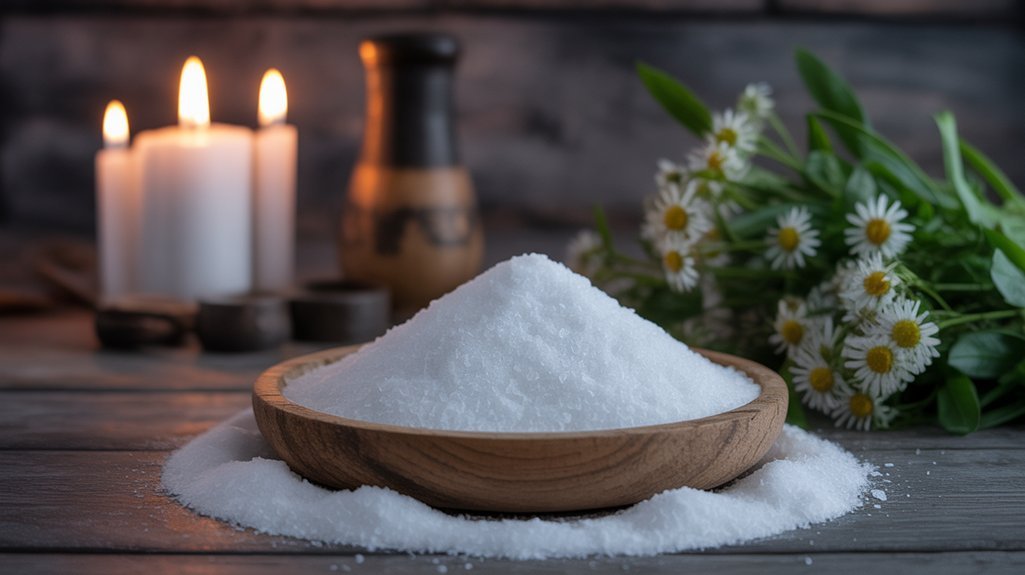
Ever had a moment when you felt a little off, like something just wasn’t right? I remember those times early in my practice, when I’d reach for salt without truly understanding its significance.
Salt isn’t just something we sprinkle on our food; it’s a powerful ally in our magical work, steeped in tradition across cultures. From Ancient Egypt’s mummification rituals to Shinto ceremonies, salt has been a vital tool for protection and purification.
Here’s a quick practice you can try tonight: grab a small bowl of salt. As you hold it, think about what you want to cleanse or protect in your life. This simple act connects you to centuries of practitioners who’ve done the same.
What makes salt so special in witchcraft? For starters, it’s incredibly versatile. You can use it defensively against negative energies, ceremonially to bless your space, or even symbolically to invite abundance.
Whether you prefer sea salt, black salt, or something more exotic like volcanic salt, each type resonates with its own unique energy.
A Personal Touch
In my practice, I learned the hard way that not all salt is created equal. Each variety carries its vibrational frequency that can align with specific intentions.
Sea salt, for example, is great for cleansing, while black salt often serves as a barrier against negativity. It’s all about what you need at that moment.
Have you ever felt the difference in energy when using different types of salt? Trust me, it’s real. Start there.
Practical Application
To incorporate salt into your magical practice, consider these simple steps:
- Cleansing Your Space: Create a salt circle around your workspace. This can help to keep out unwanted energies. Just remember to ground yourself afterward—sweep it up and dispose of it respectfully, or return it to the earth.
- Protection Jars: Mix salt with herbs or crystals in a jar to create a protective talisman. Think about what you want to safeguard—your heart, home, or personal energy.
- Ritual Bath: Add salt to your bath for a purifying soak. Just be careful if you have sensitive skin, and always rinse afterward.
- Meditation Focus: Use a small container of salt as a focal point during meditation. Visualize it absorbing negativity while you breathe deeply.
What I wish someone had told me as a beginner is that it’s okay to experiment. Not every practice will resonate with you, and that’s perfectly valid.
Be patient—results vary, and this won’t work for everyone.
Respecting Traditions
While salt is a common element, remember that some practices come from closed or semi-closed traditions.
It’s always wise to seek guidance from those who are part of those cultures. Respect the roots of these practices and approach them with an open heart.
Safety First
Always prioritize safety in your practice. If you’re using candles with your salt, make sure they’re in fire-safe containers and never leave them unattended.
And if you’re thinking about ingesting herbs, consult a healthcare provider first—some can interact with medications or pose risks during pregnancy.
Next Steps
As you explore salt in your magical practice, take a moment to reflect on its significance.
What does it represent for you? Start small, and let your intuition guide you.
Tonight, take a few minutes to create a salt cleansing ritual. You might be surprised by what you discover. Trust the process and enjoy this age-old connection to the earth and your own energy.
The Problem
Navigating these conflicting traditions raises critical questions about the role of salt in contemporary practices.
What happens when practitioners, caught between historical and modern interpretations, attempt to engage with these rituals?
As we explore the implications of these contradictions, we’ll uncover the heightened risks faced by marginalized communities, particularly in the context of colonial legacies that continue to influence perceptions of magic and witchcraft.
Why This Matters
As I reflect on my early days of practice, I remember how lost I felt navigating the basics. One thing that stood out was the role of salt—something so simple yet powerful. Ever felt that? It’s easy to overlook, especially as industrialization and urban life push sacred traditions aside. But trust me, reclaiming the significance of salt can ground you in your practice.
Let’s start tonight. Grab a small bowl of salt. As you hold it, think about its historical role in witchcraft—how it’s been used for protection, purification, and connection to the divine. This isn’t just about nostalgia; it’s about reclaiming essential tools that keep your practice vibrant.
When you skip salt rituals, you might find your tools feeling unclean, your spaces lacking protection, and your connections to deities not as strong. I learned this the hard way, and it was frustrating. I was left vulnerable to misinformation—like confusing table salt with the black salt used in witchcraft or believing pop culture’s oversimplified take on ghost deterrents.
Salt has roots in many traditions, from Wiccan circles to folk magic. It’s linked to preservation and fertility, and when you let go of these practices, you’re not just losing rituals; you’re losing centuries of wisdom. It’s a bit like abandoning a map when you’re lost—don’t do that!
Now, let’s be practical. Try this simple cleansing ritual tonight:
- Light a candle in a safe container (never leave it unattended).
- Sprinkle a circle of salt around the candle.
- As you do, visualize any negative energy being absorbed by the salt.
- Sit quietly for a few moments, breathing deeply, and feel the protective barrier forming.
This grounding practice is straightforward but powerful. Just remember: results can vary, and that’s okay.
Now, let’s pause. Have you ever felt unprotected during your work? Reclaiming salt’s role can help with that. It’s about creating a safe space for yourself—physically and energetically.
In my experience, using salt ethically matters too. Source it mindfully, whether it’s from local markets or sustainable suppliers. Some practitioners prefer sea salt for its natural energy, while others might use Himalayan pink salt for its unique properties. Both are valid—just make sure you’re choosing wisely.
What I wish someone had told me back when I was starting out is that these practices are yours to shape. You don’t have to follow every tradition to the letter. Feel free to explore, but always respect the origins of the practices you incorporate.
Who It Affects
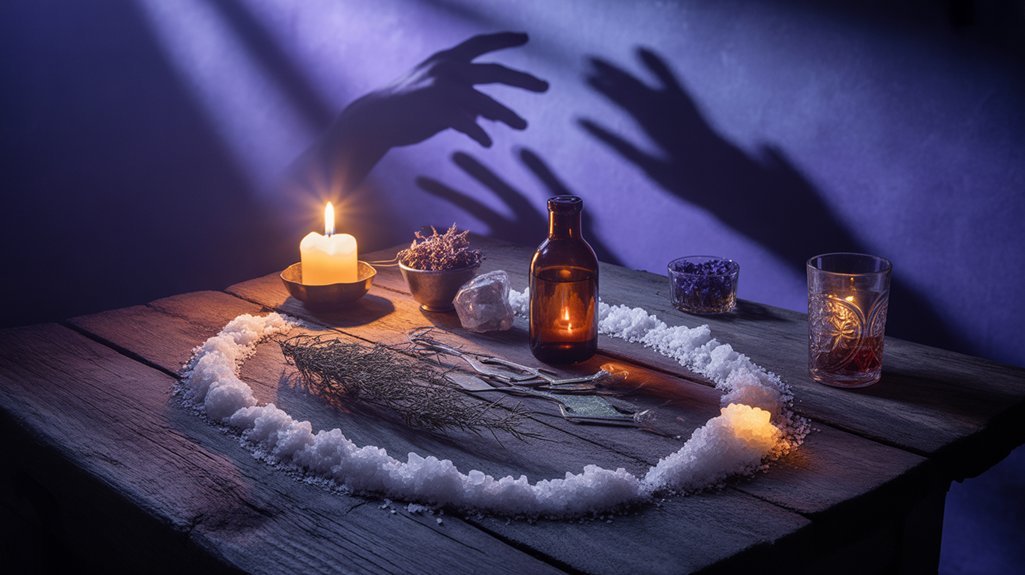
Neglecting salt in your spiritual practice can have some real consequences, and I’ve learned that the hard way. It’s like leaving a door wide open—your protective barriers start to crumble, and you become vulnerable to unwanted energies. Ever felt that? I remember the first time I skipped using salt in a spell. It didn’t go well.
Salt is a fundamental ingredient across many traditions. For Wiccans, it grounds you to the Earth element. If you’re into Hindu or Jain practices, skipping salt might invite spiritual impurities into your rituals. Even Shinto business owners often use salt to create protective barriers—it’s a simple but powerful tool.
So, what does this mean for you? Without salt, your spell bottles, foot soaks, and banishing rituals mightn’t work as intended. Your sacred space can feel a bit off, almost like there’s a heaviness in the air. You might even notice negative energies starting to creep in.
Try this tonight: Grab some salt—sea salt, kosher salt, or even pink Himalayan salt will do. Create a small dish and place it in your main living area or workspace. This simple act can help set a protective tone. Start there.
I can’t stress enough how vital it’s to respect the cultural roots of these practices. If you’re exploring traditions that aren’t your own, reach out to practitioners for guidance. It’s about honoring where these practices come from.
As you dive deeper, remember the risks. I’ve faced hexes, emotional negativity, and even the Evil Eye when I wasn’t careful. You might feel more exposed without those salt defenses.
And let’s not forget about your home’s energetic seal—it can weaken, allowing intrusions from unwanted energies.
Quick tip: If you’re creating a protective salt boundary, make sure you’re using ethically sourced salt. I always look for brands that prioritize sustainable practices.
As you incorporate salt into your spiritual work, think about how this connects to your personal experience. What I wish someone had told me when I started is that it’s okay to experiment and find your own way.
Salt is versatile; it’s not just a protective agent but also a connector to the Earth.
So, as you blend these practices into your routine, trust the process. Results may vary, and that’s completely valid. Some practitioners swear by it while others mightn’t find it effective. What matters is finding what resonates with you.
Ready to give it a go? Start with that salt tonight and see how it shifts your space. You might be surprised by the difference it makes!
The Explanation
To grasp why salt holds such a significant place in witchcraft, it’s essential to connect its unique properties and historical value to the rituals and practices that follow.
As we explore how these qualities have been woven into the fabric of various traditions, we’ll uncover the fascinating ways practitioners harness salt’s energy and symbolism for protection and spiritual work.
What unfolds next reveals the rituals and applications that bring these ancient beliefs to life.
Root Causes
Salt has a special place in many witchcraft traditions, and I remember the first time I realized its power. It’s not just about the rituals or the symbolism; it’s rooted in its real, tangible properties.
If you’re new to this, try this tonight: grab some salt and set it on your altar or workspace. Just let it sit there for a moment. Feel how grounding it is.
So, what makes salt so effective? First, its natural ability to inhibit decay. You can see this in action when you preserve food. It’s about more than superstition; it’s about real, observable science.
Then there’s its crystalline structure. This isn’t just pretty to look at. It creates electromagnetic conductivity. You can use that to direct and channel energy. Ever felt that during a ritual or meditation? It can be empowering.
Finally, think about salt’s mineral density. It can absorb and contain unwanted influences when you use it strategically. Start there. Sprinkle a bit around your space, or create a protective circle.
In my practice, I learned the hard way that salt isn’t just a seasoning—it’s a cornerstone. You’re working with something that straddles both science and spiritual application. This blend makes it indispensable across various traditions.
Remember, though, that this won’t work for everyone. Some practitioners might disagree, and that’s valid. There are many paths, and it’s okay to explore what resonates with you.
As you experiment with salt, think about where it comes from, too. Ethical sourcing matters. Whether you’re buying crystals or herbs, look for sustainable options. This respect for the earth can enhance your practice.
Now, here’s a simple ritual to try:
- Gather your materials: You’ll need a small bowl of salt, a candle, and a quiet space.
- Light the candle: As it flickers, focus on your intention. What do you want to protect or cleanse?
- Sprinkle the salt: Create a circle around the candle while visualizing protection or clarity flowing into your space.
- Sit quietly: Let the candle burn for a while, and feel the energy shift.
This is just a starting point. Trust the process. What I wish someone had told me as a beginner is that there’s no single way to do things. Experiment, and let your intuition guide you.
Ready to dive deeper? There’s a whole world of practices waiting for you to explore. Start with what feels right, and take your time. You’ve got this!
Contributing Factors
Because salt‘s effectiveness in witchcraft comes from a mix of physical and symbolic qualities, it’s essential to explore both aspects to really get why it works.
Ever noticed how salt feels like it has its own energy? Its crystalline structure sets up real energetic boundaries, giving you a tangible tool for protection. Plus, its history as currency and a preservative adds layers of meaning that make it powerful in ritual. You’re working with something that connects the physical world with your intentions.
Here are a few things that can boost salt’s potency in your practice:
- Chemical Composition: Salt interacts with the energy around it. I remember the first time I used salt to create a protective circle — it felt solid and reassuring. Start with a small bowl of salt and place it at the corners of your space for a grounding effect.
- Cultural Reinforcement: Salt has been revered across cultures for centuries. This shared belief can amplify your rituals. Think about how many traditions you’ve come across that use salt. It’s like a collective nod of approval from those who’ve come before us.
- Versatility: Salt isn’t just for one thing. You can sprinkle it in cleansing baths, use it in circle work, or even in burial rituals. Adapt its use to fit your intentions. What’s your goal for the practice tonight?
This blend of physical properties and rich symbolism makes salt a uniquely effective tool for anyone looking to ground their magical work.
Now, let’s take a moment to reflect. Have you ever felt the weight of tradition in your own practice? What I wish I’d known as a beginner is that it’s okay to experiment. There’s no one right way to use salt; your personal touch is what makes it special.
If you’re ready to dive in, try this tonight:
- Gather Your Materials: You’ll need salt (sea salt is great), a small bowl, and a quiet space.
- Create Your Space: Sit quietly and take a few deep breaths. Imagine the energy around you settling.
- Set Your Intention: What do you want to protect or cleanse? Hold that thought as you proceed.
- Sprinkle the Salt: Create a small circle with the salt. As you do, visualize a barrier forming around you.
- Close the Ritual: When you’re done, thank the salt for its energy. Remember to cleanse and dispose of it respectfully.
As you start working with salt, be patient. Results can vary, and that’s totally normal. Some practitioners might’ve different experiences, and that’s valid too.
If you’re feeling inspired, take a moment to journal about your experience. What did you notice? How did it feel to set your intention? Trust the process, and remember: your journey is uniquely yours.
What the Research Says
Scholars largely agree that salt served as a protective agent across various European, Mediterranean, and indigenous cultures, yet they debate whether this reflects universal human symbolism or independent cultural development.
This discussion raises intriguing questions about the survival of Thursday salt practices. While some argue that the Stoglav Sobor‘s 16th-century condemnation effectively eradicated the tradition, others point to grassroots evidence suggesting its resilience against ecclesiastical suppression.
This tension leads us to consider whether salt’s protective reputation arose from its practical properties, such as preservation and antimicrobial effects, or from its rich symbolic and ritual associations.
As we explore these dimensions, we uncover deeper insights into how cultural beliefs shape everyday practices.
Key Findings
Key Findings on Salt in Witchcraft
Ever had that moment when you felt overwhelmed by negative energy? I sure have. It’s during those times that I turned to salt—a simple yet powerful tool in my practice. Salt isn’t just a seasoning; it’s got protective, purifying, and sacred properties that many traditions value.
You can start using salt tonight. Try casting a small circle with it, or sprinkle some at your doorways to keep unwanted energies at bay. I learned this the hard way: using salt in circles can really help contain your rituals and keep your focus sharp.
Salt’s strength comes from its connection to the earth. It’s a physical representation of grounding energy. Studies show that it can absorb negativity, which is why I always keep a dish of salt out in my space. Just remember to change it monthly to keep its effectiveness.
Practical Tip: Want to cleanse your space? Place a small dish of salt in each room. This simple act can help attract positive energies while repelling the unwanted.
Salt can also be a base for more advanced spellwork. When you’re consecrating talismans or creating protective powders, think about how salt can enhance your intention. It draws in sacred energies while pushing away negativity.
Engagement Break: What’s your experience with salt in your practice? Ever felt its effects?
As you explore salt, remember to consider its origins. Ethical sourcing is important. Look for sea salt that’s sustainably harvested or try crafting your own from natural sources. That way, you’re honoring the earth while you work.
What I wish someone told me as a beginner is that salt is just as much about intention as it’s about the physical substance. You can create a protective powder by mixing salt with herbs that resonate with your intentions. Just be cautious with any herbs you’re using—always check for safety, especially if you’re considering ingestion.
Next Steps: Ready to try this? Gather some salt, a small dish, and your favorite protective herb. Mix them together, and set your intention. You can do this tonight. Trust the process; the more you work with salt, the more you’ll understand its role in your practice.
Where Experts Agree
You know that feeling when you walk into a space and it just feels… off? I’ve had my fair share of those moments, especially when I was starting out. One tool I wish I’d leaned on more back then is salt. It’s not just a kitchen staple; it’s a powerful ally in many traditions, and it’s pretty universally respected for its protective and purifying qualities.
Ready to give it a try? Grab some salt tonight. You can sprinkle it around your space or add it to a bath—it’s an easy, grounding step. Salt’s been used by ancient Egyptians, Shinto practitioners, and even in Aztec rituals, each honoring its ability to absorb negativity in their own way. That consensus across cultures? It’s no accident.
In my practice, I’ve found that salt can create a protective barrier—like a little shield around you. Whether you’re forming a circle for a ritual or just wanting to cleanse your living area, salt can help with that. It’s effective, and trust me, it’s not just about the tradition; it’s about the real, tangible results.
What I wish someone had told me is that salt’s not just a symbol—it actively disrupts unwanted energy. You can use it in powders or charm bags, and its mineral composition really does support your intentions. Start there. It’s simple yet profound.
Now, let’s talk safety. When using salt, especially in rituals, keep your space clear and free of clutter. Also, if you’re mixing it with herbs or other elements, make sure you’re aware of their properties and any potential interactions. Your well-being is the priority.
Ever felt that rush of energy when you set intentions? Salt can amplify that, but remember: this won’t work for everyone, and that’s okay. Every practitioner has a unique relationship with their tools.
If you’re feeling adventurous, try creating a protective salt barrier at your front door. Just take a handful of salt and sprinkle it across the threshold. It’s a practical step that many traditions recommend, and you’ll likely feel the difference in the energy of your space.
Where They Disagree
The witchcraft community can be a bit of a mixed bag when it comes to salt. I remember early on, feeling overwhelmed by the different opinions. Ever felt that? You’ll find passionate debates about what “true” black salt really is. Some traditionalists turn their noses up at dyed rock salt, insisting that using ash and cast-iron scrapings is the only way to capture authentic energy.
In my practice, I learned the hard way that not all black salt is safe to use in food. While Cyprus black salt can add a lovely finish to dishes, most varieties aren’t meant for consumption. Always check the composition before using it in your cooking.
When it comes to spirit work, practitioners are all over the map. Some shy away from salt in their rituals, while others sprinkle it generously into their spellwork. Regional influences add another layer—maybe you’re drawn to Hawaiian salt for its unique energies, or perhaps Mediterranean vibes resonate more with your practice. Start there. Trust your intuition and see where it leads you.
Try This Tonight: Want to explore your own relationship with salt? Grab a small bowl of either sea salt or table salt. Sit quietly with it for a moment. Focus on how it feels in your hands. Does it evoke any particular thoughts or feelings? This simple practice can help you build a personal connection to this foundational ingredient.
While some might argue about the merits of different salts, what I wish someone had told me as a beginner is this: it’s okay to forge your own path. Take the time to understand the traditional uses, but don’t feel boxed in by them. This journey is yours.
As you dive deeper, remember safety first! If you’re using salt in any physical practices, like creating protective circles, always ensure you’re in a safe space. If you’re curious about ingesting herbs or salts, check in with a healthcare provider.
What’s your experience with salt? Have you found a type that resonates with you? Let’s keep the conversation going.
Practical Implications
Incorporating salt into your practice can be transformative, but it’s crucial to avoid common missteps.
So what happens when you actually try this? Understanding the specific applications of different salt varieties—like using black salt to repel negative energy or blessed salt for consecration—can elevate your magical intentions to the next level. Additionally, mastering beginner witchcraft spells can enhance your confidence and effectiveness in using salt for protection.
With that foundation in place, let’s explore how to refine your approach for even greater effectiveness.
What You Can Do
Implementing salt into your witchcraft practice can feel like a game changer, especially when you’re just starting out. I remember how overwhelming it was to choose the right tools. Salt, though, is straightforward and versatile—perfect for beginners. So, let’s dive into some practical ways to make it work for you.
One of the easiest things you can do tonight is create protective barriers around your sacred space. Simply scatter salt across your thresholds, windowsills, or cast it into the corners of your room. This isn’t just about aesthetics; it helps to banish negative energies. Ever felt that heaviness in a room? Salt can help lighten that up.
For cleansing rituals, consider adding salt to magical sprays or even foot soaks before you dive into spellwork. It’s grounding, and trust me, you’ll feel the difference. I learned this the hard way—nothing beats a good cleanse to clear your mind before focusing on your intentions.
Now, let’s talk about using salt as a spell component. You can:
- Mix salt into spell bottles, bags, or herbal pillows for an extra boost.
- Draw magical symbols using thin layers of salt during your rituals. This adds a beautiful, tactile element to your work.
- Blend salt with herbs or vegetables for prosperity and abundance spells. It’s a simple yet effective way to amplify your intentions.
If you’re feeling adventurous, try wearing a consecrated salt amulet for personal protection. It’s a small step that can make a big difference. And don’t forget to sprinkle salt around your bed for a more protected sleep. I can’t tell you how many restless nights I avoided just by doing this.
What I wish I’d known as a beginner? Salt isn’t just a kitchen staple; it’s a foundational tool in your magical practice. Start with these simple steps and see what resonates with you.
Before you go, here’s a quick grounding exercise: take a moment tonight to sit quietly with a small bowl of salt. Close your eyes and visualize your intentions surrounded by that protective barrier. Feel the salt absorbing any negativity. That’s enough. Trust the process.
Keep exploring, and remember: every practitioner’s path is unique. Your experience will shape what salt means to you in your practice.
What to Avoid
I remember the first time I worked with salt. I felt this surge of energy, a promise of protection and clarity. But, oh boy, did I make some mistakes along the way! Ever felt that excitement turn into confusion? You’re not alone. Here’s what I learned: while salt can be a powerful ally, there are definitely some things to steer clear of.
First off, scattering salt carelessly? That’s a no-go. It spreads energy in ways you mightn’t want. Think of it like tossing a handful of seeds into the wind; you can’t control where they land. Instead, be intentional. Ground yourself in your space. Picture where you want that energy to go.
And mixing black salt with water? It sounds tempting, but trust me, this combo can amplify forces that might feel a bit much to handle. I’ve seen things get out of hand when that visualization isn’t crystal clear. You’ve got to be precise.
When it comes to using salt in more intense practices, like offensive magic or curses, tread carefully. These actions can blur ethical lines and sometimes lead to karmic repercussions. I’ve been there, and it’s not a place you want to revisit. What I wish I’d known as a beginner is that our intentions matter deeply.
If you’re thinking about necromancy or possession rituals, I’d advise you to skip the salt altogether. The risks can escalate quickly. Instead, focus on simpler, more grounding practices.
Recommended for You
🛒 Witchcraft Books For Beginners
As an Amazon Associate we earn from qualifying purchases.
Now, let’s talk cleanup. After a salt ritual, don’t forget to clear away the remnants. Leaving those patterns behind can draw in energies you didn’t invite. You want to create a welcoming space, not a chaotic one.
And remember, black salt is powerful. It repels so much that it can isolate you from connections you actually want. It’s all about balance. Approach your salt work with respect and clarity. That’s where the magic lies.
So, if you’re ready to try something tonight, set up a small salt circle. Visualize your intention clearly. What do you want to invite in? Start there. That’s enough.
Your practice will flourish when you honor salt’s power through mindful restraint and intention. And who knows? You might just find that connection you’ve been looking for.
Comparison of Approaches
Across various witchcraft traditions, the use of salt can feel a bit like a journey through a patchwork quilt of cultures and practices. Ever felt that? Each method reflects its origins and the materials practitioners have on hand.
For instance, Eastern European practitioners roast salt with herbs during Holy Week, imbuing it with protection and healing energy. In contrast, Hawaiian witches gather black salt from volcanic evaporation, capturing the island’s essence in their practices. You’ll find Polish Catholics favor blessed Easter baskets instead of home-burning rituals, showcasing how regional preferences shift over time.
| Tradition | Method | Primary Purpose |
|---|---|---|
| Slavic | Roasting with herbs | Protection & healing |
| Hawaiian | Volcanic charcoal addition | Island essence capture |
| Witchcraft | Iron incorporation | Negativity absorption |
What’s crucial here is authenticity. In my practice, I learned this the hard way: salt dyed with artificial colors just doesn’t pack the same energetic punch as charcoal or iron. Your approach should align with what feels natural for you, based on available ingredients and your cultural background. The healing magic of salt is often a reflection of the practitioner’s intent and cultural traditions.
So, whether you’re casting circles, crafting spell bottles, or trying a foot soak, remember you’re adapting salt’s elemental power to fit your unique magical framework. Start there. That’s enough.
Key Takeaways
Key Takeaways on Using Salt in Witchcraft
You know that moment when you’re setting up for a ritual, and you just feel a bit off? I remember those times. It’s like the energy isn’t quite right. That’s where salt can come in handy.
Salt isn’t just a kitchen staple; it’s a versatile ally for protection, cleansing, and grounding your energy. You can get creative with it, blending traditional practices with your own intentions. Ever thought about how salt might enhance your everyday rituals? Here are a few practical ways to incorporate it:
Salt transforms everyday rituals through creative blending of tradition and personal intention, grounding your energy in meaningful ways.
- Adaptive Protection: Create a custom protection barrier using salt. You can use it in various forms—coarse, fine, or even infused with herbs. Trust me, this evolves as your spiritual journey does.
- Layered Cleansing: Different salts can serve different purposes. For instance, Himalayan salt is great for general cleansing, while sea salt can help with emotional release. Experiment with what feels right for you.
- Ritual Spaces: Use salt to define your ritual space. Draw a circle around your area or sprinkle it on your altar. It’s grounding and helps set the tone.
What I wish I’d known as a beginner is that salt’s effectiveness comes from its grounding nature and the respect it holds across cultures. You don’t need to stick to rigid rules. Instead, allow yourself to play with salt’s versatility and discover what works for you.
A Word on Safety and Sourcing
As you explore, remember to stay safe. If you’re using candles in your rituals, always use fire-safe containers and never leave them unattended.
And if you’re incorporating herbs or other natural elements, it’s a good idea to consult with a healthcare provider if you plan to ingest anything. Some herbs can interact with medications or aren’t safe during pregnancy.
When sourcing materials like crystals or herbs, consider ethical practices. Look for ethically mined crystals and sustainably harvested herbs. This respect for the earth can deepen your connection to your practice.
Engaging with Salt
After years of working with salt, I’ve found that there’s no one “right” way to use it. Some practitioners might swear by specific methods, while others might take a more eclectic approach.
That’s okay! Be patient with yourself—results vary, and that’s part of the journey.
Ever felt that pull to try something new? If you haven’t yet, consider this: tonight, set aside a small bowl of salt. Hold it in your hands, close your eyes, and take a few deep breaths.
Ask yourself what you need protection or cleansing from. Visualize the salt absorbing that energy.
Next Steps in Your Practice
As you continue your exploration, remember that personal interpretation is key. Let your intuition guide you.
Maybe you’ll create a simple salt jar for protection, or perhaps you’ll start layering cleansing rituals with different types of salt.
Start there. That’s enough for now. Trust the process, and let salt become a part of your spiritual toolkit. You’ve got this!
Frequently Asked Questions
Can Salt Lose Its Protective Properties if Stored Incorrectly or Exposed to Negative Energy?
Q: Can salt lose its protective properties if I don’t store it correctly?
Yes, improper storage can diminish salt’s protective qualities.
To keep it effective, store salt in a cool, dry place, using airtight containers. This prevents moisture buildup and energy dilution.
Remember, cultural practices around salt vary, so look into traditional methods from your background for deeper insights.
Q: Does negative energy or conflict affect salt?
Yes, salt can absorb negative energy from its environment.
If it’s exposed to conflict or emotional turmoil, its protective abilities may weaken.
To recharge it, place salt in moonlight or bury it in the earth for a day. Always respect the cultural roots of these practices by learning from experienced practitioners.
Q: How can I restore salt’s protective strength?
You can restore salt’s potency by recharging it.
Try exposing it to moonlight, or burying it in soil for a day.
Setting a clear intention while doing this helps reinforce its protective qualities.
Always handle practices with care, respecting their origins and significance in different cultures.
Which Types of Salt Work Best for Different Witchcraft Rituals and Magical Purposes?
Q: What type of salt should I use for protection and cleansing rituals?
Yes, white salt is ideal for foundational protection and cleansing. Start by sprinkling it around your space or in a circle during your rituals.
Just be mindful of its use in certain traditions; learn from practitioners to respect their methods.
Q: How can I use black salt in my rituals?
Black salt is perfect for curse-breaking and banishing work. You can create a protective barrier by placing it at your doorstep or using it in your spellwork.
Remember to wash your hands after handling it, as it can carry intense energy.
Q: What salt is best for prosperity rituals?
Green salt works wonderfully for prosperity rituals. You can mix it with herbs like basil or cinnamon, then place it in a charm bag or on your altar.
Always ensure you’re sourcing your ingredients ethically to honor their origins.
Q: How do I use pink salt for emotional healing?
Pink salt is great for emotional healing. You can use it in baths or as part of a self-care ritual.
Just keep in mind that if you have any health concerns, especially skin conditions, check with a healthcare provider before use.
Q: Can I combine different salts in my spellwork?
Yes, combining red salt with black salt amplifies protective fire energy in advanced spellwork.
Mix them carefully in a small dish or jar during your ritual. Always be sure to research the meanings and uses of each salt to respect their unique properties.
How Do Modern Witches Source Ethically Harvested Salt for Their Spiritual Practices?
Q: How can I find ethically harvested salt for my spiritual practices?
Yes, you can find ethically harvested salt! Start by looking for fair trade certified suppliers who focus on worker rights and environmental care.
Check their transparency regarding sourcing, carbon footprints, and labor practices. Supporting sustainable sea salt operations or innovative lab-created salts helps ensure your practices honor the Earth.
Q: Is it okay to use regular table salt in my rituals?
No, it’s best to avoid regular table salt for spiritual practices. Common table salt often undergoes refining processes that strip it of natural minerals.
Instead, choose sea salt or Himalayan salt from ethical sources. This way, you’re more aligned with the energy you want to invoke.
Q: Can I use essential oils with my salt rituals?
Yes, you can use essential oils, but be cautious. Some oils can cause skin irritation or should be avoided during pregnancy.
Always dilute oils properly and consult a healthcare provider before use. It’s important to prioritize safety while enriching your spiritual practices with scents that resonate with you.
Q: Are there cultural considerations when using salt in rituals?
Yes, some traditions have specific salt practices that are deeply rooted in their culture.
It’s respectful to learn from practitioners of those traditions before incorporating their methods. This way, you honor their heritage while ensuring your practices are meaningful and respectful.
What Happens if Someone Uses Salt Without Proper Intention or Ritual Preparation?
Q: What happens if I use salt without proper intention or preparation?
Yes, using salt without intention can lead to disrupted sleep and a sense of unease.
To start, always set a clear intention before using salt in your practice.
Remember to cleanse the salt beforehand and align your energy with your goals.
It’s essential to respect the rituals associated with salt in various traditions, so consider learning from experienced practitioners.
Are There Cultural Appropriation Concerns When Using Salt From Non-Native Witchcraft Traditions?
Q: Can I use salt in my witchcraft practices?
Yes, salt is a widely accepted ingredient across many witchcraft traditions. To start, choose a high-quality, natural salt like sea salt or Himalayan salt.
Always respect the traditions you’re inspired by, and consider learning from practitioners within those specific paths. Salt is generally safe, but be cautious if you have any health concerns or allergies.
Q: Is there cultural appropriation involved in using salt from different traditions?
No, salt doesn’t belong to any single culture and has been used protectively across numerous traditions.
Focus on sourcing salt sustainably and understanding the specific practices you’re drawn to. It’s important to honor the origins and teachings of those traditions, so seek knowledge from their practitioners when possible.
Conclusion
Salt holds a profound place in witchcraft, symbolizing protection and purity across cultures. Tonight, take a moment to honor this sacred element: fill a small bowl with salt and place it on your altar or a chosen space. Light a single white candle nearby, hold the intention for three minutes, and then write one sentence in your journal reflecting on what you felt during this practice. Start there. Trust the process, and know that by engaging with salt’s energy, you’re deepening your connection to these ancient traditions. You’re on a beautiful path—embrace it with confidence.
Amazon and the Amazon logo are trademarks of Amazon.com, Inc, or its affiliates.
Continue Your Magical Journey
Free Witchcraft Starter Kit
Get 6 free printable PDFs: grimoire pages, moon calendar, spells, crystals, herbs, and tarot journal.
We respect your privacy. Unsubscribe anytime.
Enhance Your Practice
As an Amazon Associate, I earn from qualifying purchases.