
- Key Takeaways
- Introduction
- The Problem
- Why This Matters
- Why This Matters
- Who It Affects
- The Explanation
- Root Causes
- Contributing Factors
- What the Research Says
- Key Findings
- Try This Tonight:
- A Personal Note:
- Moving Forward:
- Where Experts Agree
- Try This Tonight:
- Where They Disagree
- Practical Implications
- What You Can Do
- What to Avoid
- Practical Tip:
- Comparison of Approaches
- Key Takeaways
- Frequently Asked Questions
- How Do Modern Witches Differentiate Between Demons and Other Supernatural Entities?
- What Legal Consequences Did Accused Witches Face for Alleged Demon Collaboration Historically?
- Are There Specific Geographic Regions Where Demon Work Was More Prevalent Among Witches?
- FAQ: Geographic Regions of Demon Work Among Witches
- How Did Religious Institutions Classify and Categorize Different Types of Demons in Witch Trials?
- What Written Grimoires or Texts Explicitly Instructed Witches on Demon Summoning Techniques?
- Conclusion
- Related Posts
- Related Posts
- Related Reading
- Awaken Your Inner Witch
Have you ever felt that tingle of excitement during a ritual, or maybe made a beginner’s mistake that left you feeling a bit lost? Tonight, let’s explore why some witches turn to darker paths, not out of malice, but as a way to push back against oppression. You’ll discover how fear and marginalization can shape spiritual choices in surprising ways. After 10 years of practice, I’ve seen how understanding this can deepen your own journey. So, grab your journal and jot down your thoughts; that’s enough for now. Trust this.
Key Takeaways
- Analyze historical texts like the *Malleus Maleficarum* to grasp how witchcraft was framed as demonic, shaping modern perceptions of spiritual practices.
- Recognize that fear-based narratives from authorities led to self-fulfilling confessions, influencing the behaviors of accused witches and reinforcing societal stigma.
- Empower marginalized groups by exploring how adopting demon-working narratives can serve as a form of resistance against oppressive institutions.
- Study early theological writings by figures like Heinrich Nider to understand how they created lasting associations between witchcraft and demonic forces.
- Consider personal spiritual practices that engage with darker forces, providing a pathway for individuals seeking empowerment outside mainstream religious frameworks.
Introduction
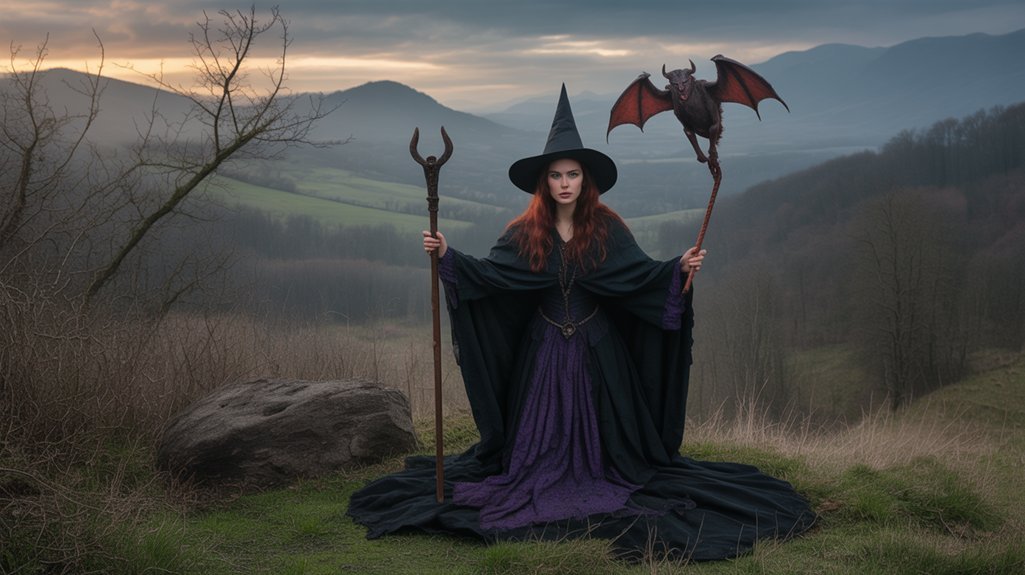
As I look back on my early days in this practice, I remember the swirling mix of excitement and fear. Ever felt that? When medieval fears took shape, accusations of witchcraft didn’t just pop up out of nowhere. They were often aimed at society’s most vulnerable: religious minorities, heretics, Jews, and women. The stereotypes we see today have roots in a blend of pre-Christian practices, folklore about nighttime spirits, and ceremonial magic rituals.
One key text that really influenced this shift was Heinrich Nider’s *Formicarius*, written in the 15th century. It framed witchcraft as devil worship, setting the stage for widespread beliefs that spread like wildfire across Europe. If you look closely, you’ll see cases like Alice Kyteler’s—her accusation echoed older heresy charges, showing how easily fear can morph into persecution.
Heinrich Nider’s *Formicarius* reframed witchcraft as devil worship, fueling persecution across Europe through fear and accusation.
Understanding this evolution is crucial. It reveals how systematic belief systems emerged from marginalization. What I wish I’d known as a beginner is that these stories aren’t just history; they help us understand human nature. They remind us that fear can twist into something destructive. Start there.
Ready to try something tonight? Reflect on your own fears or biases. Grab a journal, and jot down a few thoughts. Write freely—don’t censor yourself. Trust the process; it can be enlightening.
As we dig deeper, remember that every tradition deserves respect. It’s essential to acknowledge that some practices come from closed or semi-closed traditions. If you’re drawn to a specific path, seek guidance from those who walk it.
What I’ve learned over the years is that practices like Norse rune work or Wiccan sabbats, while distinct, share a common thread of connection to the earth and each other. Each offers wisdom, but it’s on us to approach them with care and respect.
For example, if you’re working with herbs, always consult a healthcare provider before ingestion. Some herbs can interact with medications or pose risks during pregnancy. Safety first!
Here’s a practical step: If you’re interested in using herbs, start with something simple like dried lavender. It’s often associated with calm and clarity. You can create a calming sachet to keep by your bedside. Just fill a small cloth bag with dried lavender, tie it securely, and place it under your pillow. That’s enough for tonight.
As you explore these practices, remember: results vary, and that’s okay. Some things won’t resonate with you, and that’s valid too. After years of working with different herbs, I’ve learned that what works for one may not work for another. Be patient with yourself.
Additionally, it’s important to recognize that many myths about witchcraft stem from historical misconceptions that have perpetuated harmful stereotypes.
The Problem
You carry a historical legacy marked by the tragic loss of countless innocent lives, victims of a fear-driven narrative crafted by religious and political elites to maintain their grip on power.
This persecution permeated your ancestors’ lives and shaped the very institutions you engage with today. Recognizing how authorities manufactured panic around witchcraft illuminates the mechanisms behind contemporary scapegoating and mass hysteria. The publication of the Malleus Maleficarum serves as a chilling example of how fear was weaponized to justify such persecution.
What happens when you look closer at these patterns? You’ll uncover striking parallels that echo through time, revealing how fear continues to manipulate societies.
Why This Matters
Why This Matters
Ever felt overwhelmed by the weight of your choices? I remember when I first stepped into the world of witchcraft and the occult. It was exciting, but I quickly learned that what seems like a personal journey can deeply affect not just you, but everyone around you.
When you engage with these practices—whether intentionally or not—you’re opening up to spiritual forces that can be pretty intense. It’s not just about preference; it’s like inviting a storm into your life. Those forces can manipulate, intimidate, and deceive, leading you away from your true self. I’ve seen firsthand how this can corrupt one’s heart and mind, dulling the spirit more than any physical ailment could.
The effects aren’t just personal; they ripple out into your community and beyond. Witchcraft has ways of sneaking into modern life, often disguised as new ideas or innovations. When you use manipulation or coercion, you mightn’t realize you’re partnering with energies that don’t serve your highest good. It’s crucial to remember: you’re not alone in this. Many of us have walked similar paths.
So, what do you do? First, acknowledge these strongholds. Without some form of intervention—like calling on the Holy Spirit or whatever resonates with you—you may feel stuck. The consequences can be generational, blocking blessings meant for your loved ones.
Try this tonight: Take a moment to reflect. Sit quietly with a journal and write down what you wish to release. It could be fear, anxiety, or anything that feels heavy. Trust the process. That’s enough for now.
After years of working with these energies, I’ve learned that breaking free requires more than just desire; it needs deliberate action. Renunciation and confession are powerful tools. If you’re not sure where to start, reach out to a trusted practitioner or community that resonates with you.
What I wish someone had told me as a beginner is that it’s okay to ask for help. There’s no shame in seeking guidance, especially when navigating these complex waters. And remember, everyone’s journey is unique—what works for one mightn’t work for another, and that’s perfectly valid.
Engagement Break: What’s something you’ve struggled to release? Sharing can be a great step towards letting go.
As you move forward, keep in mind the importance of ethical practices. Whether you’re using herbs, crystals, or other tools, ensure they’re sourced responsibly. Look for ethical crystal mining or sustainable herb harvesting. This respect for nature enriches your practice and aligns with the energies you’re working with.
When you step into this path, stay grounded. Look for the connections between your actions and their effects on your life and those around you. This awareness can guide your practice in a way that feels right for you.
Next Step: Try a simple grounding ritual tonight. Light a candle in a fire-safe container, and as it burns, visualize releasing what no longer serves you. This is your space, your moment. Engage with it fully. You’re on a path that many have walked before, and there’s beauty in the journey.
Who It Affects
The rise in witchcraft practice isn’t just a trend; it’s a movement reshaping how many of us seek meaning and community. I remember when I started, feeling a pull away from traditional paths. Ever felt that way? You’re not alone. Many millennials are stepping away from conventional Christianity, leaving a space that practices like witchcraft are beginning to fill.
Women are stepping into this world more than men, and I can’t help but think about the strength and intuition that often guide us. In my experience, the Latino and Hispanic communities have a rich tapestry of beliefs around witches that resonate deeply within their cultures, often more so than in white communities. It’s fascinating, isn’t it?
People with lower education and income levels are also drawn to these beliefs. That’s something I learned the hard way—spirituality can often feel more accessible when traditional structures seem out of reach. This fragmentation in American religiosity is really about finding connection, isn’t it?
Now, let’s get practical. If you’re curious about incorporating witchcraft into your life, start simple. Grab a candle and a quiet space tonight. Light the candle, focus on your intention, and just breathe. Feel that? That’s the beginning of your journey.
The psychic services industry is booming, with a $2 billion valuation showing just how real this is becoming. It’s not just about trends; it’s a tangible shift in how we construct our identities and communities outside institutional religion.
What I wish someone had told me when I was starting is that this journey is uniquely yours. Don’t compare your practice to others’. Trust the process.
If you’re ready to dive deeper, here’s a tip: look into the correspondences of herbs and crystals. After years of working with herbs, I’ve found that each has its own energy and traditional associations. Just remember—if you’re considering ingestion, always consult a healthcare provider.
And don’t forget about sourcing. Ethical harvesting of herbs and crystals is crucial. There’s power in being mindful about where your materials come from. It respects the tradition and the earth.
So, what’s your next step? Maybe it’s trying a simple ritual tonight or researching an herb you’re curious about. Just remember, this won’t work for everyone, and that’s okay. Be patient with yourself.
Trust me, the path of exploration is what makes this journey worthwhile.
The Explanation
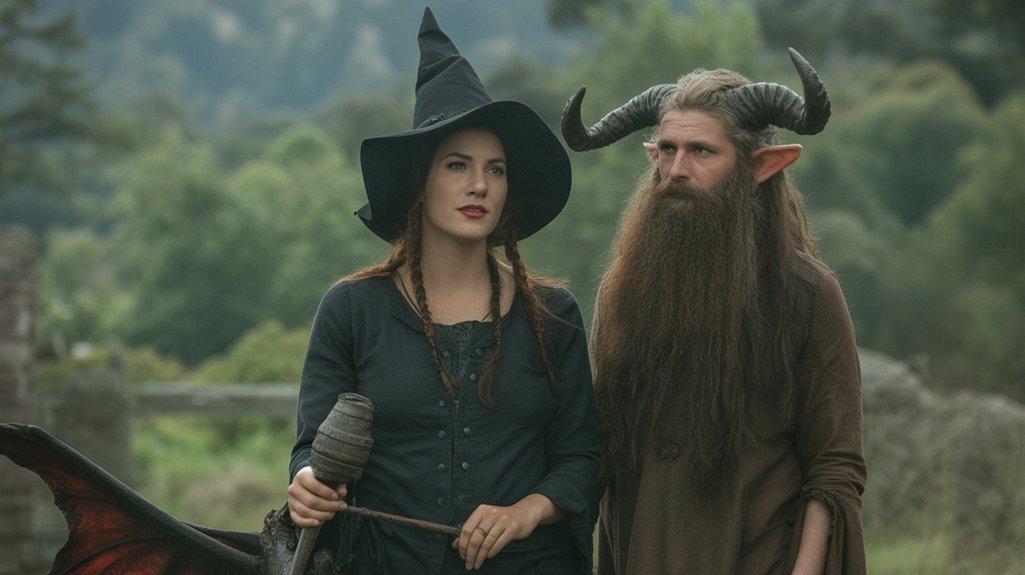
The witch hunts didn’t emerge from a vacuum; they were the product of a complex interplay of historical forces that made European societies particularly vulnerable to the notion of widespread Devil worship.
By examining the origins of these accusations, we see how the Church’s campaigns against heretical groups, such as the Waldensians and Templars, created a template for later witch hunts.
As we consider the chaotic landscape of late medieval society, where pagan practices lingered and folklore was easily reinterpreted, the stage is set for understanding how these beliefs took root and flourished.
This historical context sheds light on the misunderstood practices of witchcraft that fueled societal fears and led to tragic consequences.
What does this mean for our understanding of the societal dynamics at play?
Root Causes
As I look back on my early days as a practitioner, I remember the confusion surrounding the concept of magic. It can feel overwhelming, right? Understanding how historical perspectives shape our practices helps ground us.
For instance, during the late medieval period, clergy began reshaping the relationship between society and the supernatural. They started to categorize magic strictly as demonic pacts, merging complex rituals with simple charms. This shift turned witchcraft from a community practice into something viewed as heretical—a direct challenge to the Church’s authority.
You might wonder how this relates to your journey. Picture this: Pope Innocent VIII issued a bull in 1484, allowing for inquisitorial actions against those suspected of witchcraft. This wasn’t just about magic; it was about targeting marginalized groups—women, outsiders, the poor—who were often seen as threats. Ever felt the weight of societal pressure? That’s what these individuals faced.
Torture was used to elicit confessions, painting a vivid picture of supposed demonic networks that only fueled more accusations.
After years of working with these historical contexts, I’ve learned that understanding the roots of our practices can empower us. You don’t have to be bound by fear or societal expectations. Instead, focus on what resonates with you personally.
Try This Tonight: Reflect on a practice or belief you’ve held that may have been influenced by societal pressures. Write it down. Then, consider how you might reframe it in a way that feels true to you. That’s enough for a starting point.
As you explore your own path, remember that these historical anxieties created cycles of suspicion and persecution, but they also remind us of the importance of community and support. What I wish I’d known as a beginner is that it’s okay to question what you hear and to find your own voice in your practice.
Let’s take a moment to think about our own experiences. Have you ever felt judged for what you believe or how you practice? You’re not alone. This connection can help us create a more inclusive space for everyone.
When you’re ready to deepen your practice, consider the ethical sourcing of materials. Whether it’s herbs or crystals, think about where they come from. Sustainable harvesting and ethical mining matter. They honor the traditions we draw from while caring for our planet.
Contributing Factors
Sure! Here’s the text with the long paragraphs split into shorter ones:
—
Ever felt that tug of curiosity about witchcraft? Maybe you’ve seen those old stories or heard whispers about witches being more than just folk tales.
I remember when I first started exploring this path. It wasn’t just about spells and potions; it was about understanding a tangled history. Here’s a practical takeaway: take a moment tonight to reflect on your own beliefs about witchcraft. What does it mean to you?
Now, let’s dive into some factors that turned witchcraft into a significant issue in Europe. This transformation was influenced by a few key forces:
1. Clerical reinterpretation – As I learned the hard way, understanding the past can shed light on the present. In late medieval times, clergy began mixing elite ceremonial magic with everyday folk practices.
They framed these connections through a theological lens, treating beliefs about demonic pacts as a serious doctrine. It’s fascinating how they organized their fears about Satan, isn’t it?
2. Propaganda dissemination – Church authorities often used accusations of witchcraft as a tool against heretical groups. Visual media and pamphlets spread images of the diabolic, embedding those ideas deep into the public’s mind.
This tactic wasn’t just about belief; it was about control. Think about it: how do modern narratives shape our understanding today?
3. Social instrumentalization – Personal disputes among neighbors sometimes led to witch hunts. Confessions would often require naming others, creating a chain of accusations that justified inquisitorial actions.
I’ve seen in my practice how fear can spiral out of control. Trust me, this isn’t a new phenomenon.
These dynamics didn’t sprout from genuine witchcraft practice. Instead, they reflected a deep-seated anxiety about what it meant to be different or to challenge the established order.
Witches were labeled as threats to the very fabric of Christian society.
Take a moment to think about your own practice. What’re your beliefs? Start there. Remember, it’s okay to question and explore. You don’t have to fit into a mold.
As you journey forward, consider this: the history of witchcraft is filled with layers of meaning. What I wish someone had told me when I started is that it’s essential to honor the traditions you learn about.
Some practices come from closed or semi-closed traditions, so seeking guidance from those within those paths is vital.
Ready to explore further? Here’s a simple exercise for tonight: Find a quiet space, light a candle in a fire-safe container, and reflect on what witchcraft means to you.
Write down any thoughts or feelings that arise. This practice can help ground you in your own understanding, allowing your unique interpretation to flourish.
Trust the process and be patient. Remember, everyone’s journey is different, and that’s perfectly valid.
You’re not alone in this exploration.
—
Feel free to adjust any part as needed!
What the Research Says
Modern scholars largely agree that witchcraft accusations arose from social anxieties, religious fervor, and gender dynamics, rather than actual demonic pacts.
However, the real intrigue lies in the ongoing debate about whether the accused held genuine magical beliefs or were merely scapegoats for societal ills.
With this foundation set, we can explore how shifting perceptions of agency among the accused reflect broader societal tensions and influence historical narratives around the witch hunts.
Key Findings
Historical explorations into demonology tell a fascinating tale about how witchcraft shifted from a local folk practice to something much darker—a theological heresy. Think about it: practitioners like Kramer and Bodin changed the game. Healers weren’t just seen as misguided souls anymore; they were now thought to be in league with Satan. It’s a heavy shift, right?
This new perspective was crucial. Instead of viewing witchcraft as an independent form of magic, scholars began linking all supernatural abilities directly to demonic pacts. Picture a world where witches were thought to serve the devil through explicit contracts, often involving sexual covenants and soul surrender. This binary notion—where you either served God or the devil—created a climate of fear and persecution. Witchcraft became synonymous with heretical conspiracy, viewed as a direct threat to society rather than just a fringe practice.
Ever felt that pressure to fit into a box? You’re not alone. Many practitioners wrestle with these binary views, especially when starting out. I learned this the hard way: it’s essential to recognize that there’s room for personal interpretation in your practice. Trust your instincts.
Try This Tonight:
Consider exploring a simple grounding ritual. Light a candle in a fire-safe container—never leave it unattended! Take a moment to reflect on your beliefs about magic and the stories you’ve inherited. What resonates with you? Jot down your thoughts in a journal. This practice can help you carve out your own understanding, separate from external narratives.
As you dive deeper into your practice, remember to respect the origins of traditional methods. If you’re drawn to a specific tradition, seek guidance from those who are well-versed in it. It’s important to approach these practices with humility and respect.
A Personal Note:
After years of working with herbs, I’ve found that some traditions incorporate them differently. For example, sage is often used for cleansing, but how you use it can vary widely. Always consider your source; ethical harvesting matters. When you’re out gathering, be mindful of sustainability—some plants are endangered.
Let’s engage for a moment: What’s been your biggest struggle in connecting with your spiritual practice? It’s okay if you’ve felt lost. We all have been there.
Moving Forward:
As you explore historical contexts, remember that every practitioner has a unique journey. You might find some disagree with the traditional views of witchcraft, and that’s valid. Your experience matters just as much.
What I wish I’d known as a beginner? It’s okay to take your time. Don’t rush to label yourself or your practice. The more you explore, the clearer your path will become.
Now, as you wrap up your reflections, think about a practical step you can take this week. Maybe it’s trying a new herb in your practice or learning about a tradition you’re curious about. Start there. That’s enough. Trust the process.
Where Experts Agree
Though there’s a lot of debate about the witch-cult hypothesis, there are some things experts agree on that you might find interesting. I remember when I first started exploring these ideas; it really opened my eyes to how deeply tied our practices are to history.
First off, by the early 15th century, demonology had taken shape as a kind of theological framework that changed how authorities viewed witchcraft. Ever felt that shift in perspective? It’s like realizing there’s so much more beneath the surface. You’ll find that pacts with the Devil and sabbath rituals became key elements in witch narratives, with many confessions mentioning soul-selling and demonic familiars.
The printing press played a significant role too, spreading these demonological ideas across Europe and standardizing how persecution unfolded. It’s fascinating and a bit chilling, isn’t it? This also led to a mindset of either/or theology—God versus Devil, devout versus heretic—that created a psychological environment ripe for mass trials.
In my practice, I’ve learned that understanding these historical contexts can ground us. It reminds us that witchcraft accusations often served elite interests, helping authorities regain control during turbulent times.
What I wish someone had told me back then is that history isn’t just about the past; it can inform your personal journey too.
Try This Tonight:
Reflect on the stories you’ve heard about witchcraft. Write down your thoughts about how societal pressures shape our understanding of spirituality. Start with a few sentences about your feelings—just let it flow.
Remember, this journey is yours. Be patient with yourself, and trust the process. Each step you take adds to your understanding, even when it feels overwhelming.
If you’re curious about these themes, consider exploring how different traditions handle similar concepts. There’s a wealth of knowledge out there, but always approach with respect. If you’re drawn to a specific practice, seek guidance from those who’ve walked that path.
This won’t resonate with everyone, and that’s okay. Every practitioner’s journey is unique. What’s important is finding what speaks to you.
Where They Disagree
Where They Disagree
Have you ever felt overwhelmed by the sheer complexity of witchcraft and its history? I remember starting out, trying to grasp all the different beliefs and practices. It can be confusing, especially when experts don’t always agree on what witchcraft really means.
For instance, while many practitioners recognize that demonology influenced witch persecutions, there’s no clear consensus on how various religious groups interpreted witchcraft. Some scholars argue that Lutherans expanded the definition of sorcery beyond what Catholics believed, while others think they just dressed up old concerns in new theological language. What do you think?
Then there’s the debate about gender. Did witch-hunts mainly target women’s power, or were sexual stories just handy tools for prosecution? This question hits home for a lot of us, as it dives into the heart of societal fears and biases. The first time I came across this idea, it changed how I viewed the narratives surrounding witchcraft.
Now, let’s talk about the role of elite demonologists. Did they shape popular accusations, or were they just codifying existing folk traditions? This is where things get really interesting. It often feels like a game of telephone, where the message gets distorted along the way.
Another point of contention is whether witches’ marks were genuinely innovative diagnostic tools or just pseudoscience masking biases in the judicial process. Think about that for a moment. How often do we see similar patterns in today’s practices?
These debates remind us that understanding witchcraft isn’t just about historical facts—it’s about navigating a web of differing interpretations, motivations, and influences.
What to Try Tonight: If you’re curious, take a moment to reflect on your own beliefs about witchcraft. Write down what resonates with you and what feels discordant. Trust your intuition.
Remember, everyone’s journey is unique. Be patient with yourself as you explore. What I wish I’d known as a beginner is that it’s okay to have questions and to seek your own interpretations, even if they differ from traditional teachings.
Practical Implications
Understanding how torture-extracted confessions and clerical propaganda shaped witch trials not only sharpens your critical evaluation of historical sources but also reveals the unsettling dynamics of coercion in generating false testimony.
With this knowledge, you can now explore how these tactics weren’t just isolated incidents but part of a broader strategy employed by institutions to manipulate fear.
What happens when we apply this lens to contemporary contexts?
What You Can Do
Sure! Here’s the modified version of your text with the long paragraphs split:
—
Have you ever felt that nagging sense of injustice when you hear about past witch persecutions? It’s a heavy topic, but understanding how societies used beliefs about demons and witchcraft to consolidate power can really open our eyes.
Trust me, I learned this the hard way. Those lessons can help us see modern patterns of scapegoating and control.
Here are a few approaches that might resonate with you:
1. Examine power structures – Take a moment to look at how authorities create fear narratives. It’s often a way to push certain groups to the margins, much like those historical accusations of making pacts with demons.
Recommended for You
🛒 Witchcraft Books For Beginners
As an Amazon Associate we earn from qualifying purchases.
Can you think of examples in your own life?
2. Challenge folklore as evidence – This one’s close to my heart. When you hear claims that lack solid proof, question them. Many supernatural explanations have historically hidden real social tensions and economic anxieties.
Remember, it’s okay to ask why.
3. Promote critical literacy – Teaching ourselves and others to spot the difference between superstition and documented fact can be a powerful tool. It builds resilience against manipulation.
Ever tried explaining a complex idea simply? It’s a great way to solidify your own understanding.
By recognizing these manipulation tactics, you can strengthen your community. Together, we can prevent the repetition of historical injustices.
Start small, and be patient—results vary, and that’s valid.
What I wish someone had told me when I was starting out? It’s all about personal interpretation. There’s no one-size-fits-all. Each of us brings our unique lens to the table, and that’s where the magic happens.
So, what’s a practical step you can take tonight? Choose a recent news story or personal experience where you felt an authority figure was using fear to control the narrative.
Reflect on it. What beliefs are being weaponized?
And remember, if you’re diving into rituals or practices, always prioritize safety—especially with candles or herbs. Use fire-safe containers, don’t leave candles unattended, and consult a healthcare provider about any herbs you consider for ingestion.
You’ve got this. Trust the process, and keep questioning.
—
Let me know if you need any adjustments or additional details!
What to Avoid
Now that you’re starting to explore the world of witchcraft, it’s easy to get caught up in the stories and myths. I remember when I first began; I was fascinated by all the lore, but some of it can be misleading. Let’s talk about a few things to steer clear of as you navigate your practice.
First, don’t mix up historical persecution with actual practices. Witch hunts were often moral panics that targeted innocent people, not true representations of witchcraft. I wish someone had told me that sensationalized tales aren’t the same as reliable sources. Start there—let’s keep your foundation strong.
It’s also crucial to be skeptical of claims that lack primary source documentation. For example, the idea that witches consistently worked with demons is more about fear and ideology than sound history. This is something I learned the hard way; always question where information is coming from.
When you’re researching, avoid sources that present wild accusations as facts. Critical thinking is key. Can you tell the difference between what people *believed* about witchcraft and what practitioners *actually did*? This distinction is essential for your growth.
Instead, seek out academic resources that delve into theological contexts, historical documents, and documented traditions. These will help you build credibility and deepen your understanding of the rich tapestry of religious history.
Ever felt overwhelmed by all the information out there? Trust me, it’s okay to take your time and sift through what resonates with you.
Practical Tip:
Tonight, try to find one reliable source—maybe a book or an article from a respected practitioner or historian. Reflect on what you learn and how it aligns with your own feelings about your practice.
What I wish I’d known as a beginner is that not everything you hear is true, and that’s perfectly fine. It’s part of your journey to discern what feels right for you. Remember, some practitioners have different views, and that’s valid too.
As you explore, always prioritize safety. If you’re working with herbs or candles, make sure you’re using fire-safe containers and consulting a healthcare provider when it comes to ingestion.
Comparison of Approaches
As I reflect on my own journey into the world of witchcraft, I remember the questions that bubbled up in me: What’s the essence of this practice? How do we understand the energies around us? Back in medieval times, people were grappling with witchcraft in ways that might seem foreign to us now. They focused on practical harm—think curses and hexes, often without any notion of demon involvement.
Fast forward to the early modern period, and you see a dramatic shift. Suddenly, it was all about elaborate theories of Satanic conspiracies. People weren’t just worried about local grievances; they were hunting down supposed networks of evil, demanding proof of pacts with the Devil. It’s a wild transformation, right?
| Aspect | Medieval | Early Modern |
|---|---|---|
| Focus | Maleficium (harmful magic) | Demonic pacts |
| Evidence | Local harm testimony | Confessions of Devil worship |
| Literature | Absent | *Malleus Maleficarum*, *Demonolatry* |
You might wonder how these shifts impact our understanding today. I learned this the hard way: the narratives we choose to believe can shape our reality. In my practice, I’ve seen how texts like *Malleus Maleficarum* created a framework that moved away from community-based accusations. They replaced them with institutionalized theological ideas that required elaborate supernatural stories. That’s a lot to unpack, but it’s essential to grasp how witch hunts evolved.
Try This Tonight: Pick an intention for your practice this week. It could be something simple—like protection from negativity or clarity in a decision. Write it down, and sit with it. Trust that this intention can guide your energy. Start there.
Have you ever felt the weight of societal beliefs on your own practice? It can be heavy. Remember, it’s okay to carve your own path and interpret traditions in ways that resonate with you. There’s no one-size-fits-all here.
As we explore these historical frameworks, consider what resonates with you. For instance, the medieval focus on maleficium might remind us of the importance of community in our work. Think about how you can ground your practice in your own local environment.
A Personal Note: The first time I worked with herbs meant for protection, I felt a rush of energy. It was exhilarating! Just remember, if you’re working with herbs, always check with a healthcare provider first. They can alert you to possible interactions, and that’s a crucial step for your safety.
Let’s talk about some traditional correspondences. For instance, certain herbs like rosemary have long been associated with protection and purification. After years of working with this herb, I’ve found it incredibly effective in rituals aimed at clearing negative energy. If you’re interested, try burning some rosemary in a safe container this week—just keep an eye on it!
Be patient with yourself. Not every practice will spark immediate results, and that’s perfectly valid. Some practitioners might have different opinions on what works best, and that’s something to respect.
Next Steps: As you continue exploring, consider looking at how historical texts influenced perceptions of witchcraft. This week, read a chapter from a traditional book or article that interests you. Reflect on how those ideas fit—or don’t fit—within your own understanding.
What I wish I’d known as a beginner is to trust my intuition over the noise of external expectations. You have that same intuition. Lean into it. You’re on the right path.
Key Takeaways
The journey from medieval maleficium to early modern witchcraft wasn’t just a twist of fate. It was carefully shaped through influential texts and the power of institutions. Here are three key ways this transformation unfolded:
1. Institutional Dissemination: Picture the Council of Basel, where clerics wielded demonological ideas like weapons, spreading them throughout Europe. This wasn’t random; it was systematic.
Ever felt the weight of a belief system pushing down on you? That’s what many experienced.
2. Textual Amplification: Think about works like Nider’s *Formicarius* and Krämer’s *Malleus Maleficarum*. These texts took vague accusations and turned them into blueprints for witch hunts.
They made it all seem so official. In my practice, I’ve seen how words can carry immense power. It’s a reminder that what we read shapes our understanding.
3. Narrative Fusion: Medieval heresies mixed with local folklore, crafting a compelling mythology.
This is where devil worship became synonymous with witchcraft. It’s fascinating how stories evolve, isn’t it?
As you explore this intersection of power, literature, and culture, consider how these elements shaped a persecution model that lasted for centuries.
Ready to try something tonight? Reflect on your own beliefs and how they’ve been influenced by the narratives around you.
Grab a journal and jot down a few thoughts. What stories have shaped your view of the world?
A personal note: I learned this the hard way—our beliefs can often feel like a weight we carry, even if they’re based on outdated narratives.
Start with self-reflection. That’s enough for now. Trust the process.
Remember, this journey is about understanding and growth, not blame.
What I wish someone had told me as a beginner is that it’s okay to question what you’ve been taught. You’re not alone in this exploration.
Frequently Asked Questions
How Do Modern Witches Differentiate Between Demons and Other Supernatural Entities?
Q: How do modern witches differentiate between demons and other supernatural entities?
A: Witches often see demons as harmful beings, while spirits tied to nature or ancestors are viewed as neutral or beneficial.
To start, focus on the intentions behind your connections—work with entities that resonate positively for you.
What Legal Consequences Did Accused Witches Face for Alleged Demon Collaboration Historically?
Q: What legal consequences did accused witches face historically?
Accused witches often faced severe penalties, including hanging, pressing to death, or long imprisonment.
To understand this, it’s crucial to study the Salem trials and similar events where fear-driven legal systems prioritized conviction over justice.
If you’re exploring this history, consider reading firsthand accounts or scholarly works for a deeper insight into the cultural context.
Are There Specific Geographic Regions Where Demon Work Was More Prevalent Among Witches?
FAQ: Geographic Regions of Demon Work Among Witches
Q: Were there specific regions where demon collaboration was more common among witches?
Yes, accusations of demon collaboration were mostly concentrated in West-Central Europe, especially in Switzerland, French principalities, and the German-speaking regions of the Holy Roman Empire.
If you’re interested in this history, consider reading about the witch trials in these areas.
How Did Religious Institutions Classify and Categorize Different Types of Demons in Witch Trials?
Q: How did religious institutions classify different types of demons during witch trials?
Religious institutions didn’t use organized charts for demon classification. Instead, they identified demons through confessions and behaviors.
To understand this, you might explore texts like the *Malleus Maleficarum*, which influenced how demons were categorized by their functions.
What Written Grimoires or Texts Explicitly Instructed Witches on Demon Summoning Techniques?
Q: Do any grimoires provide instructions for summoning demons?
Yes, texts like the *Grand Grimoire*, *Grimorium Verum*, and the *Key of Solomon* offer detailed techniques.
To start, you can learn about crafting consecrated tools and performing specific rituals. Just remember, these practices come from historical contexts, so it’s best to study under knowledgeable practitioners within those traditions for a respectful approach.
Q: What kind of preparations do I need for summoning?
You’ll need to create a safe and sacred space, which includes protective barriers and tools like wands and seals.
Take your time to set everything up properly; rushing can lead to mistakes. Always prioritize your safety, especially with candles or any materials that could cause fire hazards.
Q: Should I start with a specific demon?
Yes, typically, you’d begin with a higher-ranking entity, like Lucifer, before approaching lesser spirits.
This structured approach helps build your confidence and understanding. Make sure you research each entity thoroughly and respect their attributes and cultural significance to avoid misunderstandings.
Q: Is demon summoning dangerous?
Yes, it can be risky, both spiritually and psychologically.
It’s essential to approach this practice with caution and respect. Always have protective measures in place and consider discussing your intentions with experienced practitioners who can guide you safely through the process.
Conclusion
Standing at the intersection of fear and power invites deep reflection on the strength found in embracing your identity. Tonight, take a moment for yourself: light a single black candle, hold the intention of reclaiming your narrative for 5 minutes, then journal one sentence about how you feel in this moment of defiance. This simple act can be a powerful reminder that your path is yours to define. Trust the process. Start there. You’ll find strength in the shadows, and remember, every step you take is a testament to your resilience.
Beeswax Ritual Candle Set (7 Colors)
Pure beeswax candles in seven sacred colours for spellwork.
Check Price on Amazon* As an Amazon Associate we earn from qualifying purchases. Prices and availability may vary.
Continue Your Magical Journey
Free Witchcraft Starter Kit
Get 6 free printable PDFs: grimoire pages, moon calendar, spells, crystals, herbs, and tarot journal.
We respect your privacy. Unsubscribe anytime.
Enhance Your Practice
As an Amazon Associate, I earn from qualifying purchases.
🌙 Get a Free AI Tarot Reading
Luna reads the cards just for you — powered by AI, guided by the stars. No account needed.
Draw Your Cards Now ✨Powered by Luna's Circle — AI Spiritual Guidance