

- Key Takeaways
- Introduction
- Start Simple Tonight
- The Journey of Learning
- Engage with Your Ingredients
- What I Wish I’d Known
- Your Next Steps
- The Problem
- Why This Matters
- Who It Affects
- The Explanation
- Root Causes
- Contributing Factors
- What the Research Says
- Key Findings
- Where Experts Agree
- Where They Disagree
- Practical Implications
- What You Can Do
- What to Avoid
- Comparison of Approaches
- Key Takeaways
- Frequently Asked Questions
- Can I Ingest Essential Oils, or Are They Only for Topical and Aromatherapy Use?
- How Long Do Essential Oil Blends Typically Last Before They Expire or Lose Potency?
- Which Essential Oils Are Safe to Use Around Pets and Children in My Kitchen?
- What’s the Difference Between Pure Essential Oils and Fragrance Oils for Kitchen Witchcraft?
- How Do I Properly Store Essential Oil Blends to Maximize Their Shelf Life and Effectiveness?
- Conclusion
- Related Posts
- Related Posts
- Related Reading
- Related Posts
- Related Posts
- Related Posts
- Related Reading
- Awaken Your Inner Witch
Have you ever caught a whiff of a familiar scent during a ritual and felt an instant wave of calm wash over you? If you’re looking to create that same magic in your kitchen, tonight’s the perfect time to experiment with essential oil blends. After 10 years of practice, I’ve learned that the right combinations can elevate your daily rituals beyond just pleasant aromas. You’ll discover blends that not only smell divine but also support your intentions. Start there. Trust this. Let’s explore the essentials every kitchen witch should have on hand.
Key Takeaways
- Blend 2-3 drops of essential oil with 15ml of carrier oil to ensure safe application and maximize the therapeutic benefits without skin irritation.
- Track your essential oil experiences in a dedicated journal to identify patterns in mood and energy, enhancing your intuitive understanding of blends over time.
- Let your oil blends sit for at least 24 hours before using them, allowing the scents to meld and intensify for a more impactful experience.
- Start with one essential oil that resonates with you, focusing your energy on that single scent to build a strong foundation before expanding your collection.
- Source oils from sustainable vendors to support ethical practices, ensuring your witchery honors both nature and the cultures that inspire your craft.
Introduction
Ever stood in your kitchen, a pot simmering on the stove, and felt that little spark of magic in the air? That’s kitchen witchery calling to you. It’s a beautiful blend of ancient folk practices and modern convenience, turning your cooking space into a cozy sanctuary for spellwork.
You don’t need rare ingredients or elaborate rituals. Trust me, I learned this the hard way. Instead, it’s all about your intuition and intention. Think of it as crafting your own recipe for magic. Essential oils can really amplify your efforts—awakening your intuition and grounding your energy during rituals, enhancing the effectiveness of your self-care rituals for witches.
Let’s talk about some everyday ingredients. Did you know cinnamon is often linked to prosperity? Or that lavender is your go-to for calm? And rosemary? It’s like a shield against negativity. Your kitchen is a creative lab, where each blend you whip up carries a personal touch, aligned with your unique spiritual goals.
Your kitchen is a creative lab where cinnamon brings prosperity, lavender invites calm, and rosemary shields against negativity.
Start Simple Tonight
Ready to try something? Grab some cinnamon and honey. Mix a teaspoon of cinnamon with a tablespoon of honey in a small bowl. As you blend, focus on what prosperity means for you. Maybe it’s financial stability, or perhaps it’s abundance in friendships. This simple act of combining ingredients can set your intention in motion.
Safety Tip: If you’re consuming herbs, always consult your healthcare provider, especially if you’re pregnant or on medication.
The Journey of Learning
In my practice, I often remind myself that results take time. This won’t work for everyone, and that’s perfectly okay. I remember the first time I tried working with herbs—I was frustrated when things didn’t go as planned.
But each attempt taught me something new. As you explore, be mindful of where your ingredients come from. Ethical sourcing is key. Look for sustainably harvested herbs and responsibly mined crystals. It respects the earth and the communities that cultivate these resources.
Engage with Your Ingredients
Pause for a moment: What’s your favorite herb? How does it make you feel? This connection is vital. Each herb has historical significance and traditional associations.
For example, basil is often tied to love and protection, while chamomile is linked to peace and relaxation. Take a moment to read about the herbs you’re using. Explore traditional texts or consult established practitioners to deepen your understanding. It adds a layer of respect to your practice.
What I Wish I’d Known
What I wish someone told me as a beginner is that kitchen witchery doesn’t have to be perfect. It’s about the intention behind your actions. You mightn’t see instant results, and that’s okay.
Be patient with yourself. The process can be just as rewarding as the outcome.
Your Next Steps
Now, let’s get practical. Here’s a simple ritual you can try tonight:
- Gather Ingredients: Find some herbs or spices you have on hand, like thyme for courage or sage for cleansing.
- Set Your Space: Light a candle in a safe, fire-proof container. Focus on your breath; let the day’s stresses fade away.
- Create Your Blend: Combine your chosen herbs in a small dish. As you mix, visualize your intention.
- Use It: You can sprinkle your blend into your food, brew it in tea, or simply place it on your altar.
The Problem
You’ve likely encountered essential oil recipes online that overlook the serious health risks they pose to your pets, children, and yourself.
With that understanding in mind, it’s crucial to address the potential dangers that can arise from improper use—be it through inhalation, skin contact, or ingestion.
Why This Matters
As a kitchen witch, I remember those early days when it felt like I was juggling a dozen things at once—ritual stress, relationship ups and downs, and that ever-elusive connection to my intuition. Ever felt that? It’s overwhelming, right? You might find yourself scattered, pulling away from your intentions instead of moving toward them.
Here’s a practical tip: essential oils can be your best ally. They’re not just fragrant; they’re concentrated tools that work on multiple levels, from your nervous system to your energetic field. Think about this: you can diffuse them during meditation, add them to your bath, or even infuse them into your tea. This way, you’re blending the physical with the spiritual seamlessly.
After years of working with these oils, I learned that they can amplify your practice without adding complexity. Start with a simple blend—lavender for calming and clarity, or peppermint for focus. Trust me, these small changes can elevate your craft’s precision and impact.
Now, let’s talk about blending. It’s not just about mixing scents; it’s about creating a ritual that feels right for you. I wish someone had told me to follow my own intuition more when I started. Personal interpretation is key. Feel free to experiment with what resonates.
When it comes to sourcing, always choose ethical options. Look for sustainably harvested herbs and responsibly sourced oils. This respect for tradition and nature not only honors the practice but enhances your connection to it.
So, what’s next? Try this tonight: take a moment to ground yourself. Set an intention for your practice, then choose an essential oil that speaks to you. Whether you’re looking for clarity, protection, or love, let that oil guide your ritual. Remember, it’s about the journey, not just the destination.
Be patient as you explore. Results can vary, and that’s okay. Some practitioners might’ve differing opinions on oils’ effectiveness, and that’s valid too. There’s no one-size-fits-all approach here. What works for you may not work for someone else, and that’s perfectly fine.
Who It Affects
Kitchen witches often juggle a lot, and I remember what that felt like when I was starting out. Ever felt that overwhelming stress and anxiety while trying to keep your practice alive? It’s tough, isn’t it? You’re not just managing your spells and intentions; you’re also battling fatigue and emotional ups and downs. I learned this the hard way: when I was exhausted, my connection to my practice felt distant.
If you’re struggling with sleep, it can throw everything off-kilter. Trust me, I’ve been there. When you’re tired, those rituals can feel like a chore, and meditation can seem impossible. It can feel like a cycle: poor sleep ramps up anxiety, which can make you feel even more emotionally scattered. That’s enough to derail anyone’s practice.
So, what can you do? I’ve found that essential oil blends can really help. They can target multiple areas at once—stress relief, better sleep, emotional stability, and clarity in your spiritual work. After years of working with these oils, I can tell you they can become a beautiful part of your routine.
Try This Tonight:
- Choose a calming blend—lavender, chamomile, and frankincense are great options.
- Dilute a few drops in a carrier oil (like coconut or jojoba) and apply it to your wrists or temples.
- As you do this, take a moment to breathe deeply. Inhale the scent and visualize it washing away your stress.
This practice isn’t a magic fix, and it won’t work for everyone, but it’s a gentle step you can take tonight to help restore some balance.
What I wish I’d known as a beginner is that it’s okay to seek support. Just like you wouldn’t expect to master cooking overnight, don’t put that pressure on your spiritual journey. Take it slow, and remember to listen to yourself.
After a few days of this practice, check in with yourself. How do you feel? Are you sleeping better? Is your mind a little quieter? Sometimes just noticing these small shifts can help you reconnect with your spiritual side.
And if you’re drawn to herbs, always remember to source ethically. Look for sustainably harvested options, and be cautious with anything you plan to ingest. Consult a healthcare provider if you’re unsure about interactions, especially if you’re pregnant or nursing.
The Explanation
Understanding the pitfalls of magical oil blends sets the stage for crafting truly effective formulations.
Root Causes
To really get why certain essential oils shine in kitchen witchcraft, think about their unique energetic qualities. Each oil has a story tied to its plant source and chemical makeup.
For example, lavender isn’t just a pretty scent; its calming compounds help soothe your nervous system. Ever felt that? Frankincense has a complex structure that can spark your spiritual intuition, guiding you to deeper insights.
Then there’s rose, which embodies self-love frequencies, balancing those emotional highs and lows we all experience. Cedarwood? It’s grounding, anchoring your energy when you’re setting intentions. And black pepper? It’s all about building courage and protection.
These aren’t random associations; they’re patterns where chemical properties align with energetic effects.
When you blend oils thoughtfully, you amplify those complementary vibrations. This is where the magic happens. Trust me, it’s different than just lighting a candle. You’re working with botanical intelligence, creating a symphony of molecular resonance for real spiritual outcomes.
Try this tonight: Grab a bottle of lavender and frankincense. Mix a drop of each in a small bowl with a carrier oil, like jojoba or sweet almond. Rub it on your wrists before a meditation session. Feel the calm wash over you.
In my practice, I learned this the hard way—don’t rush the process. Each blend has its own rhythm, and that’s okay. You’re not just mixing scents; you’re creating a space for intention and energy to flow.
Now, let’s talk practical steps. First, always source your oils ethically. Look for sustainably harvested plants, and be mindful of where your crystals come from, especially with endangered varieties.
And remember, safety first! If you’re using herbs internally, check in with a healthcare provider—some can interact with medications or have risks during pregnancy.
As you explore, keep in mind that not every blend will resonate with you. This won’t work for everyone, and that’s perfectly valid. Some practitioners have different experiences, and that diversity enriches our practice.
Engagement break: What’s your favorite essential oil? Do you have a go-to blend for grounding or protection?
Now, as you step into this journey, remember that understanding these connections transforms your practice. What I wish I’d known as a beginner is that it’s less about perfection and more about personal interpretation. Trust yourself. Every little experiment counts.
Next step: Start a journal to document your experiences with different oils. Note how they make you feel, any insights you gain, and how they influence your intentions. You’ll build a personal reference that will guide you over time. Keep it simple, stay curious, and enjoy the journey!
Contributing Factors
You know that feeling when you’ve just combined a few essential oils, and it seems like something magical is happening? I remember when I first started dabbling in this world. I made plenty of mistakes, but I learned a lot about how the right combinations can really elevate your practice.
Let’s talk about five key properties that work together to amplify your intention and energy. Trust me, layering these can lead to some powerful results. Here’s how you can get started:
- Synergistic Blending: Think about combining oils like lavender with frankincense. It’s amazing how these can enhance each other’s calming and protective effects. This isn’t just mixing scents; it’s about creating energetic tools that really resonate with your intentions.
- Intention Alignment: When you focus your will, you’re directing energy into those botanical essences. For example, if you’re using petitgrain for meditation, consciously directing your attention can sharpen its effects. Ever felt that?
- Vibrational Frequency: This is crucial. Cedarwood’s grounding energy can anchor your protective work, while rose adds a layer of emotional resonance. It keeps your practice from feeling scattered. Start there.
What I wish someone had told me back then is that it’s all about understanding these connections. When you see how basil’s protective qualities boost carrot seed’s intuitive enhancement, you can create blends that really tackle root causes and speed up transformation.
Ready to try this tonight? Grab a few oils you have on hand and see how they interact. Maybe mix lavender and cedarwood for a calming blend. Feel the vibes.
Now, let’s take a moment. Have you had a blend that just clicked for you? I remember the first time I mixed rosemary and peppermint. It was like a lightbulb went off! The energy shift was undeniable.
As you explore these properties, remember that not every blend will resonate with everyone. Be patient—results vary. Some practitioners might disagree with certain combinations, and that’s okay. It’s all part of your unique journey.
And a quick note on safety: always use fire-safe containers for candles and never leave them unattended. If you’re considering ingesting any herbs, consult with a healthcare provider, especially if you’re pregnant or on medication.
What the Research Says
Scientists largely agree that essential oils possess authentic antimicrobial and antiproliferative properties—cinnamon oil, for example, can inhibit leishmaniasis by 60%, while thymol-rich blends demonstrate dose-dependent cancer cell suppression across various tumor lines.
Yet, there’s a divergence in practical applications. While researchers call for standardized preparations and human clinical trials to validate therapeutic claims, traditional uses like lavender for sleep show promising preliminary support in peer-reviewed studies.
Key Findings
When I first started blending essential oils, I was excited, but I also felt a bit lost. I remember thinking, “Where do I even begin?” If you’ve felt that way too, you’re not alone. Here’s a simple takeaway: start by exploring the oils that resonate with you. For tonight, why not play with lavender and peppermint? They’re easy to find and have lovely, grounding scents.
Research backs up what herbalists have known for ages—these oils can be effective. A 2024 systematic review looked at twelve years of aromatherapy studies and confirmed their therapeutic benefits. For instance, bay leaf essential oil isn’t just aromatic; it has measurable analgesic and anti-inflammatory properties. Ever had a headache? Peppermint might help. Just remember, it’s all about personal experience.
After years of working with these oils, I learned this the hard way: not all oils are created equal. Some might irritate your skin or cause allergies, so it’s wise to do a patch test before using them widely. And if you’re pregnant or on medication, check in with a healthcare provider. Safety first!
What I wish someone had told me when I started is how important it is to trust your instincts. Each oil has a unique energy and potential. For example, lavender is often linked to calm and relaxation, while peppermint can invigorate the mind. The active compounds in these oils—like beta-ocimene and 1,8-cineol—contribute to these traditional associations, but your personal connection matters most.
Now, let’s get practical. Here’s a quick way to create your own calming blend:
- Gather your supplies: You’ll need lavender and peppermint essential oils, a small roller bottle, and a carrier oil like jojoba or sweet almond oil.
- Mix your oils: In your roller bottle, add 5 drops of lavender and 3 drops of peppermint.
- Add the carrier oil: Fill the rest of the bottle with your carrier oil.
- Shake gently: Mix everything together.
- Test it out: Apply a small amount to your wrists or temples when you need a moment of calm.
Remember, this won’t work for everyone, and that’s okay. Be patient with yourself as you explore what these oils can do for you.
As you dive into your practice, consider the origins of the plants you’re using. Ethical sourcing matters. Look for brands that prioritize sustainable harvesting and responsible practices.
What’s your favorite essential oil? I’d love to hear how you’ve used it in your practice! Trust the process, and let your intuition guide you.
Where Experts Agree
Now that you’re ready to blend, let’s talk about what I’ve learned over the years about essential oils. You might be surprised to know that when you mix oils, the effects can be even stronger than when you use them alone. This is called configural processing, and it happens in your brain when you breathe in those lovely aromas. Have you ever felt that rush of calm from lavender or warmth from cinnamon?
Here’s a practical tip: if you’re blending oils, stick to consistent ratios and always use a carrier oil. It protects your skin and helps the oils absorb better. Trust me, I learned this the hard way after a few mishaps with neat application!
Research shows that essential oils can inhibit pathogens by altering their membranes and can even reduce inflammation. That’s pretty powerful. And while some studies on specific blends might be limited, the basic antimicrobial and anti-inflammatory properties are well-supported. You’ll find that lavender is often linked with reducing anxiety, while cinnamon oil may offer some protective effects against colitis. This doesn’t mean they’re a cure-all, but they can certainly support your journey.
What I wish someone had told me when I was starting out is that quality matters. Look for oils that are ethically sourced—think sustainable herb harvesting and responsible crystal mining. This not only ensures you’re getting the best product but also respects the traditions and cultures behind these practices.
When you’re ready to experiment, why not start with a simple blend? Try combining a few drops of lavender with a carrier oil like jojoba or sweet almond. Rub it on your wrists or under your nose and see how it feels.
And remember, safety first! Always consult with a healthcare provider if you’re considering using oils for ingestion or if you’re pregnant.
Take your time with the process. Some blends might resonate with you immediately, while others may take a while to work their magic. That’s perfectly okay. Every practitioner’s journey is unique, and yours will unfold in its own time.
Keep exploring and trust what feels right for you. Your practice doesn’t have to look like anyone else’s. What matters is that you’re finding your way, one drop at a time.
Where They Disagree
When I first started working with essential oils, I was fascinated by their potential but often felt overwhelmed by the conflicting information out there. Ever felt that? You’re not alone. While many practitioners rave about essential oils’ antimicrobial and anti-inflammatory properties, there’s still debate on whether blended oils are more effective than single oils.
For instance, studies comparing pure lavender to various commercial blends often show no clear advantage for anxiety reduction. I remember feeling frustrated when I learned that the Genius blend, which I hoped would be a game-changer, only provided modest cognitive enhancement—partial eta squared values ranged from 0.076 to 0.126, but didn’t show significant interaction effects across all measures.
What I wish someone had told me back then is that results can vary widely.
Here’s a practical tip: if you’re looking to explore blends, start with one or two oils that resonate with you personally. Trust your intuition! I found that the simplest blends often brought the most comfort.
Research, like fMRI studies, shows that blended aromas can activate unique neural pathways in our brains. The inferior frontal gyrus lights up differently with various combinations. Yet, this doesn’t always mean you’ll feel a profound therapeutic effect. That’s enough to keep in mind as you experiment.
Recipe variability adds another layer of complexity. Different formulations can yield different results, and this makes it tough to replicate experiences. Remember, it’s okay to make mistakes and adjust your blends as you go.
Before diving in, consider safety. Use fire-safe containers for candles, and never leave them unattended. If you’re thinking about ingesting herbs, always consult a healthcare provider to avoid any potential interactions. Some herbs can be risky during pregnancy, so be sure to research thoroughly.
So, what’s your next step? Try blending a couple of oils tonight. Pick scents that call to you. Write down how you feel before and after. You might discover something wonderful!
And remember, this journey isn’t about perfection; it’s about finding what resonates with you.
I’ve learned that patience is key. Results can vary, and that’s perfectly valid. Some practitioners disagree on the benefits of blends versus single oils, and that’s part of our beautiful, diverse practice. It’s all about personal interpretation.
As you explore, keep your focus on what feels right for you. Every practitioner has a unique path, and there’s no one-size-fits-all answer. Enjoy the journey!
Practical Implications
You can apply essential oil blends safely by following carrier oil ratios—15ml base oil per 2-3 drops of essential oils—and starting with lower concentrations to test your body’s response.
Avoid applying undiluted oils directly to skin, ingesting blends without professional guidance, and diffusing oils continuously for more than 30 minutes, as these practices risk irritation and sensitization.
Your intuition matters, but it should complement rather than replace proper dilution standards and documented blending ratios for each application method.
So, how do you ensure that your blending not only remains safe but also maximizes the benefits?
Understanding the nuances of different oils and their interactions will take your experience to the next level.
What You Can Do
Ever found yourself overwhelmed by the endless options in the world of essential oils? I remember those early days when I felt lost, trying to make sense of it all. That’s why I want to share some simple, practical ways to integrate essential oil blends into your daily rituals.
You don’t need to be a pro to get started. Here’s a quick tip for tonight: Diffuse a grounding blend while you meditate or set intentions. It’s a great way to anchor your energy and help you focus.
You can also make your own massage oils. Just mix a carrier oil, like sweet almond or jojoba, with essential oils that resonate with your intentions—think protective oils like frankincense or healing oils like tea tree. I learned this the hard way: personalizing your blends makes all the difference.
How about crafting calming rituals? Use lavender, chamomile, and rose to create a serene evening routine. These gentle oils can support both sleep and emotional balance. It’s comforting to have that consistency. Start there.
Remember, these aren’t strict formulas. Feel free to adapt them to your needs. Want to deepen your spirituality? Go for oils that resonate with you. Looking for emotional resilience? Experiment with what feels right. Your kitchen can truly become a space for personal exploration and growth.
Now, let’s talk safety. Always be cautious when using essential oils, especially if you’re pregnant or on medication. It’s wise to consult a healthcare provider about possible interactions.
And when burning candles, use fire-safe containers and never leave them unattended.
After years of working with essential oils and herbs, I can tell you that the journey is personal. Some blends may not resonate with you, and that’s perfectly okay. Be patient—results vary.
What I wish I’d known as a beginner is that it’s all about trial and error. Trust the process.
If you’re ready to dive in, try this tonight: Pick one oil that calls to you, whether it’s for grounding, healing, or calming. Take a moment to breathe it in deeply. What feelings arise? That’s your starting point.
Engage with these practices, and remember, there’s no rush. Your journey is uniquely yours. What’ll you create in your kitchen tonight?
What to Avoid
Essential oils can be magical allies in your kitchen witchcraft, but they definitely come with some important guidelines to keep in mind. Ever had a mishap with an undiluted oil? I learned that the hard way. These concentrated oils can cause burning and irritation if applied directly to your skin.
And trust me, milk-based dilution methods? They just don’t cut it.
Here’s a tip: always patch test any diluted oil before using it more broadly. Avoid sensitive areas too—like your eyes or any broken skin. It’s all about respecting these powerful substances and your body.
Now, let’s talk about ingestion. Please, don’t ingest essential oils. Even a tiny bit can lead to gastrointestinal issues or worse. Keep your oils sealed tight and stored away from heat and light.
And if you’ve got little ones around, remember they might mistake those bottles for something edible.
If you’re pregnant, have epilepsy, or are on medication, check in with your healthcare provider before diving into essential oils.
And for our furry friends—avoid diffusing oils around pets. They’re more sensitive to these substances, and we want to keep them safe.
In my practice, I’ve found that respecting these boundaries protects not just me but everyone around me. It’s a simple step, but it goes a long way in maintaining a safe and enjoyable practice.
So, ready to explore essential oils? Start by choosing one oil that speaks to you. Maybe it’s lavender for calm or lemon for clarity. Trust the process and take it slow.
Recommended for You
🛒 Dried Herbs For Rituals
As an Amazon Associate we earn from qualifying purchases.
That’s enough for today. What’ll you try tonight?
Comparison of Approaches
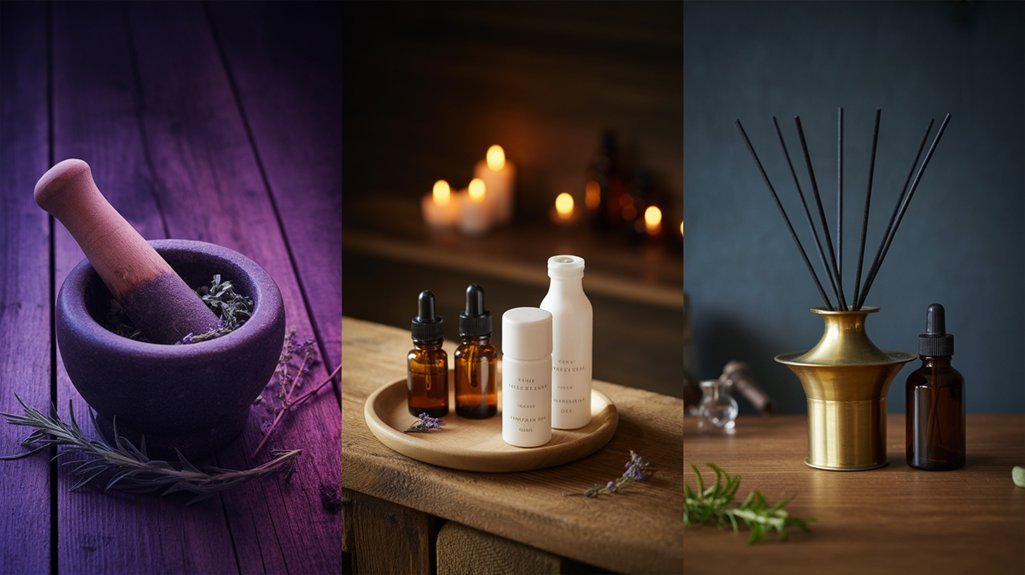
As you step into the world of kitchen witchery, it can feel both exciting and a bit overwhelming. I remember the early days when I tried to blend everything without a clear focus. Ever had that feeling? It’s so easy to get lost in the mix!
Let’s break down some blending philosophies to help you find your way:
| Approach | Focus | Best For |
|---|---|---|
| Intention-Based | Mindfulness & energy | Emotional connection |
| Therapeutic | Chemical properties | Measurable health outcomes |
| Spiritual | Intuition & spiritual connection | Grounding practices |
| Physical | Skin & body ailments | Practical wellness |
You might want to start with intention-based blends when you’re looking to infuse some ritual into your practice. It’s all about channeling your energy while you create. That’s where the magic happens! On the flip side, therapeutic blends require a bit more knowledge about chemical families and dilution ratios. This kind of understanding can lead to reliable results, but don’t let it intimidate you.
What I wish I’d known as a beginner is that the most innovative kitchen witches often blend these approaches. You can mix spiritual properties like frankincense with practical solutions like sweet almond oil. This blend creates formulations that are both effective and meaningful. For instance, lavender can bridge nervous system support with intuitive safety. It’s a versatile herb that’s been cherished for centuries.
Ready to try? Pick a blend that speaks to you tonight. Think about how you want to feel or what intention you want to set, and let that guide your choices.
Remember, everyone’s practice is unique. You’ll find what resonates with you through experimentation. Additionally, beginning your journey with beginner witchcraft spells can provide a strong foundation for your magical practices.
Now, let’s take a moment to pause. Have you ever felt that spark of inspiration while blending? Hold onto that feeling. Trust the process, and know it’s perfectly okay to make mistakes. Some blends won’t work out as you hope, and that’s valid. Be patient with yourself—results vary, and that’s part of the journey.
As you continue, consider the origins of the practices you’re exploring. Some traditions are closed or semi-closed, and it’s respectful to seek guidance from practitioners within those communities. Also, keep safety in mind: use fire-safe containers for candles, never leave them unattended, and consult a healthcare provider when ingesting herbs—especially if you’re pregnant or on medication.
To wrap this up, find a blend that resonates with your intentions. You could create a simple lavender oil tonight by mixing a few drops of lavender essential oil with a carrier oil, like sweet almond oil. This is an easy way to ground yourself and connect with the soothing properties of lavender.
Start there. Enjoy the process, and remember—it’s all about what feels right for you. Your journey in kitchen witchery is just beginning, and that’s something to celebrate!
Key Takeaways
Now that you’ve explored various blending philosophies, it’s time to focus on what truly matters for your practice. I remember the early days of my journey, when I gathered everything in sight, thinking more was better. Spoiler alert: it wasn’t.
Start with intention. Your kitchen witch toolkit isn’t just a collection; it’s a curated selection of oils that resonate with your goals and lifestyle. Here are some essentials to consider:
Recommended Reading
Dive deeper with The Hedge Witch’s Kitchen Grimoire — a practical guide with step-by-step techniques you can start using today.
Recommended Reading
Dive deeper with Witch’s Herbal First Aid Kit — a practical guide with step-by-step techniques you can start using today.
- Foundational versatility: Lavender, Rose, and Frankincense are like old friends. They serve multiple purposes—calming, love, intuition, protection. They help you blend efficiently and keep your practice grounded.
- Targeted combinations: Ever tried pairing Cinnamon with Chamomile? It amps up prosperity work beautifully. Or Rosemary with Frankincense for a boost in your intuitive practices? It’s a game-changer.
- Practical application: Make sure your blends fit seamlessly into your daily routine. Whether you wear them, diffuse them, or incorporate them into rituals, they should feel like a natural extension of your day.
Remember, the most effective kitchen witches build systems, not just collections. Your blends should work together, creating a cohesive practice that evolves as you do.
Take a moment: What do you want to focus on in your practice? Write it down. That’s your starting point.
After years of working with these oils, I learned that simplicity often leads to the most profound results. It’s easy to get caught up in the allure of exotic ingredients, but what I wish someone had told me as a beginner is that less can really be more. Trust that your intuition will guide you to what you truly need.
As you start selecting your oils, keep the following in mind:
- Safety first: Always use fire-safe containers for candles, and never leave them unattended. If you’re using herbs for ingestion, please consult a healthcare provider first. It’s crucial to be aware of any potential drug interactions and to flag pregnancy risks.
- Respect the origins: Many practices stem from specific cultures. Honor those traditions by seeking guidance from practitioners within those communities. There’s so much wisdom to draw upon.
- Material sourcing ethics: Look for ethically sourced crystals and sustainably harvested herbs. It’s vital to consider the impact our choices have on the planet.
Ready to try something tonight? Take a few drops of Lavender and Frankincense, and combine them in a small bowl. As you mix, set an intention for your practice—calmness, love, or protection. Let it sit for a moment, and then use it in your favorite way, whether that’s in a ritual or simply as a personal scent.
Remember, this won’t work for everyone, and that’s perfectly okay. Be patient with yourself; results can vary. Some practitioners might disagree on the best combinations, and that’s valid too. This journey is yours.
Additionally, witchcraft practices often emphasize the importance of connecting with your ingredients on a personal level, ensuring that each blend is uniquely yours.
Frequently Asked Questions
Can I Ingest Essential Oils, or Are They Only for Topical and Aromatherapy Use?
Q: Can I ingest essential oils?
No — this is a common misconception because essential oils are highly concentrated and can cause serious harm if ingested neat.
If you’re curious about culinary uses, consult a healthcare provider first to ensure safe practices.
Stick to aromatherapy diffusion or diluted topical applications for safe enjoyment.
Q: Are all essential oils safe to use in cooking?
Not all essential oils are safe for culinary use. Some have GRAS (Generally Recognized As Safe) status, but that doesn’t mean they’re safe to consume directly.
Always check with a healthcare professional before adding any essential oil to your food.
Prioritize safety and informed choices in your culinary adventures.
Q: Can I use essential oils for aromatherapy?
Yes, you can use essential oils for aromatherapy!
Diffusing them in your space can enhance relaxation and improve mood.
Just make sure to follow dilution guidelines, and keep essential oils out of reach of pets and children for safety.
Enjoy the calming benefits responsibly.
Q: Are there any safety precautions I should take with essential oils?
Absolutely.
Always dilute essential oils before applying them to your skin to avoid irritation, and consult a healthcare provider if you’re pregnant or nursing.
Also, be cautious with certain oils around pets, as some can be toxic.
Safety first ensures a positive experience.
Q: Can I apply essential oils directly to my skin?
No, it’s best not to apply essential oils directly to your skin without dilution.
Always mix them with a carrier oil to prevent irritation.
If you’re unsure about the right dilution or which oils to use, seek advice from an essential oil practitioner or healthcare provider.
Your skin will thank you!
How Long Do Essential Oil Blends Typically Last Before They Expire or Lose Potency?
Q: How long do essential oil blends typically last before they expire or lose potency?
Your blends usually last six to nine months, but patchouli can last up to twenty years.
To keep them fresh, store your oils in dark glass bottles at 35-40°F to slow oxidation.
If you’re working with citrus blends, consider adding stabilizing oils like frankincense.
Always test small batches first, and consult a healthcare provider if you’re pregnant or have health concerns.
Which Essential Oils Are Safe to Use Around Pets and Children in My Kitchen?
Q: Which essential oils are safe to use around pets and children in my kitchen?
Yes, oils like lavender, chamomile, frankincense, and myrrh are generally safe around pets and children. For kids over three, ginger is a good choice too.
Always dilute oils heavily—1 drop per 50 drops of carrier oil—and never apply them directly to the skin. Make sure to store bottles securely and watch for any adverse reactions, like sneezing or lethargy.
Q: Are there any essential oils I should avoid using around pets?
Yes, you should avoid diffusing oils near birds, as their respiratory systems are very sensitive.
Other pets, like cats and dogs, can also react negatively to certain oils. Always consult a veterinarian about specific oils if you have concerns, and consider learning more about safe practices from holistic animal care practitioners.
Q: How should I use essential oils safely in my kitchen?
To use essential oils safely, always dilute them and avoid applying them directly to your skin.
Keep oils stored securely out of reach of children and pets. If you’re cooking or using oils near food, consult a healthcare provider about ingestion safety, especially during pregnancy or if you have health concerns.
What’s the Difference Between Pure Essential Oils and Fragrance Oils for Kitchen Witchcraft?
Q: Why does my homemade potion feel less potent?
No, that’s a common concern among beginners. Pure essential oils are made from 100% natural plant extracts and have healing properties that enhance your wellness rituals.
To start, invest in high-quality essential oils and incorporate them into your potions. Just remember, some oils can be potent—always consult a healthcare provider if you’re pregnant or have health concerns.
Q: What’s the difference between essential oils and fragrance oils?
Essential oils are natural extracts with therapeutic benefits, while fragrance oils often contain synthetic chemicals that mimic scents without offering healing properties.
To ensure authenticity in your kitchen witchcraft, opt for pure essential oils, even if they cost a bit more. Always check the source and quality, especially if you’re using them for rituals.
How Do I Properly Store Essential Oil Blends to Maximize Their Shelf Life and Effectiveness?
Q: How should I store my essential oil blends to keep them effective?
Yes, store your blends in dark glass bottles with tight-fitting caps in your refrigerator at 35-40°F. This protects them from UV light and oxidation.
Remember to label each bottle with the opening date and check for any changes in color or scent. Avoid plastic containers to prevent leaching of chemicals.
Q: How long do essential oil blends last?
Essential oil blends can last up to two years if stored properly in roller bottles. Regularly check for any signs of deterioration.
If you notice changes, it’s best to dispose of them. Always consult a healthcare provider if you’re unsure about using them, especially if you’re pregnant or have health concerns.
Q: Is it safe to use essential oils in my home?
Yes, using essential oils can be safe, but always follow safety guidelines. Keep them out of reach of children and pets.
If you’re using them for aromatherapy, make sure the space is well-ventilated. For any health-related use, consult with a healthcare provider to ensure they’re safe for you.
Conclusion
Embrace the idea that essential oil blends are more than just scents; they’re tools for your personal journey. Tonight, gather your favorite blend and find a quiet space. Light a single white candle, hold it for three minutes while focusing on your intention, then journal one sentence about what you felt during that time. This simple practice can deepen your connection to the oils and your own creativity. Start there. Trust the process, and know that every small action counts in your growth as a kitchen witch. You’ve got this!
Beeswax Ritual Candle Set (7 Colors)
Pure beeswax candles in seven sacred colours for spellwork.
Check Price on AmazonChakra Crystal Healing Set (7 Stones)
Seven tumbled gemstones aligned to each chakra — perfect for ritual work.
Check Price on Amazon* As an Amazon Associate we earn from qualifying purchases. Prices and availability may vary.
🔗 Related From Our Network
Continue Your Magical Journey
Free Witchcraft Starter Kit
Get 6 free printable PDFs: grimoire pages, moon calendar, spells, crystals, herbs, and tarot journal.
We respect your privacy. Unsubscribe anytime.
Enhance Your Practice
As an Amazon Associate, I earn from qualifying purchases.
🌙 Get a Free AI Tarot Reading
Luna reads the cards just for you — powered by AI, guided by the stars. No account needed.
Draw Your Cards Now ✨Powered by Luna's Circle — AI Spiritual Guidance