

- Key Takeaways
- Introduction
- The Evolution of Cards
- Practical Steps to Get Started
- Honoring Traditions
- Final Thoughts
- The Problem
- Why This Matters
- Who It Affects
- The Explanation
- Root Causes
- Contributing Factors
- Contributing Elements
- Personal Insights
- Next Steps
- What the Research Says
- Key Findings
- Ready to Try?
- A Note on Ethics and Safety
- Next Step
- Where Experts Agree
- Take a Moment
- Ready to Try?
- Where They Disagree
- Practical Implications
- What You Can Do
- Practical Takeaways:
- A Personal Note:
- Let’s Engage:
- Now for Some Grounding:
- Next Steps:
- What to Avoid
- Comparison of Approaches
- Key Takeaways
- Cartomancy: A Beginner’s Guide to Your New Practice
- Frequently Asked Questions
- What Is the Historical Origin of Using Playing Cards for Divination Purposes?
- How Do I Cleanse and Prepare My Deck Before Performing Card Readings?
- Can Playing Card Divination Predict Future Events With Scientific Accuracy?
- What Spiritual or Psychological Beliefs Underpin the Practice of Cartomancy?
- Are There Specific Card Spreads Recommended for Beginners Learning Divination?
- Conclusion
- Related Posts
- Related Posts
- Related Reading
- Related Posts
- Related Posts
- Related Reading
- Awaken Your Inner Witch
Have you ever sat down with a deck of cards, feeling a mix of excitement and uncertainty about what they might reveal? If you’ve been stuck on a career decision and need a fresh perspective, tonight’s the perfect time to try a simple card spread. After 10 years of practicing divination with playing cards, I can tell you it’s easier than you think, and it can bring real clarity. Grab your deck, shuffle while focusing on your question, and let’s explore how these ordinary cards can guide you. Trust this. Start there.
Key Takeaways
- Set up a calm space with a candle for focus — a serene environment enhances clarity and intention during your reading.
- Shuffle the deck for at least two minutes while concentrating on your question — this aligns your energy with the cards, promoting a more insightful reading.
- Use a three-card spread to examine specific themes — this layout simplifies interpretation and reveals deeper narratives in your inquiry.
- Breathe deeply for five minutes before reading to ground your emotions — clarity improves when you approach the cards from a calm, centered mindset.
- Log your readings in a dedicated journal weekly — tracking insights over time builds your understanding and personalizes your interpretations effectively.
Introduction
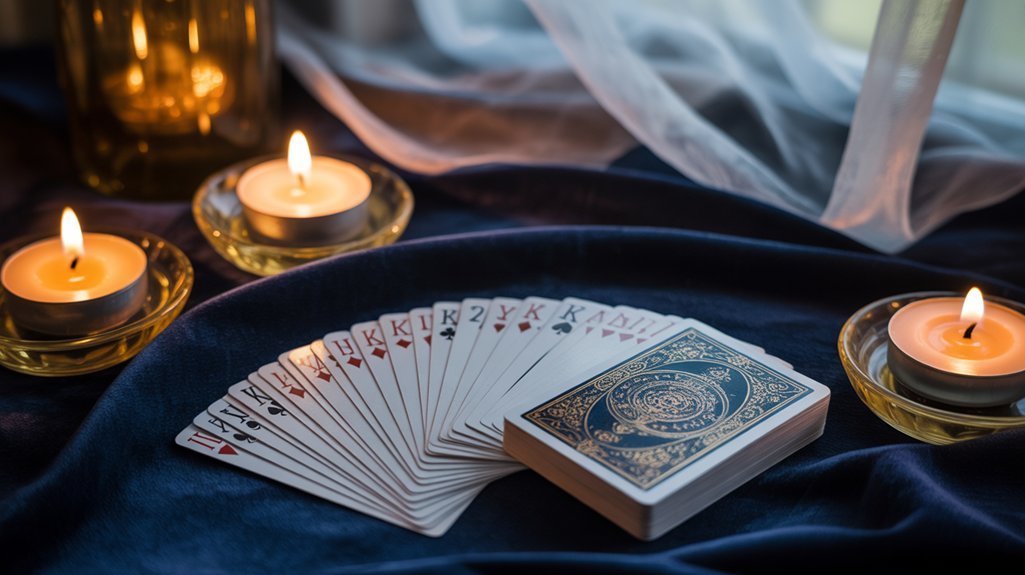
Ever sat down with a deck of cards, feeling curious about their deeper meaning? I remember my first attempts at reading them. It felt a bit overwhelming, like trying to decipher a secret language. But here’s the thing: those cards have a rich history that can help ground your practice.
Playing cards, originally born from gaming traditions in China, made their way through the Islamic world before arriving in Europe by the 14th century. They started as entertainment in Renaissance Italy, but by the 18th century, they’d transformed into tools for divination. Pioneers like Antoine Court de Gébelin and Jean-Baptiste Alliette shaped cartomancy, turning simple card games into gateways for insight.
So, how do you start? Grab a deck of cards tonight. Sit in a quiet space, shuffle them, and ask yourself a question. Pull a card and take a moment. What does it feel like to you? That’s your starting point.
The Evolution of Cards
As you explore this practice, remember that the shift from games to spiritual tools reflects our human desire to uncover hidden truths. Cards encourage us to listen to our intuition and engage with our inner selves. Witchcraft and empowerment have long been intertwined, and this connection can enhance your divination practice.
In my practice, I often remind beginners that personal interpretation is key. What I wish I’d known when I started is that each card can hold different meanings depending on your perspective. Don’t be afraid to let your intuition guide you. It’s okay to make mistakes; that’s how we learn.
Today, practitioners are embracing this legacy, using everyday cards not just for divination but also for self-reflection. It’s a beautiful blend of history and personal insight.
Practical Steps to Get Started
Here’s a simple practice you can try tonight:
- Find Your Space: Choose a quiet area where you won’t be disturbed.
- Set Your Intention: Think about a question or situation you’d like to explore. It can be anything from your current feelings to a decision you’re facing.
- Shuffle the Deck: As you shuffle, focus on your intention. This helps you connect with the cards.
- Draw a Card: When you feel ready, pull one card from the deck. Place it face up in front of you.
- Reflect: Take a moment to observe the card. What colors stand out? What emotions does it evoke?
- Journaling: Write down your impressions and any insights that arise. This practice can deepen your understanding over time.
Remember, this won’t work for everyone right away, and that’s perfectly okay. Be patient with yourself. Some days will feel more connected than others, and that’s part of the journey.
Honoring Traditions
As you explore card reading, it’s important to respect the traditions they come from. Some practices belong to closed or semi-closed traditions, so consider seeking guidance from practitioners within those communities if you feel drawn to them.
And if you’re using any physical tools like candles for your practice, always prioritize safety. Use fire-safe containers and never leave them unattended. If you’re working with herbs, check in with a healthcare provider about any potential interactions, especially if you’re pregnant or have existing health conditions.
Final Thoughts
So, what’s your first card going to be? Remember, this path is about personal discovery. Trust the process and let your intuition guide you.
What I’ve learned over the years is that there’s no right way to connect with your cards—just your way. Enjoy the journey, and know that every step you take is part of your unique story.
The Problem
When you engage in playing card divination, the insights you receive can sometimes highlight obstacles that demand your attention.
Recognizing these challenging predictions is crucial for anyone relying on the cards—whether you’re just starting out or are well-versed in the practice. Additionally, understanding that spellcasting is multifaceted can deepen your interpretation of the messages the cards convey.
Why This Matters
When I first started with cartomancy, I was overwhelmed by the stories and myths floating around. I remember hearing about ancient Egyptian ties and timeless mystical traditions and thinking, “Wow, this must be ancient wisdom.” But I learned the hard way that a lot of that’s more fiction than fact. If you’re starting out, you might be stuck in those same misconceptions.
Here’s the truth: cartomancy as we know it really blossomed in 18th-century France. Understanding this shifts your whole perspective. Instead of looking at tarot as some ancient oracle, you’ll see it as a clever evolution of Renaissance parlor games, crafted into a rich symbolic system. That’s where the real magic lies.
So, how does this affect your practice? It grounds you in authentic history. You won’t just be repeating what others say; you’ll interpret the cards with intention. Ever felt that pressure to conform to what’s “traditional”? Trust me, there’s freedom in knowing that symbolic meanings were built up over time, not just handed down from ancient sages.
Try This Tonight: Grab your deck and reflect on one card. Think about its historical context. What does it mean to you in today’s world? Start there. That’s enough for now.
As you explore, you’ll realize you have agency in your readings. You don’t have to perpetuate those old narratives. What I wish someone told me when I began is that your interpretations can be personal and valid, even if they differ from the norm.
Remember, this practice won’t resonate with everyone, and that’s okay. Be patient with yourself as you find your unique voice. Some practitioners might’ve differing views, and that’s valid, too.
Engagement Break: What’s your favorite card, and what does it mean for you?
As you dive deeper, keep in mind the importance of respectful sourcing. Whether you’re using crystals, herbs, or any other tools, look for ethical options. We’re all part of a bigger community, and being mindful about where our materials come from is crucial.
Now, let’s get practical. When you’re ready, try this simple spread:
- Shuffle your deck while focusing on a question or intention.
- Draw three cards: the first for your past, the second for your present, and the third for your future.
- Reflect on the meanings of the cards, considering both traditional interpretations and your own insights.
Final Thought: Trust the process. It’s okay to stumble — that’s part of growth. You’re not alone on this journey.
Who It Affects
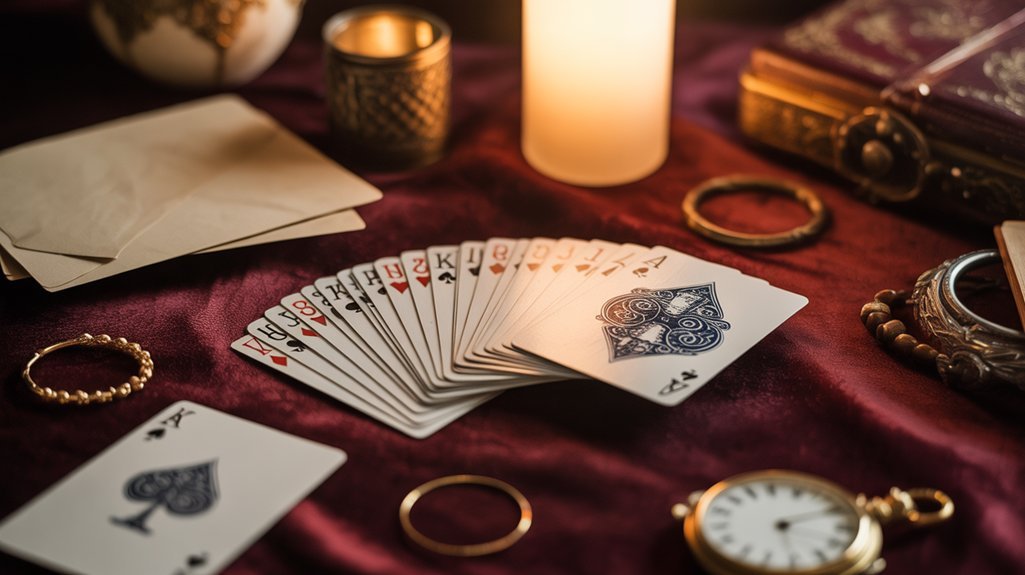
Have you ever felt drawn to the cards, curious about what they might reveal? I remember that feeling well. As someone who’s been practicing for over a decade, I’ve seen how more and more people, especially younger folks, are embracing cartomancy in ways that breathe new life into this ancient art.
You might be surprised to learn that Gen Z and millennials are leading this shift. Women aged 18-34 are the most enthusiastic, with a remarkable 62% exploring divination. But it’s not just women; men are joining in, and the LGBT community engages with cartomancy at three times the rate of the general population. They’re often looking for clarity during major life changes, seeking a safe space to explore their spirituality.
What’s driving this interest? It seems many are searching for mindfulness and a way to make thoughtful decisions without the constraints of traditional institutions. You might find this resonates with your journey, too. Start there.
You’ll also notice that people from diverse backgrounds—like Hispanic Catholics and Black Protestants—are increasingly turning to cards for insight. It’s fascinating to see how these communities are reshaping the narrative around self-discovery and guidance.
Now, if you’re thinking of trying this out, here’s a simple practice you can start tonight: Gather a deck of cards, light a candle in a safe container (never leave it unattended), and take a moment to ground yourself. Reflect on a question you’d like answered. Draw a card and let your intuition guide you. What do you feel when you look at the imagery? Trust your instincts; they’re often more insightful than you think.
In my practice, I’ve learned that it’s okay to question traditional interpretations. Some cards might resonate with you in ways that differ from established meanings. Remember, this isn’t about right or wrong; it’s about what feels true for you.
As you explore, be mindful of where you source your cards and materials. Ethical practices matter. There are many beautiful, sustainably sourced decks out there. This respect extends to the herbs you might use as well—always consult a healthcare provider before ingesting anything new, especially if you’re pregnant or on medication.
What I wish someone had told me as a beginner is this: be patient. Results vary, and some days will feel clearer than others. It’s all part of the journey.
The Explanation
You can trace cartomancy’s appeal to how your mind naturally seeks patterns in randomness, a cognitive tendency that makes card interpretations feel personally meaningful. The root cause lies in confirmation bias—you’ll remember hits and forget misses, reinforcing belief in the practice’s accuracy. Contributing factors include the deck’s flexible symbolism, which you can bend to fit almost any situation, and your own intuition, which fills gaps that cards alone can’t explain. Interestingly, many people also associate witchcraft with misconceptions about practices, leading to further misunderstandings about divination methods. So, what happens when you actually engage with this practice?
Understanding these psychological elements sets the stage for exploring how to harness them effectively in your own readings.
Root Causes
While playing card divination might seem easy at first glance, I remember how overwhelming it felt starting out. The truth is, there’s so much depth to explore. The symbols on those cards have traveled through centuries, from ancient Egyptian wisdom to modern practices we see today.
Each suit has its own vibe: Hearts vibe with emotions, Diamonds tap into finances, Clubs spark intellectual insights, and Spades reveal hidden hurdles. The numbers? They add another layer. Aces can signal fresh beginnings, Sevens might highlight areas of tension, and Nines often mark moments of completion.
Here’s a little secret I learned the hard way: it’s not just about reading static symbols. You’re creating a lively narrative based on how the cards sit together. Their proximity, order, and position matter. Ever felt that? Your intuition weaves these threads together, transforming what might seem random into something meaningful.
Ready to dive in? Start by pulling three cards. Lay them out in a row. Observe the suits and numbers. What do you feel when you look at them together? Trust your instincts. That’s enough for tonight.
As you continue, remember this: it’s a journey, and it won’t always be clear. Some practitioners may disagree about interpretations, and that’s okay. Each experience is unique. Embrace your path, and don’t rush it.
What I wish I’d known as a beginner? It’s okay to make mistakes. Each card can speak differently based on your personal experiences. Lean into that.
For a practical exercise tonight, try this: pick a specific question or area of your life you want insight into. Shuffle your deck while focusing on that question. Pull three cards and lay them out from left to right. Reflect on how they relate to your question and to each other.
And remember: this practice is about you. There’s no right or wrong way to interpret these cards. Just be patient with yourself. Trust the process — it unfolds in time.
Contributing Factors
So, have you ever picked up a deck of playing cards and wondered what they might reveal? I remember the first time I laid cards out, feeling a mix of excitement and uncertainty. It took me a while to realize that playing card divination isn’t just about the cards themselves; it’s about the connection you build with them.
Here’s a practical step to get started: grab a deck of cards, shuffle them while focusing on a question or intention. Pull three cards and lay them out. Instead of looking up their meanings right away, ask yourself what feelings or thoughts arise as you look at them. This is where your intuition starts to kick in.
Now, let’s talk about what makes this practice effective. It’s a blend of history and personal exploration—drawing from traditions like Chinese folk sorcery and Hoodoo, which have refined these practices over centuries. But it’s not just about the lineage; it’s about you.
Contributing Elements
- Synchronicity Alignment: Think about those moments when a card seems to speak directly to your situation. You’re tapping into chance and rhythm, trusting those meaningful coincidences. It’s like your subconscious is communicating with you. Ever felt that?
- Accessibility Breeds Confidence: Using a simple deck of cards makes divination approachable. You don’t need fancy tools or extensive training. This groundedness helps you build trust in your own abilities. Start there.
- Symbolic Density: Each card carries layers of meaning—suits, numbers, and court cards. This isn’t a rigid system; it’s a canvas for your creativity. You’ll find that the more you engage with these symbols, the clearer your intuitive pathways become.
As you explore, remember: you’re not just receiving interpretations; you’re co-creating meaning. This active involvement can feel empowering and enlightening.
Personal Insights
After years of working with cards, I’ve learned that the real magic often happens when you let go of strict interpretations. Trust your instincts.
What I wish someone had told me as a beginner is that there’s no wrong way to approach this. Some days, the cards might feel off; that’s okay. Be patient—results vary, and that’s part of the journey.
Next Steps
Want to dive deeper? Try this tonight: set aside a few quiet minutes. Light a candle in a fire-safe container—never leave it unattended—and focus on your question while shuffling.
Draw your cards and jot down your thoughts. Reflect on what each card means to you personally. This practice doesn’t have to be perfect. Just trust the process.
And remember, if you’re drawn to specific traditions, seek guidance from those who practice them. There’s a wealth of knowledge out there, and it’s always respectful to honor those roots. Happy exploring!
What the Research Says
When exploring the scholarly literature on card divination, you’ll discover a consensus on its historical roots and cultural variations.
However, the debate intensifies regarding whether these practices yield authentic divinatory insights or primarily reflect psychological projection.
With a shared recognition of card reading’s potential benefits in wellness contexts, experts diverge on whether these benefits stem from genuine spiritual efficacy or are merely placebo effects.
This complexity leads us to examine the nuances of how individuals experience and interpret these practices in their own lives.
What happens when you actually try card divination for yourself?
Key Findings
Playing card divination has a rich history that goes back to the 14th century, weaving through both Eastern and Western cultures. I remember my early days, fumbling through books, trying to make sense of it all. Here’s a tip: you don’t need Tarot’s complex imagery to start your journey. Just grab a deck of playing cards and start exploring their meanings.
In my practice, I’ve found that Chinese money-suited cards often carried profound symbolic meanings, while cartomancy really found its footing in Europe during the 18th century. France became a hotspot for card reading systems, focusing on love, money, and health. Isn’t it fascinating how these traditions have evolved?
If you’re new to this, know that there are several established methods you can explore. The English Method, the 32-card Foreign Method, and a few different 21-card and 56-card systems all offer unique frameworks. Start where you feel drawn. You might be surprised at what resonates with you.
Ever felt that spark of intuition while shuffling cards? It’s a beautiful thing. Modern research suggests that practicing cartomancy can enhance your intuitive skills and help you recognize symbols in everyday life. Trust me, I learned this the hard way: the more you practice, the more you’ll understand.
Ready to Try?
Here’s a simple exercise you can do tonight:
- Get Comfortable: Find a quiet space where you won’t be disturbed. Sit with your deck of cards.
- Set an Intention: Think about a question or theme you want to explore—love, career, or even just how your day might unfold.
- Shuffle the Deck: As you shuffle, focus on your intention. Feel the cards in your hands.
- Draw a Card: Pull one card from the deck and take a moment to reflect on its traditional meanings. What does it say to you?
- Journal: Write down your thoughts. What feelings did it evoke? Did any personal experiences come to mind?
That’s enough for a start. Remember, this practice doesn’t have to be perfect. Some days will feel more insightful than others, and that’s okay.
A Note on Ethics and Safety
As you engage in any spiritual practice, it’s essential to be mindful of your resources. If you’re using herbs or crystals, consider where they come from. Look for ethically sourced materials.
And if you’re ever ingesting herbs, consult a healthcare provider first.
What I wish I’d known as a beginner is that it’s okay to take your time. You don’t have to rush into anything. Some practices resonate more than others, and that’s perfectly valid.
Be patient with yourself; every practitioner’s journey is unique.
Next Step
If you feel comfortable, share your experiences with someone you trust, or even write about them. Reflecting on your insights can deepen your understanding.
Where Experts Agree
When I first started my journey with card reading, I remember feeling a mix of excitement and confusion. It wasn’t just about the cards; it was about understanding myself better. Ever felt that? Over the years, I’ve learned that while some folks dismiss divination as purely subjective, there’s a lot more happening beneath the surface.
You see, researchers and practitioners often notice consistent patterns in card reading that go beyond personal interpretation. Studies show that engaging with cards can enhance cognitive skills—like memory and pattern recognition. I wish someone had told me this early on. It makes so much sense, right? Just think about it: as you interact with the cards, you’re not just reading symbols; you’re training your mind to recognize and process information more effectively.
Let’s get practical. Using regular playing cards is a fantastic way to start. They’re accessible and portable—no need for fancy decks or expensive tools. You can build your confidence with symbols you’re already familiar with. Start there. Just grab a deck from your kitchen drawer and see what insights emerge.
Most importantly, card divination supports genuine self-reflection. I’ve found that it opens up meaningful dialogues with my subconscious. Whether I’m seeking psychological insights or spiritual guidance, the interpretive framework allows me to explore deeper layers of my thoughts and feelings. That’s something countless practitioners have experienced over the years.
Take a Moment
Have you ever sat with a card and felt a sudden clarity? It’s a beautiful experience. But remember, this won’t work for everyone right away. Be patient—results vary. What I wish I’d known as a beginner is that it’s okay to take your time. Trust the process.
As you explore this practice, consider the cultural origins of the methods you’re using. Some traditions are closed or semi-closed, so it’s essential to find guidance from practitioners within those communities. Respect and ethical sourcing matter—whether that’s ensuring your crystals are ethically mined or your herbs are sustainably harvested.
Ready to Try?
Here’s a simple exercise for tonight:
- Pick a Card: Shuffle your deck and draw one card.
- Reflect: Take a moment to think about what that card means to you personally.
- Write It Down: Jot down your thoughts, feelings, and any insights you gain from it.
- Check In: After a few days, revisit your notes and see if your perspective has shifted or deepened.
This practice can be a great way to engage with your intuition and notice how your understanding evolves. Remember, it’s a journey—every small step counts.
And don’t forget to keep that fire-safe container nearby if you’re working with candles, and consult your healthcare provider before trying any new herbs. Let’s keep this practice safe and respectful.
Embrace your unique path, and keep those questions coming. You’re not alone on this journey!
Where They Disagree
You know, when I first started exploring card divination, I felt like I was stepping into a world filled with contradictions. I remember the confusion that came with hearing seasoned practitioners debate whether Tarot or playing cards came first. It’s like standing at a crossroads, with each path offering its own unique insights. The truth? They probably evolved separately, and that’s perfectly okay.
Ever felt overwhelmed by all the differing methods? In my practice, I’ve seen folks argue over how to shuffle cards—some say seven times after invoking the spirits, while others swear by the cleansing ritual and three knocks. It’s fascinating, really! But here’s the thing: you’ll find your own way. What resonates with you is what matters most.
When it comes to interpreting cards, I learned this the hard way. The English method assigns the Eight of Hearts to gifts and journeys, but if you’re using a 32-card deck, things can look completely different. It’s all about personal interpretation. So, trust your instincts—start there.
Let’s talk about the heart of the matter: the power of the cards. Some scholars argue that cards are just tools for projection, kind of like psychological tests. On the flip side, many practitioners believe these ancient symbols carry genuine prophetic wisdom. Both perspectives hold value, and it’s okay to explore them without feeling pressured to pick a side.
Practical Tip: Try this tonight: pull a card and take a moment to sit with it. What feelings arise? What memories does it stir? Write down your thoughts. This practice is about tapping into your own insights, not just what traditional meanings say.
As you go deeper, you might notice the tensions between rational analysis and personal experience. That’s normal! Some practitioners have strong opinions, and that’s valid. Just remember, this journey is yours to shape.
If you’re ever unsure about a practice, especially one that draws from closed traditions, seek guidance from someone within that community. Respect is key.
Engagement Break: What’s been your experience with card interpretations? Have you found a method that feels right for you?
As you continue on this path, take your time. You won’t have all the answers immediately, and that’s okay. Be patient with yourself. Some days might feel easier than others, and that’s part of the process.
Next Step: Consider creating a small ritual around your card readings. Maybe light a candle (safely, of course—never leave it unattended!) and set an intention for your session. This simple act can help ground your practice.
What I wish I’d known as a beginner is to embrace the journey without rushing to fit into someone else’s mold. Your unique perspective is what makes your practice special. So take a deep breath, trust the process, and enjoy the magic of discovery!
Practical Implications
Having established the foundational cleansing rituals for your card deck, you might wonder how to deepen your practice.
The next phase involves honing your interpretive skills, ensuring that every reading resonates with clarity and insight.
Let’s explore how to navigate card meanings and effective spreads to elevate your divination experience.
What You Can Do
Ever felt a bit lost when trying to make sense of a card reading? I remember those days—sitting with a deck, feeling overwhelmed by the meanings, and wondering how to apply them to my life. It can feel daunting, but it doesn’t have to be. You can turn card divination into something genuinely useful, and it all starts with asking the right questions before you draw.
Here’s a simple way to start tonight: Pose a specific question that’s been on your mind. It could be about a relationship, a job situation, or even a personal challenge. This sets the stage for deeper insights and lets your intuition guide you.
Practical Takeaways:
- Navigate love decisions. Try a three-card spread to explore past patterns, current dynamics, and potential futures. It’s a straightforward way to gain clarity.
- Resolve workplace dilemmas. Use multi-angle readings to look at complex situations from fresh perspectives. What if you approached the issue from a different angle?
- Decode card combinations. Sometimes, you’ll find contrasting cards next to each other. Good cards next to challenging ones can signal nuanced truths. It’s not always a simple answer.
You’re not just predicting outcomes here. You’re building your intuitive decision-making skills. This approach treats divination as a valuable tool for self-discovery and strategic thinking, moving beyond traditional fortune-telling.
A Personal Note:
In my practice, I learned the hard way that it’s easy to get lost in the meanings of the cards. What I wish I’d known as a beginner is that personal interpretation is just as important. Trust your gut feelings about the cards; they often hold the most significance for you. Start there.
Let’s Engage:
What’s a question you’ve been pondering lately? Write it down. Take a moment to really feel what you want to know before diving into your reading. You might be surprised at the insights that come through.
Now for Some Grounding:
Remember, this won’t work for everyone, and that’s okay. Be patient with yourself. Sometimes, the answers take time to unfold.
As you draw your cards, keep your question close to your heart. Reflect on what each card means to you personally. Look for patterns and connections that resonate.
Next Steps:
Try doing a reading tonight. Pick a quiet spot, light a candle (make sure it’s in a fire-safe container, and never leave it unattended), and set your intention. You might also want to have a journal handy to jot down your thoughts and insights.
And if you’re using herbs in your practice, remember to consult with a healthcare provider if you plan to ingest them. It’s always wise to be aware of any potential interactions.
What to Avoid
Ever found yourself reaching for your tarot deck when life’s got you feeling a bit too much? I’ve been there. It’s tempting to pull cards when emotions are running high, but trust me, it often clouds your readings with your own worries. You might end up misreading the guidance, missing those clearer paths ahead.
So, here’s a simple tip: ground yourself before you shuffle. Take a moment to breathe deeply, feel your feet on the ground, and set a clear intention for your reading. Here’s the thing — vague questions lead to vague answers. Start there.
If you find yourself casting cards multiple times on the same issue, pause. You’re looking for insight, not validation. Just like I learned the hard way, repeated readings can dilute the process, making it feel more like a crutch than a tool for self-discovery.
When you do pull cards, avoid drowning in symbolism. It’s easy to get lost in the meanings and try to force connections between cards. Remember, the querent’s experience matters more than your own interpretations. Every reading is unique, and staying specific helps you deliver clarity instead of contradictory messages.
What I wish someone had told me as a beginner is that it’s okay to let go of your expectations.
Want to try something tonight? Before your next reading, jot down your thoughts and feelings on paper. This helps clear your mind and gives you a more grounded perspective. After years of working with this practice, I’ve found that a simple journal entry can transform how I approach my readings.
And hey, if you’re working with cultural symbols or practices, be respectful. It’s essential to acknowledge their origins, especially if they’re from closed or semi-closed traditions. If you’re unsure, reach out to practitioners from those traditions for guidance.
Recommended for You
🛒 Ritual Candles
As an Amazon Associate we earn from qualifying purchases.
Finally, a quick note about safety: If you’re using candles during your readings, always use fire-safe containers and never leave them unattended. And if you’re incorporating herbs or crystals, remember to consult a healthcare provider, especially if you’re pregnant or taking medications.
Comparison of Approaches
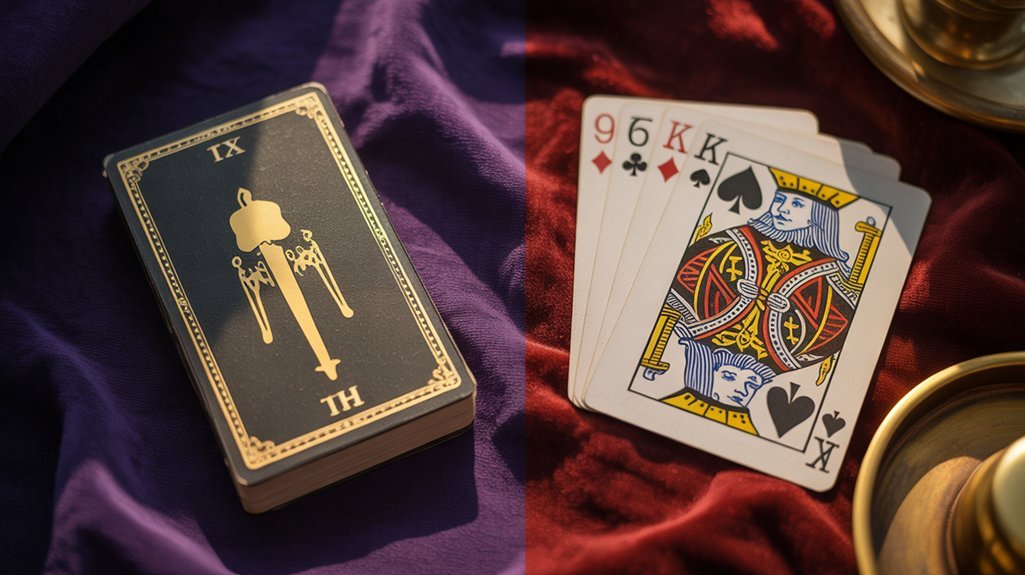
| Approach | Methodology | Focus |
|---|---|---|
| Traditional | Single-card meanings from 1729 texts | Established symbolism |
| Gypsy | Multi-card combinations, contextual adjacency | Relational insights |
| Modern | Poker-style spreads, personalized definitions | Individual evolution |
You know, when I first started reading cards, I felt overwhelmed by all the rules and traditions. It can be tough to navigate what resonates with you. Ever felt that? Breaking free from those outdated constraints can be liberating. That’s why I love blending Lenormand-style readings with suit values.
This contemporary approach mixes tarot positioning techniques with the practical symbolism of playing cards, creating a dynamic system that feels alive. It respects historical roots while inviting you to develop your own unique interpretations. You don’t have to stick to the old ways if they don’t speak to you.
Ready to try something new?
Start by pulling a few cards tonight. Look at their traditional meanings, but also consider how they relate to your current situation. You might find insights that surprise you.
In my practice, I learned that combining different styles can deepen your understanding. For example, using a poker-style spread allows for a more personal interpretation, which can really resonate in today’s world. Don’t hesitate to trust your instincts as you explore.
Remember, it’s okay if this process feels a bit messy at first. It won’t work for everyone, but that’s part of the journey. Some practitioners may prefer sticking to one method, and that’s valid too. Just know that there’s space for your voice in this practice.
What I wish someone had told me as a beginner: It’s all about connection. Focus on how the cards speak to you rather than getting bogged down by rigid meanings.
Here’s a practical step to get started tonight:
- Choose a quiet space where you can reflect.
- Pull three cards.
- Jot down their traditional meanings and then what they mean to you in this moment.
- Take a few deep breaths and let the insights flow.
Trust the process. That’s enough for now. You’re building your own path, and every step counts.
Key Takeaways
Cartomancy: A Beginner’s Guide to Your New Practice
Have you ever picked up a deck of playing cards and wondered about their hidden meanings? I remember the first time I tried cartomancy — it felt like a secret world was opening up to me. With over 600 years of history, cartomancy is a practice that’s stood the test of time. And here’s the good news: you can dive in without needing specialized tools or breaking the bank.
Ready to try something tonight? Grab any ordinary deck of cards you have lying around. Even the simplest deck can offer profound insights. Start by pulling one card and reflecting on its traditional meaning. Then, let your intuition guide your interpretation. What does that card say to you today?
Here’s what I’ve learned along the way:
- Accessibility transforms spirituality: Playing cards blend seamlessly into daily life. You don’t need to set up an elaborate altar or use specific tools. This makes it easy to incorporate your practice into everyday moments.
- Affordability removes barriers: You won’t find financial hurdles here. Everyone can access playing cards, making divination inclusive and welcoming.
- Intuition drives innovation: Your personal insights can breathe life into traditional meanings. Don’t feel confined by rigid systems. The beauty of cartomancy lies in its adaptability.
Let’s take a moment here. Have you felt the pressure to stick to traditional interpretations? It’s easy to get caught up in what you “should” do. Trust me, I’ve been there. What I wish I’d known as a beginner is that your unique voice is what makes your readings special.
Now, let’s get practical. Here’s a simple step-by-step to get you started tonight:
- Set the Space: Find a quiet spot where you won’t be disturbed. Light a candle if you’d like, but make sure it’s in a fire-safe container and never leave it unattended.
- Shuffle the Deck: As you shuffle, focus on a question or situation in your life. What do you need guidance on?
- Pull a Card: When you feel ready, pull a card from the deck. Take a moment to observe its imagery and color.
- Reflect on Meaning: Look up the traditional meaning of the card, but also ask yourself what it means to you today.
- Journal Your Thoughts: Write down your reflections. This practice helps deepen your understanding over time.
Remember, results vary, and that’s completely okay. Some cards might speak to you immediately, while others take time to unravel their messages. Be patient with yourself.
As you build your practice, keep in mind the importance of respecting the origins of any spiritual practice. If you’re drawn to particular traditions, seek guidance from experienced practitioners.
What’s next? Consider pulling a card each day this week. Reflect on its meaning and how it resonates with your life. You’re not just following a tradition; you’re carving out your own path in this rich, historical landscape.
Trust the process. Start there. Each card has a story to tell — and so do you.
Frequently Asked Questions
What Is the Historical Origin of Using Playing Cards for Divination Purposes?
Q: When did playing card divination start?
Yes, formal playing card divination began in late 18th-century France with Jean-Baptiste Alliette.
To explore this, you can start by researching his work and the meanings he assigned to each card.
Keep in mind that earlier informal practices existed, so it’s beneficial to learn from various sources to understand the broader context.
Q: Can I use any deck of cards for divination?
Yes, you can use a standard deck of playing cards for divination.
To get started, familiarize yourself with the meanings of each card and how they relate to your questions.
Just remember, some traditions might’ve specific decks or interpretations, so it’s helpful to explore those if you’re interested.
Q: Is card divination safe?
Yes, playing card divination is generally safe.
Just ensure you’re in a comfortable space where you can focus.
If you’re planning to incorporate other elements, like candles or herbs, always practice fire safety and be cautious with any substances you use.
How Do I Cleanse and Prepare My Deck Before Performing Card Readings?
Q: How do I cleanse my tarot deck before a reading?
Yes, cleansing your deck is a great idea. Start by passing your cards through sage or incense smoke to clear any lingering energies.
You can also gently knock the deck three times to disperse unwanted vibes. If you’re using crystals or moonlight, place your deck overnight with them.
Always ensure proper ventilation when using smoke, and be mindful of any allergies.
Q: Is it important to order my cards before a reading?
Yes, reordering your cards can help create clarity for your reading. After cleansing, take a moment to methodically arrange your cards.
This practice can set a focused tone. If you’re unsure how to order them, you can follow the traditional suits or your personal system.
Just make sure to handle your cards respectfully.
Q: How should I prepare myself mentally before a reading?
Yes, mental preparation is key. Take a few deep breaths and visualize white light surrounding you and your deck.
This helps set your intention and creates a peaceful atmosphere for your reading. You might also want to meditate briefly to clear your mind.
Remember, it’s okay to take your time in this process.
Q: Are there any safety concerns when cleansing my cards with smoke?
Yes, safety is important when using smoke. Always ensure you’re in a well-ventilated space and keep a fire extinguisher nearby if using sage or incense.
Make sure to check for any allergies or sensitivities to smoke or herbs. If you’re pregnant, consult a healthcare provider before using essential oils.
Can Playing Card Divination Predict Future Events With Scientific Accuracy?
Q: Can playing card divination really predict my future?
No — this is a common misconception because card divination mainly highlights psychological mechanisms like confirmation bias and pattern recognition.
Instead of looking for predictions, consider using the cards as tools for self-reflection. They can help clarify your current thoughts and inspire better decision-making. Remember, it’s important to approach this practice with an open mind and respect for its historical roots.
Q: Why do I sometimes feel the cards are accurate?
You might feel the cards are accurate due to the Barnum effect, where vague statements feel personally relevant.
To enhance your experience, focus on what the cards reveal about your own feelings and circumstances. It’s a good idea to keep a journal of your readings to track your insights over time. Always approach this practice with a critical eye and recognize its limitations.
Q: How can I get started with card divination?
Yes, and here’s how to start: Choose a deck that resonates with you, and familiarize yourself with its meanings.
Begin with simple spreads, like a one-card draw, to explore your thoughts and emotions. As you practice, remember to respect the cultural significance of the deck you choose, and consider learning from experienced practitioners. Enjoy the journey of self-discovery!
What Spiritual or Psychological Beliefs Underpin the Practice of Cartomancy?
Q: What do the cards actually represent in cartomancy?
Yes, the cards act as archetypal symbols reflecting your inner landscape. To get started, choose a deck that resonates with you and spend time familiarizing yourself with each card’s imagery and meanings.
Remember, interpretations can vary, so trust your intuition. If you’re exploring a specific cultural tradition, consider learning from experienced practitioners within that tradition.
Q: Can cartomancy predict the future?
No, this is a common misconception because cartomancy is more about self-discovery than fortune-telling. Begin by using the cards to explore your thoughts and feelings about current situations.
This practice can enhance self-awareness. Always approach readings with an open mind, understanding that outcomes are influenced by personal choices and circumstances.
Q: How do I interpret the cards during a reading?
Yes, interpreting the cards involves understanding their symbolism and trusting your intuition. Start with simple spreads, like a three-card layout, focusing on past, present, and future.
As you read, take notes on your impressions. Remember, your interpretations may evolve with experience, so don’t be hard on yourself as you learn.
Q: Is it safe to use candles during my readings?
Yes, using candles can create a calming atmosphere, but always practice fire safety. Keep candles on stable surfaces, away from flammable materials, and never leave them unattended.
If you’re incorporating herbs or essential oils, be sure to research any safety concerns, especially if pregnant or if you have allergies.
Are There Specific Card Spreads Recommended for Beginners Learning Divination?
Q: What’s the best way to start learning tarot?
Yes, starting with a one-card daily pull is a great way to build your foundational card knowledge. This simple practice helps you connect with the cards and their meanings.
As you grow more comfortable, consider journaling your insights to track your progress.
Q: How do I progress after one-card pulls?
Once you feel confident, try three-card spreads like Past-Present-Future or Mind-Body-Spirit. These spreads provide deeper insights without overwhelming you.
Just remember to take your time, and don’t rush into more complex spreads until you’re ready.
Q: When should I try five-card spreads?
You can move to five-card spreads after mastering the basics. These spreads allow for multi-layered interpretations, which can really enrich your readings.
Just ensure you feel grounded in your foundational meanings first, so you can enjoy the process.
Q: Are there specific cultural practices I should be aware of?
Yes, some practices are rooted in specific cultures or traditions. If you’re interested in those, it’s best to learn from practitioners within those communities to respect their teachings and context.
This approach ensures you honor the traditions properly.
Q: Is it safe to use candles during readings?
Definitely, but always practice fire safety when using candles. Keep them on a stable surface, away from flammable materials, and never leave them unattended.
Your safety is important, so be mindful of your surroundings.
Conclusion
Trust your intuition; it’s a powerful guide. Tonight, draw a card from your deck, and take a moment to really feel its energy. Sit in a quiet space for five minutes, breathing deeply as you focus on the card in front of you. Afterward, write down one sentence about any emotions or thoughts that arise. This simple practice can unlock insights you might not even realize you had. Start there. Remember, it’s all about listening to yourself and honoring what comes up. You’ve got this!
Beeswax Ritual Candle Set (7 Colors)
Pure beeswax candles in seven sacred colours for spellwork.
Check Price on AmazonChakra Crystal Healing Set (7 Stones)
Seven tumbled gemstones aligned to each chakra — perfect for ritual work.
Check Price on Amazon* As an Amazon Associate we earn from qualifying purchases. Prices and availability may vary.
✨ Explore tarot in-depth with Luna’s free tools:
- Complete Guide to All 78 Tarot Card Meanings
- 3,000+ Tarot Card Combination Meanings
- Get a Free 3-Card Tarot Reading from Luna
- Learn Luna’s Signature Tarot Spreads
Powered by Luna’s Circle — Free Tarot, Spells & Spiritual Tools
Continue Your Magical Journey
Free Witchcraft Starter Kit
Get 6 free printable PDFs: grimoire pages, moon calendar, spells, crystals, herbs, and tarot journal.
We respect your privacy. Unsubscribe anytime.
Enhance Your Practice
As an Amazon Associate, I earn from qualifying purchases.
🌙 Get a Free AI Tarot Reading
Luna reads the cards just for you — powered by AI, guided by the stars. No account needed.
Draw Your Cards Now ✨Powered by Luna's Circle — AI Spiritual Guidance