

Disclosure: This post contains affiliate links. If you click through and make a purchase, we may earn a small commission at no extra cost to you. Thank you for supporting this site!
Three years ago, I lit a plain white taper candle on my kitchen counter, set my late grandmother's rosary beside a chipped teacup of black coffee — the way she took it every morning — and asked her, out loud, if she could hear me. The candle flame bent sideways even though every window was shut. I'm not going to tell you that was definitely her. I will tell you that moment changed how seriously I take spirit correspondence work, and it's why I still keep a small “spirit shelf” separate from my main altar. Correspondences — the specific colors, herbs, crystals, and timing witches match to a particular intention — aren't decoration. They're a language, and in 2026, more beginners than ever are learning to speak it for spirit communication specifically, not just spellwork.
9 min read
In This Article
- What Is Spirit Correspondence Work, Exactly?
- Why Timing and Correspondence Matter More Than Beginners Think
- 7 Spirit Correspondence Rituals to Try in 2026
- Your Spirit Work Supply List (Budget-Friendly Options Included)
- Common Mistakes Beginners Make With Spirit Correspondence Work
- Frequently Asked Questions
Key Takeaways
- What Is Spirit Correspondence Work, Exactly?
- Why Timing and Correspondence Matter More Than Beginners Think
- 7 Spirit Correspondence Rituals to Try in 2026
- Your Spirit Work Supply List (Budget-Friendly Options Included)
What Is Spirit Correspondence Work, Exactly?
Correspondence work is the practice of pairing physical objects — candle colors, herbs, crystals, days of the week, moon phases — with the energetic quality you're trying to invite. It's a system that shows up across centuries of Western esoteric tradition, from the planetary correspondences in Agrippa's 16th-century “Three Books of Occult Philosophy” to the herb-and-color tables in Scott Cunningham's 1985 “Encyclopedia of Magical Herbs,” which is still the single most-cited beginner reference on any witch's bookshelf.
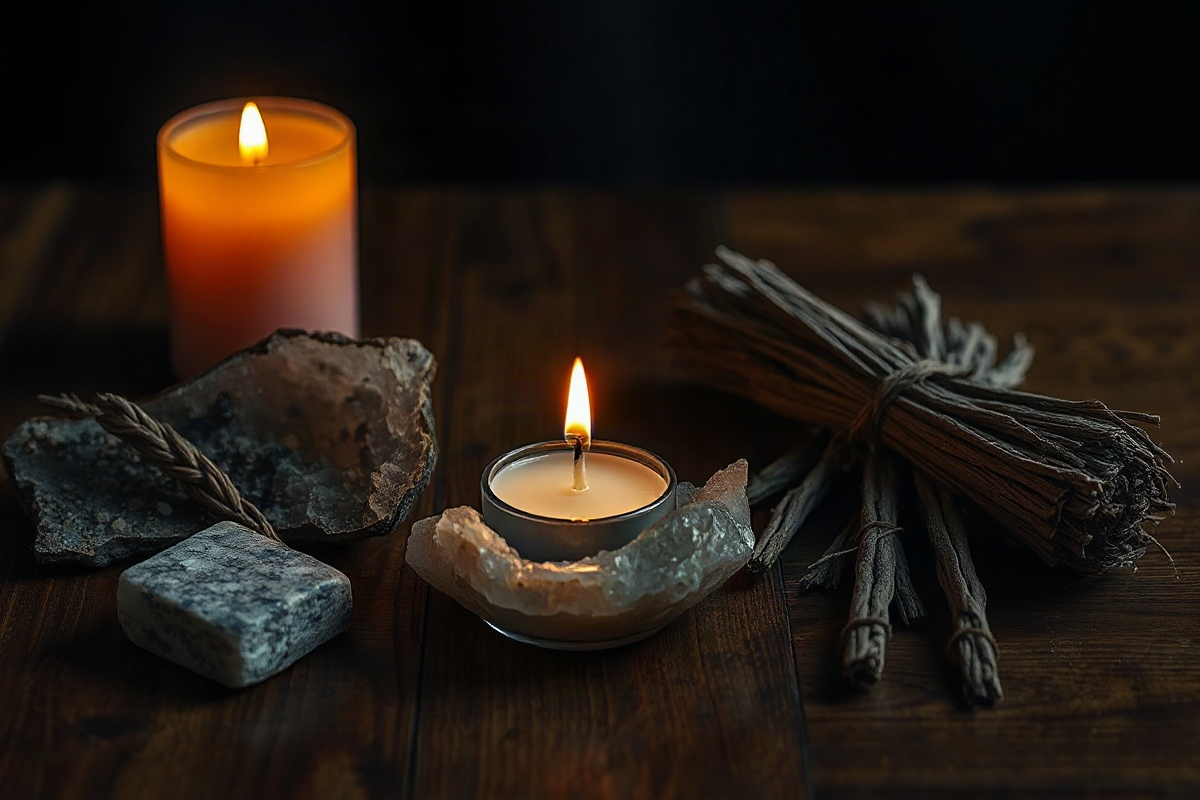
“Spirit” in this context is broad on purpose. It can mean a deceased loved one, a guide who's never been human, a house spirit, a nature spirit tied to a specific tree or river, or simply the collective energy of “spirit” as the fifth element alongside earth, air, fire, and water. You don't need to pin down exactly what you're contacting before you start — you need a clear intention and the right correspondences to hold that intention steady.
Think of correspondences like a dial, not a key. A purple candle doesn't unlock a spirit conversation on its own. It tunes your attention and, arguably, the environment's energy toward that frequency, the same way a specific playlist gets you into a mood faster than silence does. Whether you believe the mechanism is psychological, energetic, or both honestly doesn't matter much for practice — what matters is that it works, consistently, for the people who try it with focus and respect.
A purple candle doesn't unlock a spirit conversation on its own.
Why Timing and Correspondence Matter More Than Beginners Think
I get asked constantly whether correspondences are “necessary” or just aesthetic. Here's my honest answer after nearly a decade of practice: you can absolutely talk to spirit with nothing but your voice and intention. But correspondences give beginners something crucial — structure. When you're new, uncertainty is the biggest energy leak in any ritual. Knowing “amethyst for clarity, Monday for the moon and intuition, waning moon for release” removes decision fatigue and lets you actually focus on the work itself.
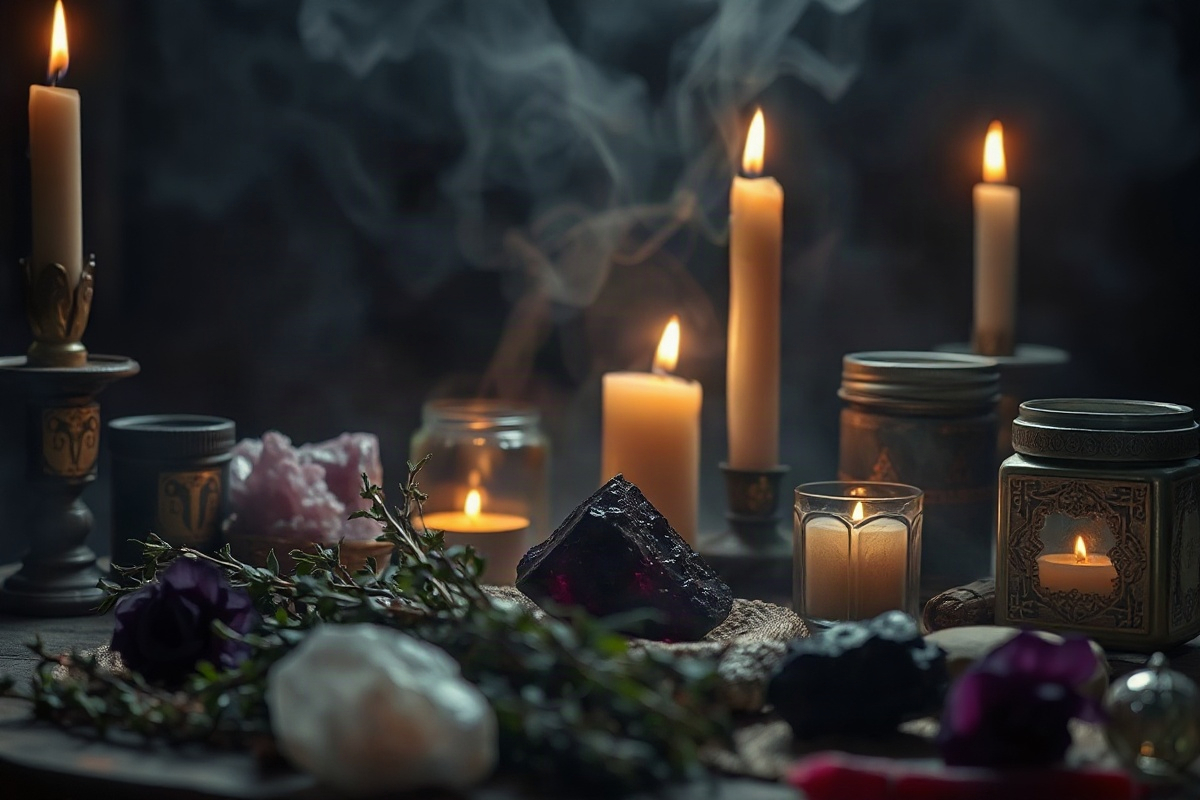
Moon phase timing matters more here than in almost any other branch of witchcraft. The veil between worlds — a phrase you'll hear constantly in spirit work — is traditionally considered thinnest during the New Moon (for invitation and new connections), the Full Moon (for clearest communication and charging tools), and around Samhain, October 31st, which sits on the Wheel of the Year as the specific point when Celtic-derived Pagan tradition marks the boundary between the living and the dead as porous. If you're tracking phases, our sister site moonrituallibrary keeps a running moon phase calendar that's genuinely useful for planning these rituals weeks ahead.
Skip the timing considerations if you must — spirits don't punch a clock, and plenty of solid contact happens on a random Tuesday afternoon. But in my own practice, and in feedback from readers who've tried both, rituals timed to the right lunar phase report clearer, more consistent results. That's not superstition; it's pattern recognition after doing this dozens of times.
That's not superstition; it's pattern recognition after doing this dozens of times.
7 Spirit Correspondence Rituals to Try in 2026
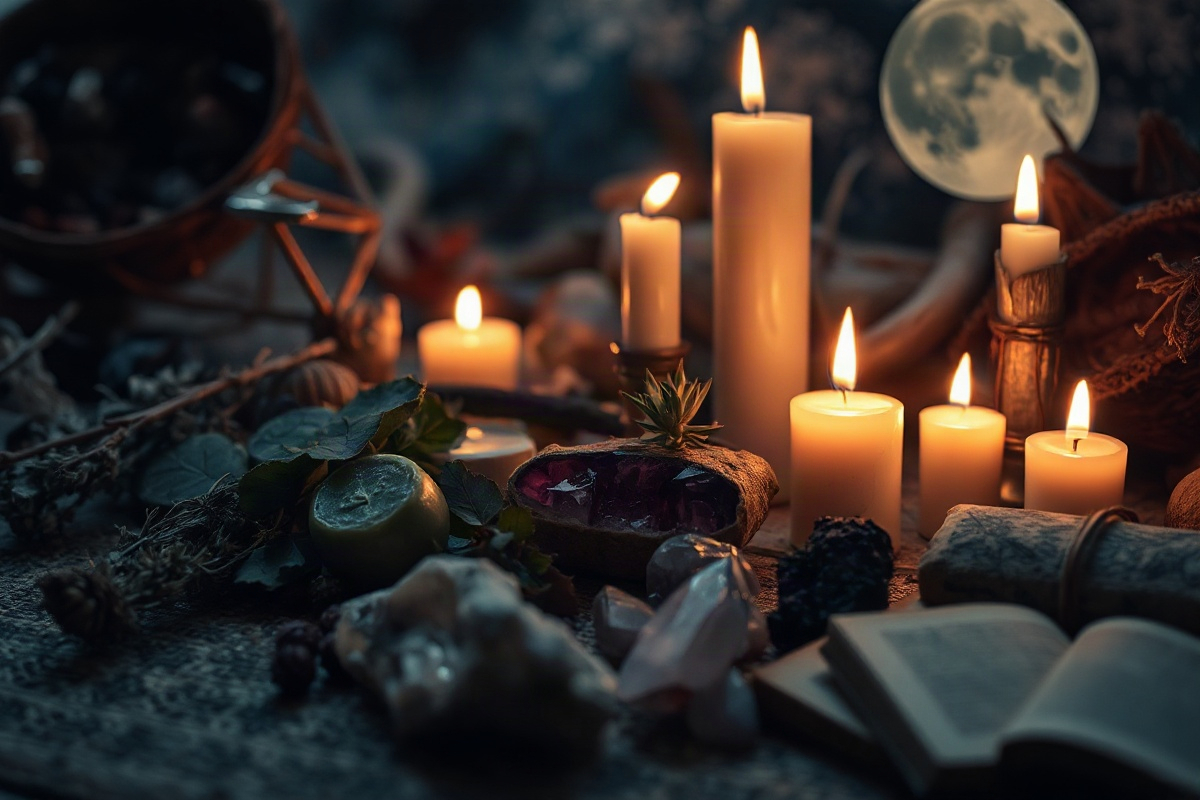
Each of these rituals pairs a specific intention with matching correspondences. Do them in order if you're brand new — they build in complexity — or pick the one that matches what you actually need right now. All of them can be done solo, indoors, in under 30 minutes.
1. The Ancestor Photograph Ritual (Best for: reconnecting with lost loved ones)
Set a photo of the person on a small table. Light one white or black candle — white for peaceful connection, black for protection while you open contact, both traditional in Western folk magic. Add a cup of something they loved (coffee, tea, whiskey, doesn't matter) and a pinch of rosemary, which has carried “remembrance” symbolism since at least Shakespeare's Ophelia and shows up in mourning customs across Mediterranean Europe. Sit for 10 minutes, speak to them plainly, and journal anything you notice afterward — a scent, a temperature shift, a thought that felt like it wasn't yours.
2. The New Moon Spirit Guide Introduction
New Moon nights (check your calendar — 2026's first New Moon falls January 18th) are ideal for first contact with a guide, not a loved one. Light a purple or white candle for intuition and clarity. Hold a piece of clear quartz or amethyst — both prized for “amplifying” perception in crystal-work traditions dating to Victorian-era occultism — and simply ask, out loud or silently, “Do I have a guide who wishes to introduce themselves?” Note any name, symbol, animal, or color that surfaces. Write it down immediately; these impressions fade fast.
3. The Dream Communication Sachet
Mugwort has been used in European and Chinese folk practice for dream work for centuries — it's the star ingredient in most “dream pillow” recipes you'll find, including Cunningham's. Sew or tie a small cloth pouch with a teaspoon of dried mugwort and a chip of amethyst, and slip it under your pillow before bed on a Monday (the traditional day of the Moon). Safety note: mugwort is contraindicated in pregnancy and can trigger allergic reactions in people sensitive to ragweed — swap in dried lavender if that's you.
4. The Threshold Welcoming Ritual
This one invites benevolent house spirits or a specific ancestor to visit your home rather than reaching out into the ether. Sweep your front doorstep (literal broom, literal dust — the folk-magic gesture of “clearing the way” is centuries old), then place a small dish of salt and a sprig of bay leaf on the threshold. Ring a small bell three times — bells appear in spirit-calling traditions from Catholic liturgy to Japanese Shinto because the sound is believed to cross between states of awareness more easily than speech.
5. The Four Elements Spirit Circle
Lay out four small bowls in a square: a feather or stick of incense for Air, a lit tealight for Fire, a small dish of water for Water, and a pinch of salt or a stone for Earth. Sit in the center. This ritual calls on “spirit” as the unifying fifth element — the framework goes back to classical Greek philosophy and was formalized into modern witchcraft by Gerald Gardner's mid-20th-century Wiccan writings. It's less about contacting a specific entity and more about attuning yourself to spirit as a presence, which beginners often find calmer and less intimidating than direct-contact work.
6. The Full Moon Mirror Scrying Session
Fire and glass safety first: use two white candles positioned behind you, not in front of the mirror, and never leave an open flame unattended near a reflective surface you're staring at for 15+ minutes. Sit facing a dark mirror or a black bowl filled with water, in a dimly lit room, ideally during the Full Moon (April 1st, 2026, is a good early-year target). Hold a piece of black obsidian — long associated with protective scrying — and soften your gaze rather than staring hard. Most beginners see nothing their first three or four attempts. That's normal. Scrying is a slow-build skill, not a switch.
7. The Protective Spirit Boundary Ritual
Do this one after any of the above, or anytime contact feels overwhelming. Mix black salt (regular salt with ash from a burned bay leaf, cooled completely) and sprinkle it across your doorway or around your workspace. Burn a small bundle of dried cedar or rosemary — always in a fireproof dish, never near curtains or papers, and never left unattended — to clear the space. Hold black tourmaline while you state, firmly, that only energy for your highest good may remain. This is your “close the door” ritual, and every spirit worker should have one.
This is your “close the door” ritual, and every spirit worker should have one.
Your Spirit Work Supply List (Budget-Friendly Options Included)
You do not need a $60 crystal grid kit or an antique silver bell to do any of this. Here's what actually matters, with real price ranges:
- Candles: plain white, black, and purple tapers or tealights ($4-8 for a pack of 12 at most grocery stores). Skip the $18 “spirit contact” branded candles — the color and your intention do the work, not the label.
- Crystals: a rough clear quartz point ($3-6), amethyst tumbled stone ($2-5), black obsidian ($4-7), black tourmaline ($5-10). Buy from a local metaphysical shop if you can — many will let you handle stones before buying, which matters more than people expect.
- Herbs: dried mugwort, rosemary, bay leaf, cedar — $3-6 per ounce from a spice shop or online herbalist. You genuinely do not need “ritual grade” herbs; the mugwort in a bulk-herb bin works exactly the same as one marketed for witchcraft at triple the price.
- Mirror or scrying bowl: a $5 thrifted picture frame with black paint on the glass works as well as a $45 “scrying mirror.”
- Bell: any small bell — a cat's collar bell is fine.
- Fireproof dish: an old ceramic bowl or ashtray, not a candle in itself.
Total cost to try all seven rituals above: roughly $25-40 if you're starting from zero, less if you already have candles and a kitchen spice rack with rosemary and bay leaf in it.
Common Mistakes Beginners Make With Spirit Correspondence Work
- Skipping grounding afterward. Eating something, drinking water, or literally putting your bare feet on the floor for two minutes resets your energy. Skipping this step is the number-one reason beginners report feeling “foggy” or unsettled after a session.
- Burning herbs with windows and doors shut. Ventilate the room. Mugwort and cedar smoke can trigger asthma and migraines faster than sage does.
- Expecting Hollywood-level contact. A cold draft, a flickering flame, a name popping into your head — that's what real spirit contact usually feels like. It's subtle almost every time.
- Not closing the circle or ritual. Always end with a clear statement or the boundary ritual above. Leaving things “open” is the most common beginner complaint I hear about feeling drained.
- Using someone else's closed cultural practice without invitation or context. Stick to the traditions above, which come from broadly shared Western folk magic and modern Wicca, or do real research into lineage and permission before borrowing anything more specific.
Deepen your practice, one ritual at a time
Join our circle for seasonal rituals, moon guides, and gentle prompts — sent with intention, never spam.
Frequently Asked Questions
Do I need to be Wiccan or follow a specific tradition to do spirit correspondence work?
No. Spirit correspondence work predates Wicca by centuries and shows up in folk magic traditions across Europe, in Spiritualist practice from the 1840s onward, and in modern secular energy work. You can practice this as an eclectic witch, a spiritual-but-not-religious person, or alongside any existing faith — just adapt symbols to what feels authentic to you.
How do I know if a ritual “worked” or if I'm just imagining things?
Keep a written log every time — note the date, moon phase, and anything you noticed, however small. Patterns emerge over weeks, not one session. If the same symbol, name, or sensation shows up across three or more unrelated attempts, that's a much stronger signal than any single dramatic moment.
Is it dangerous to contact spirits as a beginner?
Not inherently, and you shouldn't let fear-based warnings stop you from trying. That said, always use a closing or boundary ritual (see Ritual #7) and trust your gut — if a session feels wrong, stop, ground yourself, and try again another day. Most “bad” experiences beginners report trace back to skipping grounding, not to anything sinister.
Can I combine tarot with these rituals?
Yes, and many practitioners do — pulling a single card before or after a ritual for extra clarity is common practice. The Death, Star, and High Priestess cards are frequently associated with spirit and intuition work in modern tarot interpretation, though any card can offer insight depending on the spread.
What if nothing happens the first few times?
That's the norm, not the exception. Scrying alone typically takes most beginners 4-6 sessions before they notice anything. Treat these first attempts as calibration, not failure — you're learning to notice subtle shifts most people spend their whole lives tuning out.
Start small: pick one ritual from this list — the ancestor photograph ritual is the gentlest entry point — and try it on the next New Moon or Full Moon on your calendar. Keep a dedicated notebook just for spirit work logs; the patterns you'll spot after a month of entries are worth more than any single dramatic “sign.” And build your supply kit gradually rather than buying everything at once — a $4 white candle and a pinch of rosemary from your spice rack is a completely legitimate place to begin. This work rewards patience and repetition far more than expensive tools, and there's real community in sharing what you notice — drop your experiences in the comments or bring them to our next moonrituallibrary lunar calendar post. You're not doing this alone.
📚 Explore More on This Topic
Editor's Pick: a set of guided journals for spirit communication.
Join The Mystic Circle
Weekly spells, moon rituals & magickal wisdom — plus a free ritual planner.
Continue Your Magical Journey
Enhance Your Practice
As an Amazon Associate, I earn from qualifying purchases.
Everything a Witch Needs, in One Living Grimoire
941 pages across 5 volumes and 6 bonus guides — foundations, herbalism, tarot, crystals, 26 traditions, a fillable Book of Shadows, and a seasonal companion. The last witchcraft resource you'll ever need.
🌙 Get a Free AI Tarot Reading
Luna reads the cards just for you — powered by AI, guided by the stars. No account needed.
Draw Your Cards Now ✨Powered by Luna's Circle — AI Spiritual Guidance
Your Free Moon Ritual Calendar
24 rituals for every new and full moon of 2026, plus sabbat celebrations, moon water guide, and monthly crystal & herb correspondences.
Get the Moon CalendarAlso: Free Spellbook