
- Key Takeaways
- Introduction
- The Problem
- Why This Matters
- Dive Deeper
- Reflect and Connect
- Moving Forward
- Who It Affects
- A Practical Takeaway
- Reflect and Engage
- The Explanation
- Root Causes
- Contributing Factors
- What the Research Says
- Key Findings
- Key Findings in Magical Practices
- Practical Steps to Enhance Your Practice
- Connecting with Tradition
- Final Thoughts
- Where Experts Agree
- Where They Disagree
- Practical Implications
- What You Can Do
- What to Avoid
- Comparison of Approaches
- Key Takeaways
- Frequently Asked Questions
- Can I Create My Own Personal Witchcraft Symbols With Unique Meanings?
- Are Certain Symbols More Powerful During Specific Moon Phases or Seasons?
- How Do I Safely Store or Display Witchcraft Symbols in My Home?
- What’s the Difference Between Cultural Appropriation and Respectful Symbol Adoption in Witchcraft?
- Q: What’s the difference between cultural appropriation and respectful symbol adoption in witchcraft?
- Can I Combine Symbols From Different Witchcraft Traditions in My Practice?
- Conclusion
- Related Posts
- Related Posts
- Related Reading
- Related Posts
- Related Posts
- Related Reading
- Related Posts
- Awaken Your Inner Witch
Have you ever found yourself staring at a pentagram or moon phase, wondering what it really means while preparing for your ritual? You’re not alone—many beginners feel that way. Tonight, you can start recognizing 12 essential symbols that will enhance your practice. After 10 years of exploring this path, I can tell you that understanding these symbols isn’t as daunting as it seems. Each one holds a unique purpose that can guide your work. So, grab a notebook and jot down what resonates with you; start there. You’ll be amazed at how quickly these symbols can enrich your experience.
Key Takeaways
- Use an upright pentagram for protection in rituals — it creates a powerful shield against negative energies during your practice.
- Incorporate elemental symbols in your spells: use fire for transformation, air for clarity, water for intuition, and earth for grounding to enhance effectiveness.
- Explore the Ogham alphabet to connect with tree wisdom — this tool helps you communicate with nature spirits and deepen your magical practice.
- Reflect on your personal symbols monthly to track their evolving meanings — this practice enriches your magical understanding and experience over time.
- Dedicate 15 minutes daily to work with your chosen symbols — consistent practice amplifies their energy and boosts your spiritual potency significantly.
Introduction
Starting your witchcraft journey can feel overwhelming, can’t it? I remember the excitement and confusion that swirled together when I first began. One of the most valuable lessons I learned along the way is the importance of symbolism. It’s more than just pretty designs—symbols are like a secret language that connects you with ancient traditions and helps you channel your intentions.
Here’s a quick tip to try tonight: Find a simple symbol that resonates with you—maybe a crescent moon or a protective sigil. Draw it in a notebook or on a small piece of paper. This isn’t about perfection; it’s about intention. Start there.
Symbols in witchcraft are dynamic tools that amplify your magical work. Each one carries specific energetic signatures, allowing you to communicate with spiritual forces and manifest your goals with clarity. Whether it’s a protective sigil or an invocation to a deity, these sacred forms create a bridge between your conscious intent and unseen energies.
Symbols in witchcraft are dynamic tools that amplify your magical work, creating a bridge between your conscious intent and unseen energies.
In my practice, I’ve discovered that mastering this symbolic language opens up new dimensions in your work. You can wear these symbols as talismans, inscribe them in your spellwork, or even integrate them into your personal space. They become extensions of your will, transforming abstract ideas into tangible actions.
Have you ever felt a symbol resonate deeply within you? Maybe you’ve seen a rune that felt like a whisper from the past or a sigil that sparked a sense of safety. Embrace that feeling. Symbols can guide you, but remember, there’s no one right way to interpret them.
It’s important to respect where these symbols come from. Some practices belong to closed traditions, so if you’re drawn to a specific culture, seek guidance from those who are part of it. This isn’t just about honoring the tradition; it’s about grounding your practice in respect.
A word of caution: If you’re working with herbs or candles, always prioritize safety. Use fire-safe containers for candles and never leave them unattended. If you’re ingesting herbs, check with a healthcare provider, especially if you’re pregnant or on medication.
Now, let’s talk about some practical steps. Pick a symbol that speaks to you today. Research its traditional meanings—this adds depth to your practice. Then, create a small ritual around it. Light a candle (safely, of course) and focus on your intention as you draw or visualize the symbol. Feel its energy. Trust the process.
What I wish someone had told me when I first started is that symbols are personal. They can shift and change meaning over time. Be patient with yourself as you explore. This won’t work for everyone, and that’s okay.
As you continue your journey, keep experimenting with different symbols. Each one can lead you to new insights and deeper connections.
Ready for your next step? Tonight, take a few moments to meditate on the symbol you chose. Ask it what it wants to teach you, and listen closely. Your intuition is your greatest guide.
Additionally, remember that the pentagram is one of the most recognized symbols in witchcraft, often used to represent the elements.
The Problem
You’re stepping into a practice where symbols carry deep significance, yet no single authority dictates their meanings or correct usage.
This ambiguity can lead to serious misinterpretations—imagining a pentagram as malevolent or misidentifying a triquetra as purely Christian—clouding your spiritual journey and distancing you from seasoned practitioners.
This confusion is particularly challenging for anyone starting their witchcraft path, whether alone or within a coven, since each tradition brings its own interpretations of these potent symbols.
Moreover, understanding the forgotten witchcraft symbols can enrich your practice and provide clarity on their true meanings.
Why This Matters
When I first started my journey into witchcraft, I often felt lost. It was like trying to navigate a vast ocean without a map. One thing I learned—symbols are your compass. Without them, you’re casting spells with one hand tied behind your back.
Symbols aren’t just pretty decorations; they’re the language spirits understand. They help focus your energy and translate your intentions into real-world changes. Ever felt like your spells just didn’t hit the mark? That’s often because you’re missing those vital layers that enhance potency and create the right conditions for manifestation.
Here’s a practical tip: start by choosing one symbol that resonates with you. Maybe it’s a simple shape or an emblem from a tradition that speaks to your heart. Use it in your rituals this week. That’s enough to begin forging a connection.
If you skip recognizing symbols, you’re casting in the dark. You might miss out on the guidance of deities or ancestral spirits that can significantly accelerate your growth. I remember feeling overwhelmed by all the correspondences at first. It’s easy to get lost in the details. But really, it’s about finding what feels right for you.
Take a moment to think about your personal symbols. They’re tied to your unique journey, waiting for you to explore them. I wish someone had told me how important these connections are early on. They can turn a casual practice into something genuinely effective.
Dive Deeper
Let’s talk about correspondences. They’re the threads that weave your rituals together. Each herb, crystal, or candle color carries traditional meanings. For example, lavender is often associated with peace and healing, while black tourmaline can offer protection.
When you understand these connections, your rituals become more cohesive and powerful. But remember, this isn’t a one-size-fits-all approach. Some practitioners might have different interpretations, and that’s okay. Your intuition is a valuable guide. Be patient with yourself; results can vary.
If you’re ready to dive in, try this tonight: choose an herb or a crystal that resonates with you. Research its traditional associations and write them down. Then, incorporate it into your next ritual or meditation. Feel the difference it makes.
Reflect and Connect
Take a moment to reflect. What symbols or correspondences have you encountered that resonate with your spirit? Share your thoughts or experiences in a journal. This practice can deepen your connection to your craft.
And don’t forget safety! If you’re using candles, always place them in fire-safe containers and never leave them unattended. When working with herbs, especially for ingestion, consult a healthcare provider to avoid any adverse effects.
Moving Forward
As you continue on this journey, embrace those personal symbols. They’re not just decorations; they’re keys to deeper understanding and connection. What I wish I’d known as a beginner is that it’s all about personal interpretation. Trust your instincts.
Who It Affects
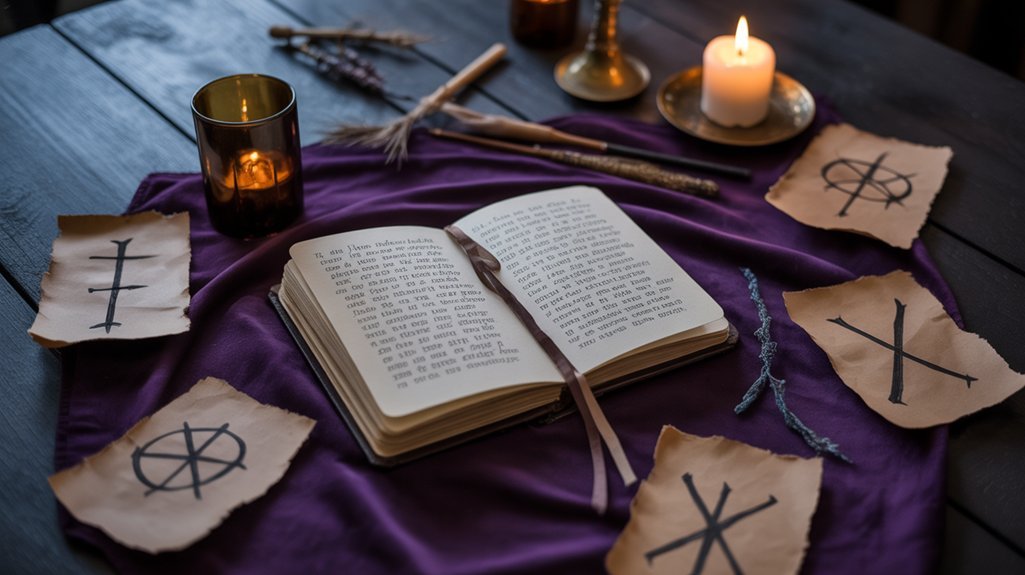
Ever felt overwhelmed by all the symbols out there? I remember when I first started, I was excited yet confused. It’s easy to think that mastering symbols will be a smooth ride, but the truth is, each of us faces unique obstacles along the way.
If you’re dealing with information overload, symbol recognition can feel like another layer of fog rather than a guiding light. You might find it hard to pinpoint which symbols truly resonate with your goals. Start by focusing on just one or two symbols that speak to you. That’s enough for now.
For those of you who practice inconsistently, I learned this the hard way: symbols can lose their energy when they’re not woven into your daily life. You can’t build the momentum they need if your practice is sporadic. Try setting aside just five minutes a day to engage with a chosen symbol. Trust the process; it’ll deepen your connection.
If you’re in a situation where cultural or geographic constraints limit your practice, you’re not alone. It can be tough to explore symbols openly. Sometimes, you might need to practice discreetly, which can feel isolating. Seek out online communities or local practitioners who share your interests. Connecting with others can lighten that burden.
And for beginners, I get it: you might feel frustrated when results don’t come quickly. I wish someone had told me that subtle shifts matter. Those small changes in your life? They’re part of the journey. Don’t dismiss them. Every little step counts.
Your unique context shapes how symbols serve your practice. What works for one person may not resonate with another, and that’s perfectly okay.
A Practical Takeaway
Ready to try something tonight? Choose one symbol that stands out to you. Write it down and reflect on what it means to you personally. How does it relate to your current situation? This simple act can ground your practice and help clarify your intentions.
Reflect and Engage
What’s been your biggest challenge when working with symbols? Share your thoughts. Sometimes, talking it out can provide clarity.
The Explanation
Navigating the complexities of symbol selection can feel overwhelming, especially when balancing various traditions and personal beliefs. This challenge not only stems from the diverse meanings symbols hold across practices but also from the pressure to choose wisely before you’ve established your own foundation. Understanding the significance of witchcraft symbols can help clarify your choices as you embark on your journey.
Root Causes
Understanding why certain symbols resonate with beginner witches is a journey worth taking. I remember when I first started; I was drawn to symbols like the pentagram and cauldron, but I didn’t always know their rich histories. Ever felt that pull?
These symbols have roots in ancient fertility rituals and spiritual practices across places like Egypt, Mesopotamia, and medieval Europe. Your brain naturally categorizes symbols into belief systems, triggering emotional responses. It’s fascinating how our minds work!
What I wish I’d known back then is that these symbols emerged partly from rebellion against authority. They carry deep associations with independence and resistance. You might find that really empowering. Culturally, symbols like these represent female autonomy and alternative power sources. And that’s something we all can connect with, regardless of our backgrounds.
Try This Tonight: Take a moment to sit quietly with a symbol that speaks to you. It could be a pentagram, a cauldron, or even something personal. Close your eyes and breathe deeply. Visualize what that symbol means to you. Start there.
Each symbol you adopt carries centuries of meaning, embedded in human cognition and social memory. They can be genuinely effective tools in your practice. But remember, this won’t work for everyone, and that’s okay. Trust the process.
As you explore these symbols, think about their origins. Some practices come from closed or semi-closed traditions, so it’s always respectful to seek guidance from those within those paths.
Engagement Break: What symbols resonate with you? Why do you think they hold power in your practice?
The first time I tried working with herbs, I learned the hard way about the importance of sourcing. Sustainable harvesting is key. If you’re using herbs for ingestion, always consult with a healthcare provider first. Never underestimate the potential for interactions, especially if you’re pregnant.
In my practice, I’ve found that the more you engage with these symbols, the more personal meaning they gain. Remember, this journey is yours. Some practitioners might disagree, and that’s valid too.
Next Step: Choose a symbol that resonates with you. Start a journal and jot down what it represents for you. Reflect on its historical context and how it aligns with your personal beliefs. It’s all about finding your voice in this vast, beautiful tapestry. You’ve got this!
Contributing Factors
Each symbol you encounter in your practice holds a depth of meaning that can enhance your journey. I remember when I first started, feeling overwhelmed by the choices. But here’s the thing: these symbols aren’t just pretty images; they’re gateways to connecting with complex energies.
Let’s break it down:
- Multidimensional representation – Each symbol can represent various concepts, like elements, goddess aspects, or opposing forces. This means you can channel multiple energies with just one focus point. Ever felt that? It’s powerful.
- Ancestral resonance – Think about symbols like the Triquetra or the Witch’s Knot. They carry centuries of intentional energy work. That means you’re tapping into established pathways, making it easier to access what you need without starting from scratch. I wish someone had emphasized this when I began.
- Visual anchoring – Your mind sees these symbols as containers for specific magical purposes. When you focus on a symbol, it aligns your intention with its archetypal power. It’s like flipping a switch. Start there.
You’re not inventing a new system; you’re building on what’s already there. This can speed up your magical development more than you might think.
Try this tonight: Pick a symbol that resonates with you. Sit quietly for a few minutes. Visualize it. What comes to mind? What feelings does it bring up? Trust that process.
Remember, this practice isn’t one-size-fits-all. Results vary, and that’s okay. Some practitioners might’ve different views on these symbols, and that’s valid too.
Now, let’s talk about safety. If you’re incorporating candles into your rituals, always use fire-safe containers and never leave them unattended.
Also, if you’re working with herbs, consult a healthcare provider, especially if you’re pregnant or on medication.
When I first tried working with these symbols, I often overlooked their historical context. Take the time to understand where they come from. Each tradition has its own stories and meanings. Engaging with these roots can deepen your practice.
Here’s a practical exercise: Research a symbol you’re drawn to. Look into its origins and traditional uses. Write down your findings and reflect on how it resonates with you. That’s enough for now.
As you explore, remember to approach each symbol with respect. Some practices come from closed traditions, so seek guidance from those within those communities if you’re unsure.
What I wish I’d known as a beginner is that it’s okay to make it your own. While tradition is important, your personal interpretation matters too. You’re carving your path, and that’s beautiful.
Now, go ahead and connect with a symbol tonight. Let it guide you.
What the Research Says
Experts largely agree that symbols function as psychological anchors, embedding themselves in your unconscious mind to foster personal empowerment and spiritual growth.
However, they diverge on whether these symbols stem primarily from historical apotropaic traditions—protective marks meant to ward off evil—or from modern Wiccan reinterpretations that emphasize goddess imagery and environmental spirituality.
This divergence invites deeper exploration into how these symbols can influence your understanding of empowerment and protection.
Key Findings
Key Findings in Magical Practices
When I first started exploring witchcraft, I was captivated by the symbols that seemed to pulse with energy. They felt like secret keys to a hidden world. And guess what? You don’t need to be a seasoned practitioner to connect with them. Here’s a simple takeaway: choose a symbol that resonates with you tonight. Maybe it’s a pentagram, or even a simple star. Trust your intuition.
Symbols are more than just pretty pictures; they’re concentrated vessels for your intention. Think about elemental associations: fire for transformation, air for clarity, water for intuition, and earth for grounding. Each element adds a layer to your spellwork. Ever felt that moment when a candle flame flickers just right? That’s fire communicating with you.
The pentagram is a powerful example. When it’s upright, it channels protection; when inverted, it aids banishment. I learned this the hard way—understanding the orientation can really shift your practice.
You might also explore ancient systems like the Ogham alphabet. This connects you to tree wisdom and nature spirits. It feels like a bridge between modern practice and historical roots. If you’re curious, try writing your intentions in Ogham tonight.
Ritual tools? They’re not just objects; they’re energetic conduits. Your wand can channel power, your chalice can receive divine energy, and your athame can cut through boundaries. Each tool has a purpose, and understanding that purpose can help you amplify your magic.
Practical Steps to Enhance Your Practice
- Choose Your Symbol: Pick one that resonates with you. It could be from an ancient tradition or something personal.
- Set Up Your Space: Create a small altar or a dedicated space for your practice. This doesn’t have to be elaborate—just a clean surface where you feel comfortable.
- Gather Your Tools: If you have a wand, chalice, or athame, hold them and visualize their purpose.
- Intentional Meditation: Spend a few minutes in quiet reflection. What do you want to manifest? Let those thoughts flow.
- Perform a Simple Spell: Light a candle (always in a fire-safe container and never leave it unattended) and focus on your symbol and intention.
What I wish someone had told me as a beginner is that it’s okay to make mistakes. Some things will work beautifully, while others might flop. That’s part of the learning process.
Connecting with Tradition
Remember, every practice has its roots. If you’re drawn to a specific tradition, take the time to understand it. Some practices come from closed or semi-closed traditions, so seek guidance from practitioners within those communities.
Also, be mindful of where you source your materials. If you’re using herbs or crystals, look for ethical suppliers. Sustainable harvesting is crucial for preserving these natural resources.
Final Thoughts
Your magical practice is uniquely yours. As you explore symbols, tools, and rituals, keep an open heart and mind. Be patient with yourself—results can vary, and some techniques might resonate more than others.
Tonight, take that first step. Light a candle, focus on your chosen symbol, and let the energy flow. Trust the process; you’re on the right path.
Where Experts Agree
Ever found yourself drawn to a symbol that just feels right? I know I have. When I first started practicing, I loved exploring different symbols, but it took me a while to understand their deeper meanings. Here’s a little insight I wish someone had shared with me back then.
Many witchcraft communities celebrate symbols based on personal resonance, and that’s a beautiful thing. But there’s also rich historical and cultural context behind these symbols that can enhance your practice. Researchers have found that protective marks often appear near doorways, windows, and thresholds—places where spiritual energy seems to slip in and out. That’s no accident.
For instance, some carvings at King’s Tower in Knole date back to the witchcraft mania around 1605-1606, showing that practitioners intended these markings as shields against unwanted energies.
Now, let’s talk about the shapes themselves. Have you ever noticed how certain geometric patterns—like spirals or endless lines—don’t have clear endpoints? They’re not just pretty; they serve a purpose. In my practice, I’ve come to see these designs as barriers that trap negative energy, creating a protective space. They work through visual confusion, which can be a powerful tool for energy manipulation.
Try This Tonight: Find a small space in your home—maybe a doorway or window—and draw a simple geometric shape. It could be a spiral or a series of interlocking lines. As you do this, focus on your intention for protection. What do you want to keep out?
Remember, this isn’t just about making something look nice. It’s about understanding the intention behind the symbol. Each mark carries weight, rooted in history and shared practice. So when you create your own, you’re connecting with those who came before you.
Engagement Break: What’s a symbol that resonates with you? Have you created any protective marks in your space yet?
As you explore, keep safety in mind. If you’re working with candles or herbs, ensure you’re using fire-safe containers and consulting a healthcare provider for any herbs you plan to ingest. Your well-being is essential.
What I wish I’d known as a beginner is that symbols aren’t just decorative; they’re imbued with intention and history. Each one tells a story, and you’re adding to that narrative every time you create or use a symbol.
To deepen your practice, consider the materials you’re using. Ethical sourcing is vital. When choosing crystals, look for ethical mining practices. For herbs, think about sustainable harvesting. It’s all part of respecting the traditions we engage with.
Ready to take the next step? Find a quiet moment, sit with your symbol, and meditate on its meaning. Let your intuition guide you. This isn’t about perfection; it’s about connection. Trust the process, and allow your practice to unfold naturally.
Where They Disagree
Ever found yourself puzzled by the symbols different witches use? Trust me, you’re not alone. When I first started, I was overwhelmed by the variety and the disagreements surrounding witchcraft’s iconography. Some folks trace the roots of these symbols back to the Church’s medieval campaigns against women and Jews, while others look to different historical periods. It’s like trying to piece together a puzzle with missing pieces.
What I wish someone had told me is that timing and motivation behind these symbols are often debated. Some believe it’s all about institutional control, while others see it as grassroots resistance. This might feel confusing, but remember: there’s beauty in interpretation.
Now, if you’re diving into this world, you might hear about the distinction between Wicca and witchcraft. Many practitioners, like myself, prefer not to label ourselves as Wiccan, even if historians have often lumped us together. This can shape how symbols are valued in different communities, and that’s okay. Start where you feel comfortable.
You might also encounter discussions on cultural appropriation. Neopagan witchcraft sometimes faces criticism for borrowing Indigenous practices without proper attribution. It’s a good reminder to tread lightly and respectfully. If you’re exploring traditions outside your own, consider seeking guidance from practitioners within those cultures.
Practical Tip: Try creating your own symbol tonight. Grab a piece of paper and some colored pencils. Reflect on what witchcraft means to you and sketch a symbol that resonates with your journey. It doesn’t have to be perfect. Trust your instincts.
What I learned the hard way is that personal interpretation is key. You might find that what works for one practitioner doesn’t resonate with you, and that’s perfectly valid.
As you explore, remember to be mindful about sourcing your materials. If you’re using herbs, consider sustainable harvesting practices. If you’re drawn to crystals, look for ethically mined options. This not only honors the earth but also connects you deeper to your practice.
Engagement Break: Have you ever felt a connection to a certain symbol? How did it make you feel?
As you continue your journey, be patient. Results and experiences can vary widely. Some practitioners may disagree on certain symbols’ meanings, and that’s part of the tapestry of witchcraft. Embrace it.
Ready for a next step? Think about a symbol that holds personal significance to you, and incorporate it into your practice. Whether it’s a drawn sigil or a physical representation, let it remind you of your unique path. Start there. That’s enough for now.
Practical Implications
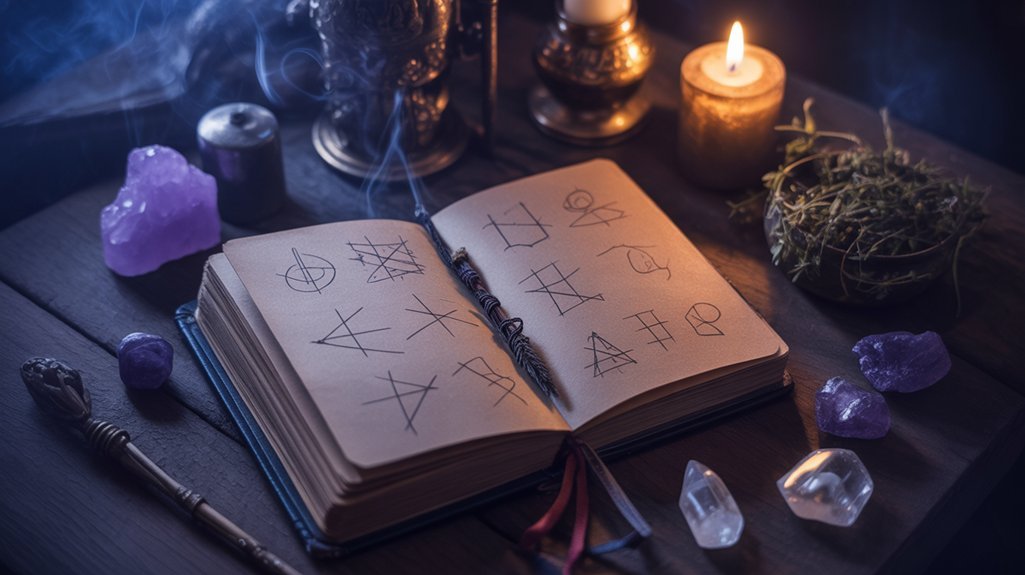
Integrating protective symbols into your daily life can be a powerful practice, especially when you consider the significance behind each choice.
What You Can Do
Translating symbolic knowledge into tangible practice is like turning dreams into reality. Have you ever felt that spark when a symbol resonates deeply with you? It’s a magical experience, and I’m here to help you weave those symbols into your everyday life. You don’t need to be a seasoned witch to start; just a willingness to explore.
Try this tonight: Create a simple wearable talisman. It could be as straightforward as drawing a small symbol on a piece of cloth or even a temporary tattoo. For example, Hecate’s Wheel can offer you protection and a sense of connection to your intentions. Just start with something small; that’s enough.
- Create wearable talismans: When I first began, I embroidered symbols onto my clothes. It’s a personal touch that keeps your intentions close. You might want to choose symbols that resonate specifically with your journey.
- Establish spatial wards: Think about your space. I learned the hard way that drawing pentacles on doors and windows can create a protective barrier. Layer moon glyphs on windowsills for added shielding. This practice helps ground your energy and keeps unwanted influences at bay.
- Develop ritual anchors: Carving runes like Eihwaz onto candles or talismans during meditation can amplify your spell work. I remember the first time I did this; it felt like a powerful barrier against obstacles.
Symbols can become conduits for your will. Start small—perhaps just one amulet or a marked candle—then expand your practice as your confidence builds. Trust the process. Remember, this won’t work for everyone, and that’s perfectly okay. Be patient; results vary.
What I wish I’d known as a beginner is how crucial it’s to respect the origins of these practices. Some symbols and rituals come from closed or semi-closed traditions, so it’s wise to seek guidance from practitioners within those paths.
A practical tip: Always prioritize safety. For candles, use fire-safe containers and never leave them unattended. If you’re working with herbs, consult a healthcare provider if you plan on ingesting them, especially if you’re pregnant or on medication. Sustainable practices matter too—look for ethically sourced crystals and responsibly harvested herbs.
Let’s keep this journey grounded and personal. What symbol resonates with you? Write it down, sketch it, or meditate on it tonight. This simple act can start to anchor your practice in a way that feels authentic to you.
What to Avoid
Ever found yourself drawn to symbols that just felt off? I remember my early days, experimenting with everything I came across. It was exciting but also a bit reckless. Some symbols, like inverted pentagrams or certain sigils meant for summoning, can attract unwanted spiritual interference. Trust me, you don’t want that kind of energy in your space.
Instead, focus on symbols that resonate with you personally. Research them, understand their history, and make sure you feel comfortable using them. It’s about building authentic power through your own intentional choices.
Recommended for You
🛒 Witchcraft Books For Beginners
As an Amazon Associate we earn from qualifying purchases.
And let’s talk about divination tools like tarot and oracle cards. They’re great for gaining insights but think of them as passive channels, not active magical instruments. Want to innovate in your craft? Start with symbols and tools you’ve personally connected with. That way, you’re safeguarding your practice while enhancing it.
Now, what about those symbols tied to trauma, like inverted crosses or swastikas? These carry heavy historical baggage. Engaging with them can muddle your mental clarity and energetic boundaries. I’d learned the hard way that some symbols just aren’t worth the complications they bring.
Try This Tonight: Take a moment to explore symbols that resonate with you. Write down a few that you feel drawn to or curious about. This simple act of personal reflection can guide you toward a more grounded practice.
As you dig deeper, remember to stay discerning. What you invite into your spiritual space matters. That’s where your practice gains strength. Trust the process and be patient—results can vary, and that’s completely okay.
What I wish I’d known as a beginner? Not all tools are right for everyone. Some practitioners might disagree, and that’s valid. Embrace what feels right for you.
If you’re working with physical tools—like candles or herbs—be sure to prioritize safety. Use fire-safe containers for candles and never leave them unattended. If you’re considering herbs for ingestion, consult a healthcare provider first. Remember, it’s always best to be mindful of potential interactions.
As you explore, look for sources that align with ethical practices. Choose ethically mined crystals and sustainably harvested herbs. It not only enriches your practice but also respects the earth and its resources.
Comparison of Approaches
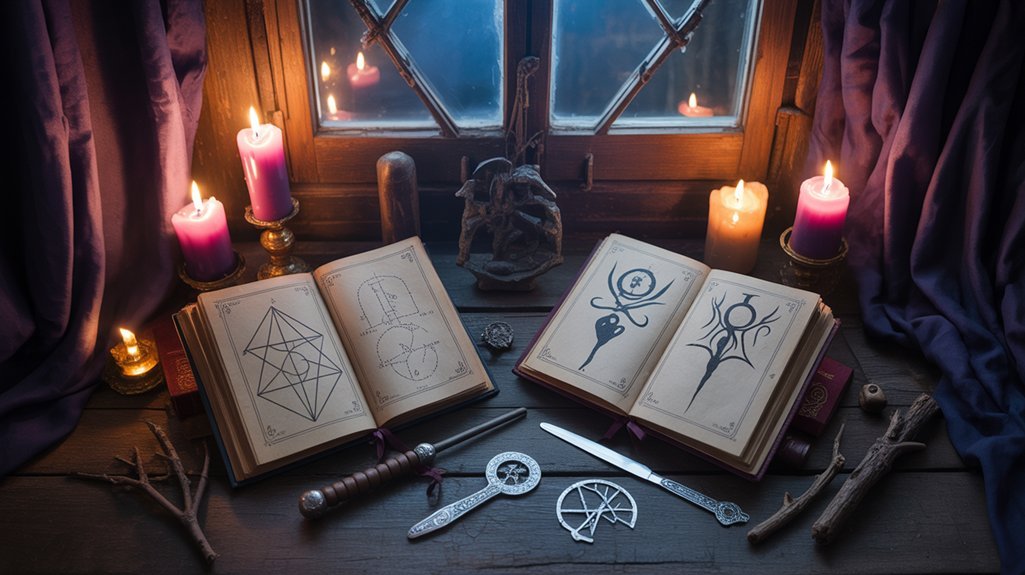
The symbols that resonate with your practice can really reflect your personal journey and approach. Whether you find yourself drawn to the comforting roots of tradition or the creative spark of modern adaptations, there’s something here for everyone.
Here’s a quick overview to get you started:
| Symbol | Traditional Roots | Modern Application | Best For |
|---|---|---|---|
| Pentacle | Ancient pagan elements | Wiccan protection rituals | Elemental balance |
| Algiz Rune | Germanic Elder Futhark | Contemporary witchcraft | Fierce protection |
| Triskele | Neolithic Celtic artifacts | Neo-pagan cycles | Life transformation |
| Helm of Awe | Icelandic Poetic Edda | Enemy repulsion work | Victory magic |
I’ve found that connecting with established traditions can really ground your practice in something meaningful. But don’t forget, modern adaptations can breathe new life into those age-old symbols. You might discover that the pentacle serves Wiccans well for its elemental structure, while neo-pagans might prefer the more fluid septogram.
Ever felt that pull between the old and the new? You don’t have to pick one way. Many practitioners, myself included, blend both approaches. It creates a richer practice that honors our heritage while allowing for personal expression.
Practical Takeaway: If you’re feeling inspired, why not try creating a small altar tonight? Choose a symbol that speaks to you—maybe the pentacle for balance or the Triskele for transformation. Surround it with items that resonate: candles, crystals, or even a piece of nature. Just remember—if you’re using candles, always place them in fire-safe holders and don’t leave them unattended. Safety first!
What I wish someone had told me when I started is that it’s okay to experiment and make mistakes. That’s part of the journey. You’ll learn what resonates with you through practice and reflection.
So, what’s your go-to symbol? Take a moment to think about it. It could be a powerful anchor for your practice.
As you explore these symbols, remember that traditions come from various cultures, some of which may be closed or semi-closed. It’s always a good idea to seek guidance from practitioners within those traditions to honor their origins fully.
And while you’re at it, consider the ethics of what you use. Are your crystals ethically sourced? Are the herbs you’re planning to use sustainably harvested? These choices matter.
Now, let’s talk about practicality. If you’re drawn to the Algiz Rune for protection, here’s a simple ritual you can try tonight:
- Gather Your Materials: You’ll need a piece of paper, a pen, and a quiet space.
- Draw the Algiz Rune: Focus on its shape as you draw it, visualizing protection surrounding you.
- Set Your Intention: Write down what you want protection from—be specific.
- Meditate: Sit quietly with the rune and your intention. Take deep breaths. Feel the energy around you.
- Keep It Close: Place the paper somewhere safe, like under your pillow or on your altar.
This won’t work for everyone, and that’s okay. Be patient and trust the process. The more you engage with these symbols, the more personal they’ll become.
What are you excited to explore next?
Key Takeaways
Now that you’ve had a chance to explore how different approaches shape your practice, let’s dive into what really matters: the symbols you’ll use.
You’re crafting a personalized magical toolkit that resonates with your intentions. These archetypal symbols—like pentagrams, triple moons, witch’s knots, elemental markers, and the wheel of the year—aren’t just relics of the past; they’re dynamic tools you’ll adapt as you grow.
Here’s what I’ve learned over the years:
- Intentionality matters more than tradition. Choose symbols that resonate with your goals, not just what you’ve inherited. Think about what feels right for you.
- Layer your symbols to amplify their power. Combining symbols can deepen your magical work and give it personal meaning. Ever felt that?
- Experimentation is key to mastery. Try different symbols, placements, and applications. What works for one person mightn’t work for you, and that’s perfectly okay.
You’re not bound by history. You’re shaping your craft through thoughtful symbol selection and creative application. Start there.
Let’s get practical. Tonight, pick one symbol that resonates with you. Maybe it’s a pentagram for protection or a triple moon for intuition. Write it down. Reflect on what it means to you. Here’s a simple exercise:
- Take a moment in a quiet space.
- Light a candle (use a fire-safe container and never leave it unattended).
- Visualize your chosen symbol. Imagine it glowing with energy that aligns with your intentions.
- Sit with that feeling for a few minutes. Trust the process.
What I wish someone told me when I started? Don’t stress about doing everything “right.” Each practitioner’s journey is unique.
As for sourcing your materials, be mindful. Look for ethically mined crystals and sustainably harvested herbs. It respects both the earth and the traditions you’re engaging with.
Remember, this journey is yours. Some symbols may resonate more than others, and that’s valid. Be patient; results can vary. If you’re unsure about using certain herbs or crystals, consult a healthcare provider, especially if you’re pregnant or on medication.
Frequently Asked Questions
Can I Create My Own Personal Witchcraft Symbols With Unique Meanings?
Can I create my own personal witchcraft symbols?
Yes, you can absolutely create unique symbols that reflect your intentions. Start by writing down your desired outcome, then strip away vowels and repeated letters. Rearrange the remaining characters into an abstract design.
Just be mindful that some symbols may hold specific cultural meanings, so it’s a good idea to research and respect those traditions.
How do I charge my symbol?
You can charge your symbol by burning it, carving it onto candles, or incorporating it into rituals.
Just remember to practice fire safety, especially when using candles or flames. Always keep flammable materials away and never leave them unattended.
Can I use my symbol for any intention?
Yes, you can use your symbol for any intention that resonates with you.
Just ensure that your intentions are respectful and harm-free. If you’re drawing from specific cultural practices, learning from those traditions can deepen your understanding and respect for their meanings.
What if I feel unsure about my symbol’s effectiveness?
It’s normal to feel uncertain at first. Trust in your creative process and stay open to your symbol’s evolution.
If you’re feeling stuck, consider meditating on your intention or seeking guidance from experienced practitioners who can offer support and insight.
Are Certain Symbols More Powerful During Specific Moon Phases or Seasons?
Q: Are certain symbols more powerful during specific moon phases?
Yes, timing your symbols with the moon phases can enhance their effectiveness. For instance, use completion symbols during the full moon.
Focus on growth symbols as the moon waxes, and use the waning moon for letting go.
Always respect cultural practices related to these symbols, and if you’re working with candles or herbs, prioritize safety to avoid any hazards.
—
Q: How does the season influence the potency of symbols?
Yes, seasonal cycles can amplify your symbols’ energy. For example, the Worm Moon signifies renewal, making it perfect for symbols related to new beginnings.
Be mindful of cultural significance tied to seasonal symbols and consider learning from those traditions.
When using physical items like herbs or candles, always follow safety guidelines to keep your practice safe.
How Do I Safely Store or Display Witchcraft Symbols in My Home?
Q: How can I display witchcraft symbols in my home safely?
Yes, you can display witchcraft symbols safely by placing them mindfully. Hang pentacles on doors and windows to protect your space, and use witch bells at entrances to ward off negative energy.
Always ensure these symbols are positioned respectfully, considering their cultural significance.
Q: Where should I store unused witchcraft symbols?
You should store unused symbols in a dedicated altar space or a sacred box. This keeps them safe and preserves their energy.
Make sure the box is in a clean, quiet area, as this reflects the respect you have for these items.
Q: How do I use crystals for protection around my home?
Yes, placing crystals at your property’s four corners can create a strong energetic boundary.
Choose stones like black tourmaline or obsidian for their protective properties. Be mindful of their placement and remember to cleanse them regularly to maintain their effectiveness.
Q: How can I activate sigils in my home?
You can activate sigils by positioning them intentionally throughout your rooms and focusing your intention on them.
Simply visualize your desired outcome while focusing on the sigil. Always treat these symbols with respect, and ensure you understand their cultural context before using them.
Q: Is there a safe way to use candles in my witchcraft practice?
Yes, you can safely use candles by following fire safety guidelines.
Always keep candles away from flammable materials and never leave them unattended while lit. Consider using a candle holder to protect surfaces and ensure proper ventilation in your space.
What’s the Difference Between Cultural Appropriation and Respectful Symbol Adoption in Witchcraft?
Q: What’s the difference between cultural appropriation and respectful symbol adoption in witchcraft?
No, it’s not okay to adopt symbols without understanding their cultural significance.
To practice respectfully, learn about the traditions you’re interested in, seek guidance from practitioners within those cultures, and approach their symbols with intention.
Can I Combine Symbols From Different Witchcraft Traditions in My Practice?
Can I combine symbols from different witchcraft traditions in my practice?
Yes, you can blend symbols from various traditions.
Start by researching the cultural roots of each symbol you want to use. It’s important to learn from practitioners within those traditions to respect their origins.
Always approach this with intention, treating each symbol and deity with the reverence they deserve.
This way, your practice becomes a unique expression rather than mere appropriation.
Conclusion
Mastering these symbols is about unlocking your magical potential. Tonight, light a single white candle and focus on the pentagram for three minutes, holding the intention of protection. Afterward, journal one sentence about what you experienced. As you practice, remember that each symbol you learn connects you to centuries of wisdom and tradition. Start there. It’s all about taking small steps and being consistent. Trust the process, and watch as your spellwork evolves with each practice. You’ve got this!
Beeswax Ritual Candle Set (7 Colors)
Pure beeswax candles in seven sacred colours for spellwork.
Check Price on Amazon* As an Amazon Associate we earn from qualifying purchases. Prices and availability may vary.
✨ Explore tarot in-depth with Luna’s free tools:
- Complete Guide to All 78 Tarot Card Meanings
- 3,000+ Tarot Card Combination Meanings
- Get a Free 3-Card Tarot Reading from Luna
- Learn Luna’s Signature Tarot Spreads
Powered by Luna’s Circle — Free Tarot, Spells & Spiritual Tools
🔗 Related From Our Network
Continue Your Magical Journey
Free Witchcraft Starter Kit
Get 6 free printable PDFs: grimoire pages, moon calendar, spells, crystals, herbs, and tarot journal.
We respect your privacy. Unsubscribe anytime.
Enhance Your Practice
As an Amazon Associate, I earn from qualifying purchases.
🌙 Get a Free AI Tarot Reading
Luna reads the cards just for you — powered by AI, guided by the stars. No account needed.
Draw Your Cards Now ✨Powered by Luna's Circle — AI Spiritual Guidance