

As an Amazon Associate I earn from qualifying purchases.
In many contemporary witchcraft practices, deities are not just worshipped but actively engaged with as collaborators, a fact that distinguishes these practices from more mainstream religious observances. Traditionally, deities in witchcraft have been seen as archetypal energies or guiding forces rather than authoritarian figures demanding obedience. This can be traced back to ancient pagan traditions, where gods and goddesses personified various aspects of life and nature, highlighting the cyclical and interconnected nature of existence. Today, with a growing resurgence of interest in paganism and witchcraft, deities continue to hold a significant place, serving as sources of empowerment and tools for personal and communal transformation.
Interestingly, a report by Pew Research Center found that a small but growing number of people identify with New Age beliefs, including witches who work with deities. This reflects an increasing shift toward spirituality that emphasizes personal experience and connection rather than doctrine. In witchcraft, deities are frequently chosen based on personal affinity or need, allowing practitioners a tailored and flexible approach to spiritual practice. This adaptability can serve as a solution for those seeking spiritual paths that resonate on an individual level, often aligning with modern values such as gender equality, environmental stewardship, and personal empowerment.
Far from a homogenous practice, the invocation and interaction with deities in witchcraft can vary widely. Some may form deep, personal relationships with a single deity, while others might engage in eclectic or pantheistic practices, calling upon different deities as the need arises. The role of deities in witchcraft is as varied as the practitioners themselves, each incorporating these powerful entities into their rituals, meditations, or daily lives in ways that are meaningful and significant to them personally. Whether seen as literal beings or symbolic representations, deities in witchcraft facilitate a unique blend of tradition and personal experience, making spirituality accessible and relevant in a rapidly changing world.
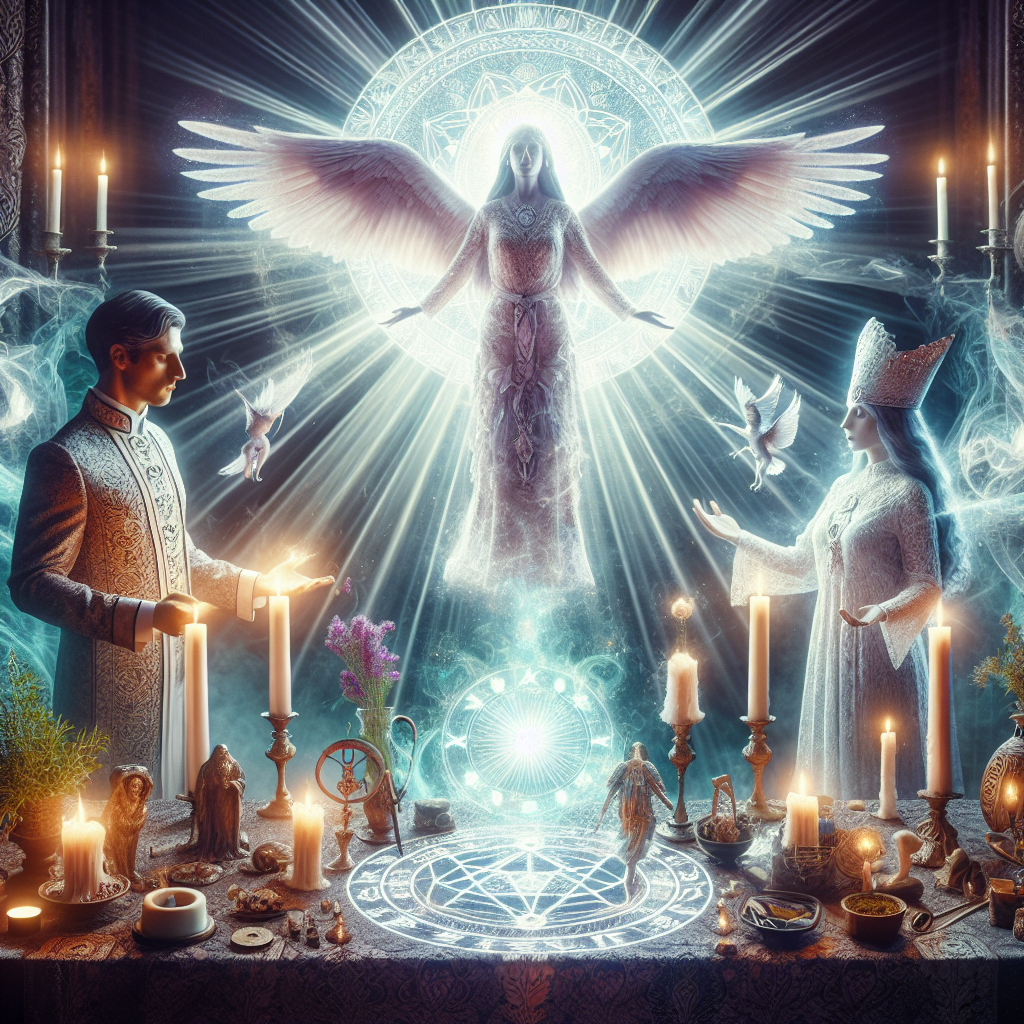
### Grasping the Significance of Deities in Witchcraft
Deities in witchcraft serve as powerful archetypes or spiritual entities that practitioners may form relationships with to enhance their magical practices. These deities often embody aspects of nature, human emotions, or universal principles, providing guidance, protection, and energy for various rituals and spells. Understanding the role of these deities can enrich a witch’s spiritual journey, offering insights into both the mystical and practical dimensions of their craft. As we delve deeper into the next section, we’ll explore how different cultures perceive these divine figures and the impact that working with them can have on one’s personal and magical development.
Understanding Roles in Witchcraft
The role of deities in witchcraft is a multifaceted and deeply personal aspect of both individual practice and the wider pagan and Wiccan communities. Deities serve as archetypes, symbols, and sources of spiritual guidance for practitioners. Understanding these roles can provide insight into the ways in which these divine figures are integrated into magical practices and beliefs.
Deities as Sources of Spiritual Guidance
For many witches, deities act as spiritual guides, offering wisdom and support through various magical practices. This guidance can manifest in several ways, including:
- Helping practitioners connect with the natural world and its energies.
- Providing inspiration for personal growth and development.
- Facilitating communication with the spiritual realm.
Spiritual guidance from deities can be especially valuable for those new to witchcraft, as it helps orient their beginner magic practices and enhances their understanding of complex spiritual concepts.
Interaction with Deities in Rituals and Spells
Deities in witchcraft often play a central role in rituals and spells. Witches may call upon specific deities to aid them in their workings. These interactions typically involve:
- Invocations or prayers directed to particular gods or goddesses.
- Offering gifts or sacrifices as a sign of devotion and respect.
- Performing rituals during specific phases of the moon or seasonal festivals that are associated with certain deities.
These practices emphasize the mutual relationship between witches and deities, highlighting the interactive and reciprocal nature of their connections.
Roles of Specific Deities in Witchcraft Traditions
Different deities occupy various roles and hold different significance across witchcraft traditions. Some common categorizations include:
- Deities of Nature: Such as the Green Man or Gaia, who embody the spirit of the Earth and the cycles of nature.
- Warrior Deities: Like the Norse god Odin or the Greek goddess Athena, who are invoked for strength and protection.
- Love and Fertility Deities: Includes figures like Aphrodite or Freyja, associated with matters of love, passion, and fertility.
Understanding these roles is key to effectively integrating deities into one’s practice and recognizing the ways they can support and enhance magical endeavors.
Deities and Cultural Context
The cultural backgrounds of deities in witchcraft are significant, as they carry historical and mythological narratives that add depth to their roles. These stories often reflect:
- The cultural values and moral stories that shaped ancient societies.
- Historical events or natural occurrences that were personified in myth.
- Connections between different pantheons and cultures through shared deities or similar characteristics.
This cultural understanding enriches the practitioner’s relationship with the deities and imbues their practice with a sense of heritage and tradition.
A Growing Community
The interest in deities within modern witchcraft is on the rise. According to a recent study, over 60% of self-identified witches actively incorporate multiple deities into their practices, indicating a dynamic and evolving engagement with ancient mythologies in contemporary spiritual contexts.
html
What is the role of deities in witchcraft?
Deities in witchcraft serve as sources of guidance, inspiration, and power. Practitioners may invoke deities for protection, wisdom, and to enhance their magical workings.
Are deities in witchcraft the same as those in mainstream religions?
While some deities in witchcraft may have origins in mainstream religious pantheons, their role and interpretation can differ significantly within a magical context.
Do all witches work with deities?
No, not all witches incorporate deities into their practice. Some may choose to work with spirits, ancestors, or rely solely on personal energy and nature.
Can witches work with deities from multiple pantheons?
Yes, witches may choose to work with deities from various cultural and historical pantheons depending on personal beliefs, practice, and affinities.
How do witches choose which deities to work with?
Witches may choose deities based on personal resonance, specific needs, or through research and experiential connections formed over time.
Is it necessary to offer something to deities in witchcraft?
Offerings are a common practice in witchcraft to honor deities and express gratitude. They can range from simple items like candles or incense to more elaborate rituals.
What are the ethical considerations when working with deities?
Respect, commitment, and understanding cultural significance are key ethical considerations when working with deities in witchcraft.
Can deities refuse to work with a witch?
Yes, it’s possible. It’s important to approach deities respectfully and acknowledge that not every deity may respond or prefer to work with every practitioner.
Do deities in witchcraft influence morality?
Some deities may embody or promote specific moral values, but witchcraft itself does not dictate a fixed moral framework. Practitioners often develop personal ethical codes.
How can one begin working with a deity in witchcraft?
Begin by researching the deity’s history, attributes, and cultural background. Initiate contact through meditation, prayer, or ritual, paying close attention to any signs of response or connection.
Conclusion
The intricate relationship between deities and witchcraft reveals profound insights into how these celestial figures serve as pivotal elements in the spiritual practices of witches. Deities are not merely abstract concepts or symbolic representations; they are dynamic participants in the magical realm, embodying elemental powers that witches can harness for rituals and spells. Their presence provides guidance, strength, and a spiritual framework within which practitioners can explore their own magical abilities. This framework is particularly crucial for beginners, offering a structured pathway to understanding the vast and often overwhelming world of witchcraft. Deities aid practitioners in developing a personal spiritual practice that respects tradition while also evolving through personal exploration and intuition.
Moreover, deities serve as intermediaries between the practitioner and the magical energies pervasive in the universe. They act as guides, offering wisdom and protection, thereby reducing the risks inherent in magical endeavors. The role of these deities extends beyond mere facilitation of magic; they inspire practitioners to deepen their understanding of self, the world, and the interconnection between all beings—both human and otherwise. This spiritual relationship empowers witches to hone their craft, nurturing a profound connection to the unseen forces that govern the natural and supernatural world. Crucially, acknowledging deities in witchcraft emphasizes the diversity and adaptability of magical practices, highlighting how these revered beings continue to shape and define the evolving landscape of modern witchcraft.
Amazon and the Amazon logo are trademarks of Amazon.com, Inc, or its affiliates.
Continue Your Magical Journey
Free Witchcraft Starter Kit
Get 6 free printable PDFs: grimoire pages, moon calendar, spells, crystals, herbs, and tarot journal.
We respect your privacy. Unsubscribe anytime.
Enhance Your Practice
As an Amazon Associate, I earn from qualifying purchases.