


As an Amazon Associate I earn from qualifying purchases.
Have you ever found yourself flipping through a book, hoping for guidance, only to feel a rush of connection with a random passage? It’s a powerful moment. Tonight, I’ll show you how to tap into that intuition with bibliomancy, a practice I’ve enjoyed for over a decade. All you need is a meaningful text—maybe a favorite novel or poetry collection. Pose a question, then let the book guide you to an answer. Trust this. It’s simpler than you think, and you might be surprised by what you discover. Start there.
Key Takeaways
- Formulate a clear question before starting bibliomancy — this sharpens focus and ensures the insights you gain are relevant and meaningful.
- Choose a book with personal significance; using a text that resonates enhances the depth of your interpretations and connections.
- Randomly select passages but spend at least 10 minutes reflecting on each one — this promotes deeper understanding and personal insight.
- Engage in journaling after your session to clarify thoughts; writing helps solidify meanings and reveals patterns in your reflections over time.
- Avoid relying solely on bibliomancy for major decisions; use it as a supplementary tool alongside evidence-based methods for balanced decision-making.
Introduction

Ever found yourself flipping through a book, hoping for a spark of insight? That’s the beauty of bibliomancy. It’s a practice I’ve turned to countless times over the years, and it doesn’t require any special tools—just a book and a willingness to embrace the unexpected.
Try this tonight: Grab a book that speaks to you, whether it’s poetry, philosophy, or a sacred text. Open it up to a random page. Close your eyes, take a deep breath, and let your finger land on a passage. That text might just hold the guidance you need.
Bibliomancy comes from the Greek words *biblio-* (book) and *-mancy* (divination). It’s a method that invites you to step away from traditional reading. Instead of following a narrative, you’re engaging with the text in a way that feels almost like a conversation. You ask a question, and the universe—or your intuition—responds through the words on the page.
What I wish I’d known as a beginner is that it’s all about interpretation. It’s not about summoning spirits or waiting for grand revelations. It’s about finding resonant wisdom that aligns with your current situation. You’re the one giving meaning to those words, and that’s a powerful thing. Just like the healing rituals in witchcraft, bibliomancy can offer a unique path to personal insight and peace.
Building Your Practice
Starting out, it’s easy to get hung up on the idea of “what’s supposed to happen.” In my practice, I learned the hard way that it’s okay to feel uncertain. You mightn’t get an answer right away, and that’s fine. Here’s a simple framework to guide you:
- Formulate a Clear Question: Think about what you want guidance on. It can be something specific or a general inquiry about your life.
- Choose Your Text Wisely: Select a book that resonates with you. It could be a classic novel, a collection of essays, or even a spiritual text. Just make sure it feels right.
- Create a Calm Space: Find a quiet spot where you won’t be interrupted. Light a candle if you want—just remember to use a fire-safe container and never leave it unattended.
- Engage with the Text: Open the book, close your eyes, and let it fall open naturally. Breathe deeply, then let your finger touch a passage. Read it thoughtfully.
- Reflect: Take a moment to think about what the passage means to you in relation to your question. What feelings arise? What connections can you draw?
Remember: This won’t always work the same way for everyone. That’s valid. Sometimes, you might need to try again or approach a different text. Be patient and trust the process.
Finding Meaning
After years of exploring this practice, I’ve come to appreciate the dialogue it creates. Each session feels like a dance between my thoughts and the wisdom of the text. Maybe you’ve felt that too? When a passage resonates so deeply, it’s as if the words were written just for you.
If you find yourself struggling to connect with the text, don’t hesitate to jot down your thoughts or feelings afterward. This can help clarify your insights and deepen your understanding over time.
Next Steps
As you dive into bibliomancy, remember: it’s about personal interpretation and connection. What you glean from the text is uniquely yours. Trust your instincts, and don’t shy away from unexpected meanings.
If you’re feeling adventurous, consider trying this with different types of books over time—explore poetry one night, and perhaps a philosophical text the next. Each book brings new layers of understanding.
The Problem
As you embark on your bibliomancy journey, you may find yourself facing two significant hurdles: the disappointment of an initial reading that feels disconnected and the challenge of integrating individual signs into a meaningful narrative, even after you’ve grasped their meanings.
These obstacles are common among practitioners, from curious newcomers to experienced diviners familiar with other systems. Understanding the reasons behind these difficulties is crucial, as it will help you navigate the process and deepen your skill before considering giving up.
Why This Matters
Ever sat down with a book, ready for some insight, only to feel more confused than enlightened? I remember those early days, flipping through pages and hoping for clarity. Bibliomancy can feel like a mixed bag. Sure, anyone can crack open a book and point to a passage, but interpreting that text? That’s where things can get tricky.
Without a solid technique, you might misread a result and think, “Is it me? Am I not cut out for this?” Trust me, I’ve been there. The real challenge isn’t just finding random text; it’s about weaving those seemingly disconnected passages into a meaningful narrative. If you’re not careful, you might toss aside a practice that could have led you to profound insights simply because the first readings felt muddled.
And then there’s the danger of self-narratization. It’s all too easy to reduce complex texts to your personal struggles, filtering everything through a lens of confirmation bias. Have you caught yourself doing this? Recognizing these pitfalls is crucial. It helps you distinguish between genuine divination skills and self-deception. You don’t want to chase false certainties; you want to build real interpretive mastery.
Practical Takeaway
Here’s a simple exercise you can try tonight: Choose a book that resonates with you—maybe a favorite novel or a spiritual text. Open it to a random page and read the passage. Jot down your initial thoughts, but don’t rush to conclusions. Instead, take a moment to reflect on how that text connects to your current feelings or questions.
Start there. This practice can help you build a bridge between the text and your personal experience, strengthening your interpretive skills over time.
A Personal Perspective
After years of working with different texts, I learned that patience is key. This won’t work for everyone right away, and that’s okay. Results vary. What I wish someone had told me as a beginner is that it’s a process. Sometimes it takes multiple readings to see the connections clearly.
If you find yourself stuck, take a deep breath. Trust the process. Give yourself permission to sit with the ambiguity.
Moving Forward
As you dive deeper into bibliomancy, remember to approach the practice with respect for its origins. Some traditions have closed practices, so seek guidance from experienced practitioners if you’re drawn to a specific path.
And always, always prioritize safety—especially if you’re incorporating physical elements like candles or herbs into your practice.
Feeling inspired? Ready to try this tonight? Let’s keep exploring together, step by step.
Who It Affects

Building interpretive mastery with bibliomancy can feel exciting, right? But let me share some honest truths from my own journey. I remember diving into random passages, thinking I could find all the answers. It’s tempting to let those words guide you, but here’s the kicker: relying on chance can keep you from making those tough calls in life. Ever felt that?
You might notice a shift in your judgment when facing complex choices. I’ve been there, too — letting the pages do the decision-making felt easier, but it often masked deeper issues I needed to confront. If you’re feeling anxious or uncertain, it’s crucial to seek genuine support from trusted friends or mentors instead of leaning solely on bibliomancy.
Your religious or spiritual community mightn’t be on board with this practice. I’ve seen practitioners feel isolated or misunderstood, and that can be tough. Remember, it’s okay to seek guidance from those who understand your chosen path. Trust your intuition while respecting the traditions that guide you.
What I wish I’d known as a beginner is to balance personal exploration with community wisdom. You might find conflicting interpretations, which can be confusing. Instead of letting that chaos rule your practice, remember: clarity comes from within.
Take a moment to breathe, and start there. Consider journaling your thoughts before and after a bibliomancy session. This simple practice can help you reflect on what resonates versus what feels off.
And one last thought: while the allure of random guidance is strong, grounding your practice in thoughtful analysis is essential. Your relationships and credibility within your faith community matter. When you approach bibliomancy with intention, you’ll find it can enrich your journey instead of complicating it.
Ready to give it a try? Grab a book that resonates with you tonight, perhaps one you hold dear. Open it to a random page, but before you read, set an intention. What do you need guidance on? After reading, jot down your thoughts and feelings. That’s where the real magic happens. Trust the process, and be kind to yourself along the way.
The Explanation

Having established the intriguing interplay of randomness and personal interpretation in bibliomancy, we can now explore how this practice can manifest in more profound ways.
What might happen when you put these concepts into action? The next phase reveals how the seemingly arbitrary can lead to significant insights, transforming your approach to guidance and decision-making.
Root Causes
Throughout my journey as a practitioner, I’ve often reflected on how we humans seek meaning in uncertainty. Ever felt that? Bibliomancy, a practice I’ve come to appreciate, taps into this deep-rooted need. It draws from ancient traditions across cultures—like the Jewish practice of consulting the Torah, or the Greek and Roman divination methods. This rich history shows us something vital: people everywhere have longed for ways to make decisions when the future feels murky.
I remember when I first stumbled into bibliomancy. It was comforting to think I could find guidance in sacred texts. By randomly selecting passages, I could ease my anxiety about choices, handing over the responsibility to a mix of chance and divine influence. There’s something powerful about opening a Bible, I Ching, or Koran, feeling connected to a broader cultural wisdom.
Here’s a practical tip: Try it tonight. Grab a book that resonates with you, set your intention, and randomly select a passage. Reflect on it. What does it say to you? Start there. That’s enough.
In my practice, I’ve learned that this method provides psychological comfort. It allows us to feel in control while also inviting a sense of surrender. It’s about balancing that push and pull. What I wish someone had told me when I started is that it’s okay to interpret the messages in your own way. Your intuition is a valuable guide.
As you explore, remember to approach this practice respectfully. Different traditions come with their own nuances and ethics. If you’re curious about a specific text or method, consider seeking out practitioners from that tradition to deepen your understanding.
When you select your passage, take a moment to ground yourself. Breathe deeply. This isn’t just about chance; it’s about connecting with something greater. Trust the process. Not every reading will resonate, and that’s perfectly okay. Be patient—results vary, and some practitioners may have differing views on the practice.
As you get more comfortable, try blending bibliomancy with other practices. For instance, you could light a candle (make sure it’s in a fire-safe container and never leave it unattended) to create a sacred space. Pair it with herbs that resonate with your intention; just be sure to consult a healthcare provider if you plan to ingest anything.
The journey of exploration is what enriches our practice. So, what’s your next step? Grab that book, set your intention, and see where the words lead you tonight.
Contributing Factors
Understanding Bibliomancy: A Beginner’s Guide
Ever found yourself at a crossroads, unsure of which path to take? I remember that feeling well—it can be overwhelming. That’s where bibliomancy comes into play. It’s a simple yet profound practice that can offer clarity and insight. Let’s break it down together.
Here’s a quick way to try bibliomancy tonight: Grab a book that resonates with you—maybe a favorite novel or a spiritual text. Focus on a question or situation in your life. Open the book at random and let your eyes land on a passage. Read it, and see how it connects to your query. That’s the beauty of this practice: it’s personal, and it invites your interpretation.
So, why does bibliomancy work? It’s all about how our minds operate:
- Cognitive pattern recognition: Our brains are wired to find connections. When you read a random text, your mind naturally seeks relevance to your life. It’s fascinating, right?
- Intentional focus: By concentrating on your question before you select a passage, you’re guiding your mind toward what matters most to you. It’s like setting a compass for your journey.
- Text density and variety: A book is filled with diverse perspectives. You’re bound to find something that speaks to your situation, no matter how unique it feels.
I learned this the hard way: when I first started, I thought I needed to read complex texts. But really, it’s about what resonates with you. Start there.
And let’s talk about that tactile experience. The process of opening a book and physically turning the pages can create a psychological investment in the outcome. You’ll find that this randomness, combined with your interpretation, enhances the divination effect you’re seeking.
Engage with Your Practice
What I wish I’d known as a beginner is that it’s okay if it doesn’t always feel profound. Some days, you’ll get a passage that seems to miss the mark. That’s valid, too. Remember, this practice won’t work for everyone, and that’s part of the journey. Be patient—results vary.
As you explore bibliomancy, think about the cultural roots. This practice draws from various traditions across the globe, so it’s important to approach it with respect. If you’re inspired by a specific tradition, consider reaching out to practitioners within that context. Their insights can deepen your understanding.
Practical Steps for Your Journey
Ready to dive deeper? Here’s a simple ritual to try:
- Choose Your Book: Select one that holds meaning for you—something rich with words and stories.
- Set Your Intention: Take a moment to focus on your question or situation. You might even jot it down in a journal.
- Open the Book: With your eyes closed, let your fingers find a page. Open your eyes and read the passage.
- Reflect: Spend a few minutes thinking about how it relates to your question. What feelings or thoughts arise? Trust your intuition here.
And a safety tip: If you’re using candles or any physical elements in your practice, make sure they’re in fire-safe containers and never leave them unattended.
Final Thoughts
Remember, it’s your interpretation that matters most. The first time I tried this ritual, I was surprised by how meaningful a simple passage could be. It might take time to develop your intuition, and that’s perfectly okay.
What the Research Says
Scholars have shed light on the historical significance of bibliomancy, highlighting its widespread use in medieval manuscripts and church records.
While there’s a consensus on its decline by the sixteenth century, the debates about the reasons behind this shift—ranging from religious censorship to changing literacy patterns—set the stage for a deeper exploration of its legacy.
Key Findings
Key Findings in Bibliomancy
Ever found yourself flipping through a book, hoping for a sign or a bit of wisdom? That feeling isn’t just you. Bibliomancy, the art of divination using texts, has roots that reach deep into both religious traditions and the curiosity of everyday seekers. I remember my first time experimenting with it — I was nervous but excited to see what the universe might reveal.
You can start exploring bibliomancy tonight with any book that speaks to you. It could be a sacred text, a poetry collection, or even a dictionary. Just pick a book, close your eyes, and let it open to a random page. What do you see?
Research shows that you’ll feel a stronger connection if you’re working with texts you personally resonate with. This isn’t just coincidence; it’s your mind making patterns out of the information. I learned this the hard way, believing at first that the magic came from the book itself. In reality, it’s your engagement that amplifies the interpretive impact.
You might choose to let the pages fall open naturally, or you could use tools like dice to guide your selection. This randomness creates a sense of meaningful coincidence. It’s a gentle nudge from the universe, or perhaps just your own intuition. Ever felt that?
But here’s a key takeaway: bibliomancy doesn’t rely on supernatural forces. Instead, it’s about your cognitive ability to find patterns in the ambiguity. Just like in life, sometimes you’ve got to trust the process, even if it feels a little random.
Practical Steps
- Select Your Text: Grab a book that resonates with you. If you have a collection of poetry or a favorite novel, start there.
- Set the Mood: Find a quiet space. Light a candle (just remember, fire safety first — use a stable holder and don’t leave it unattended).
- Ask a Question: Before you open the book, think of a question or a topic you want insight on.
- Open the Book: Close your eyes, breathe deeply, and let the book fall open.
- Interpret: Look at the text you see. What feelings or thoughts arise? Jot them down. This is your moment.
- Reflect: Give yourself time to process what you’ve read. What does it mean to you?
If you’re working with herbs or candles, always consult a healthcare provider, especially if you’re pregnant or have health concerns. And remember, not every practice will resonate with everyone, and that’s perfectly okay.
Engaging with Tradition
Bibliomancy has been practiced across cultures — from medieval Europe to Iranian traditions. Acknowledging these roots is essential. It’s good to seek guidance from practitioners within those traditions when diving deeper.
What I wish I’d known as a beginner is the importance of personal interpretation. While it’s great to learn from others, your unique perspective is what truly brings the practice to life.
Ready to give it a try? You might just discover something about yourself you didn’t expect. Trust the process. That’s enough.
Where Experts Agree
When I first started exploring bibliomancy, I remember feeling a mix of excitement and uncertainty. Ever felt that? It’s a practice that draws on the deep reverence we’ve for texts—whether it’s sacred scripture, poetry, or even your favorite novel.
It’s not just some obscure spiritual gimmick; it’s a method that many scholars recognize as a legitimate form of divination. The European Association of Biblical Studies even ties it to rich historical traditions, like those from Mesopotamia.
Here’s a simple way to try it tonight: Pick a book that resonates with you, something you cherish. Close your eyes, take a few deep breaths, and set an intention or a question you have in mind. Then, open the book at random, and let your eyes settle on a passage. What does it say to you? Trust your interpretation. It’s all about personal connection.
What I wish someone had told me early on is that this practice transcends any single tradition. Christians might use the Bible, Muslims the Quran, and others might turn to poetry or personal favorites. That universality suggests it taps into our shared human need for guidance and meaning-making.
As you explore, remember to respect the origins of these practices. They come from diverse cultural backgrounds. If you’re drawn to a specific tradition, consider seeking guidance from practitioners within that space.
After years of working with different texts, I’ve learned that the magic often lies in the simple act of engaging with the written word. Some practitioners might disagree with how to interpret a passage, and that’s totally valid. Be patient with yourself—results can vary.
Now, let’s take a moment to reflect. Have you ever encountered a phrase in a book that seemed to speak directly to you? Hold onto that feeling as you practice.
As you continue your journey, think about sourcing your materials ethically. If you’re using books or texts from specific traditions, ensure you’re honoring those sources. This respect extends to herbs and crystals as well—consider sustainable options and alternatives to endangered plants.
To wrap up this session, here’s a grounding practice: Close your eyes, hold your chosen text close, and express gratitude for the wisdom it holds.
When you feel ready, open the book again, and see what new insights await you. Start there. That’s enough for now.
Where They Disagree
When I first started exploring bibliomancy, I was both fascinated and confused. Ever felt that? It’s a practice that can feel deeply personal and yet, surprisingly contentious among those who delve into it. Scholars and practitioners often see things differently when it comes to how this art truly works.
Some folks firmly believe that the randomness of the text reflects divine intention. Others argue it’s really just a mirror of our subconscious. I learned this the hard way—what feels like guidance might be shaped by my own biases. You might hear that the specific vocabulary of a book constrains meaning in ways that tarot’s images don’t.
But skeptics caution that this can lead to confirmation bias, where we see what we want to see rather than what’s actually there.
In my own practice, I’ve noticed how the dialogue between my questions and the text often feels like it reveals something authentic. But I’ve also seen how critics point out that misses go unrecorded, which can make our perceived accuracy feel inflated. That’s where it gets tricky.
You might find yourself interpreting passages in a way that feels right, but beware—forcing a reading into your own narrative can lead to misunderstandings. Trust me, I’ve been there. It’s easy to misread scripture.
And then there’s the big question: Are we tapping into something greater, like a multiverse consciousness, or are we just getting good at recognizing patterns in literature? There’s no straightforward answer, and that’s okay.
Practical Takeaway:
If you’re ready to try bibliomancy tonight, grab a book that speaks to you. Ask a question, then randomly open the book and read the passage. Reflect on how it connects to your question. Remember, there’s no right or wrong answer—your interpretation is what counts. Start there.
Engagement Break
What I wish I’d known as a beginner is that it’s okay to make mistakes. Embrace them! Each misstep can guide you to deeper insights. What’s your experience been like with interpreting texts?
Moving Forward
As you continue on this path, keep in mind that practices like bibliomancy draw from various traditions. Always approach with respect, especially if you’re exploring texts that belong to closed or semi-closed traditions.
Seek guidance from practitioners within those traditions if you can—it makes a world of difference.
And remember, there are safety considerations too. If you’re using candles for ambiance, ensure they’re in fire-safe containers and never leave them unattended. If you’re incorporating herbs, consult a healthcare provider about any potential interactions, especially if you’re pregnant or taking medication.
Each journey through bibliomancy is unique. Embrace yours, trust the process, and let your intuition guide you.
Practical Implications

With a solid understanding of bibliomancy’s fundamentals, you might wonder how to apply this practice effectively in your life.
While it can be a powerful reflective tool, it’s crucial to approach it with clarity and openness. Rather than seeking specific answers, think of bibliomancy as a way to prompt deeper self-examination and gain new perspectives on your circumstances.
This sets the stage for exploring how to harness its insights in a meaningful way.
What You Can Do
Practicing bibliomancy can feel like a magical exploration, and I remember how thrilling it was to dive into this world. If you’re new to it, you might wonder where to start. Here’s a simple, grounded way to turn an ordinary book into a tool for divination.
First, pick a text that speaks to you. It could be a sacred scripture, a favorite novel, or even a reference book that holds personal significance. Trust your intuition here. Ever felt that pull toward a particular book? That’s your starting point.
Next, formulate a clear question. Keep it specific and focus on it while you prepare for the next step. This will help guide your reading. Once you feel centered, it’s time to access a passage. You can try different methods, like:
- Letting the book naturally fall open by balancing it on its spine.
- Closing your eyes and letting your finger drop onto the page.
- Using dice to randomly select a page number.
After you land on a passage, read it carefully. Reflect on how it relates to your question. This isn’t about reading randomly—it’s about finding meaning that connects with your intention. You’re engaging in active divination, blending your focus with the unexpected.
What I wish I’d known as a beginner is that interpretation is deeply personal. Don’t worry if it doesn’t make sense right away. Give yourself the space to explore what the passage means to you. Sometimes, the insights come later.
Let’s take a moment. Have you ever had a book speak to you at just the right time? That’s the magic of bibliomancy.
As you practice, keep a journal. Note the questions you ask and the interpretations you feel. Over time, patterns may emerge—connections you didn’t expect. Remember, this practice mightn’t resonate with everyone, and that’s perfectly okay.
Before you give it a try tonight, here’s a practical takeaway: Create a cozy space, light a candle in a fire-safe container (never leave it unattended!), and keep a notebook handy.
Trust the process. You’re on your way to discovering your own unique guidance through these texts. Enjoy the journey!
What to Avoid
As I look back on my own journey with bibliomancy, I remember the excitement of opening a book, letting the pages fall where they may, and hoping for profound insights. It feels magical, doesn’t it? But here’s the thing: relying solely on random passages for crucial decisions can lead you down a rabbit hole of confusion. Trust me, I’ve been there. It’s easy to slip into the habit of letting chance dictate your choices instead of your own wisdom.
Start with your own intuition. Use bibliomancy as a touchstone for reflection, not as a substitute for thoughtful decision-making. Ever found yourself reading a passage and thinking, “This feels just right”? That’s the cue to dig deeper, to explore what it means for you, rather than taking it at face value.
And let’s talk about context. I wish someone had told me how easy it’s to project my beliefs onto a text. It’s tempting to interpret passages that align with what I already think, but that often leads to misunderstanding. Instead, why not ask yourself what the text can teach you, rather than confirming what you already believe?
Oh, and here’s a big one: don’t use bibliomancy for medical decisions. I’ve seen people delay seeking real help because they felt a passage gave them all the guidance they needed. It can feel comforting, but it poses real risks. Always prioritize your health and consult a professional when needed.
Historically, many spiritual traditions have cautioned against relying on divination methods that lack a solid foundation. They understood how easy it’s to get lost in “success stories” that boost our faith in these practices, even when they mightn’t be rooted in reality. Instead, I’ve found that grounding my practice in evidence-based decision-making serves me much better.
Ready to try something? Tonight, before you pick up that book, take a moment to breathe deeply. Set an intention for your reading. What’re you hoping to learn? This simple act can help steer your focus and encourage more meaningful insights.
Recommended for You
🛒 Ritual Candles
As an Amazon Associate we earn from qualifying purchases.
Remember, everyone’s path is unique. Some practitioners may disagree with this perspective, and that’s perfectly valid. We all have different experiences and beliefs, and that diversity enriches our practices.
What I wish I’d known as a beginner is that it’s perfectly okay to blend intuition with traditional knowledge. So, as you explore bibliomancy, don’t hesitate to consult established texts and practitioners from various traditions. They offer a wealth of insights that can enhance your understanding and practice.
As you dive in, approach each reading with curiosity and openness. Your journey is yours alone, and there’s no right or wrong way to do this. Trust yourself, and remember: start there. That’s enough for tonight.
Comparison of Approaches
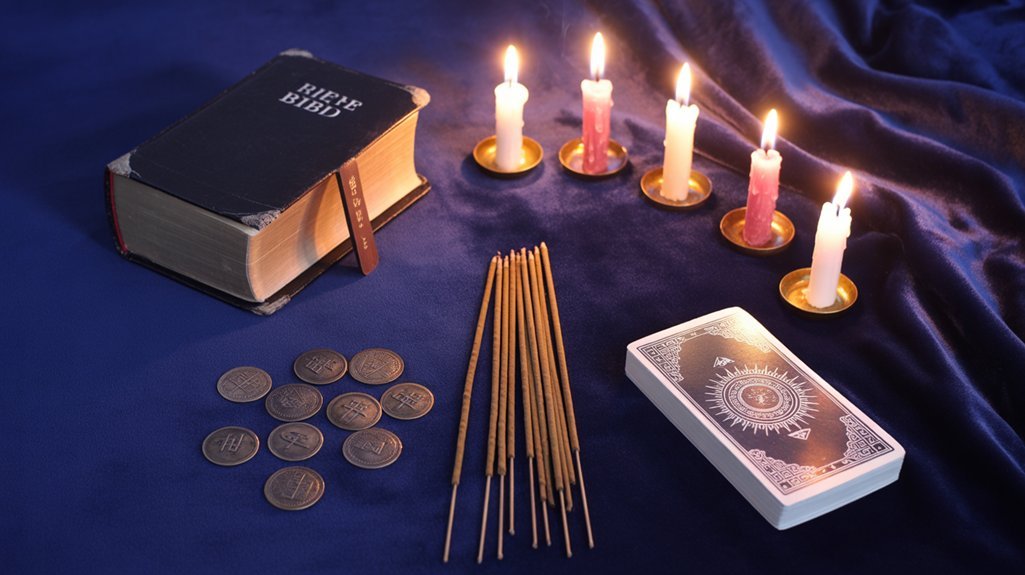
Ever felt that rush when you open a book and land on the perfect passage? That’s the magic of bibliomancy! After years of practice, I still remember what it was like to start—excited but uncertain about my choices. It’s a journey, and everyone finds their way differently.
There are five main methods of bibliomancy, each with its own flavor. They might seem a bit different on the surface, but they all share a common thread: randomization and your own interpretive intuition. Here’s a quick rundown to help you decide which method might fit your goals:
| Method | Best For |
|---|---|
| Random Opening | Quick, intuitive insights |
| Dice-Based | Structured, repeatable guidance |
| Key Suspension | Binary yes/no decisions |
Want to give it a try tonight? Pick a book that resonates with you—something that speaks to your heart. Open it randomly and trust your instincts to guide you to the right passage. That’s enough to spark something meaningful.
You can also explore scanning methods if you’re looking for something more deliberate within those randomized choices. Think about using specialized texts. Sacred works can add spiritual depth, while literary picks might inspire your creativity. It’s all about aligning your approach with your intention.
What I wish I’d known as a beginner is that your intuition is your best guide. Some methods will feel more comfortable than others, and that’s okay. This won’t work for everyone, so be patient with yourself as you explore.
Now, if you want to try something a little more structured, the dice-based method can be a fun twist. You roll the dice to determine which passage to consult. This adds a layer of repeatability, making it a great tool for ongoing guidance. Just remember, there’s no right or wrong way to interpret what you find.
Before diving deeper, let’s pause for a moment. Have you ever felt overwhelmed by choice when selecting a text? Take a breath. Start small. Pick one book tonight and see where it takes you.
As you practice, it’s essential to approach these methods with respect for their origins. Some practices belong to closed or semi-closed traditions, so if you’re drawn to those, consider reaching out to a practitioner within that tradition for guidance. Understanding the role of cultural interpretations can enhance your experience and respect for the practice.
Finally, let’s talk safety. If you’re using candles during your practice, make sure to use fire-safe containers and never leave them unattended. And if you’re working with herbs or other natural materials, always consult a healthcare provider if you plan to ingest anything.
Ready to dive into your own bibliomantic journey? Trust the process and enjoy the exploration. Your intuition is waiting to guide you!
—
Key Takeaways
Have you ever flipped through a book, hoping for a spark of inspiration? I remember that feeling well. When I first started exploring bibliomancy, I was a bit lost. It took time to understand how to make it work for me.
If you’re looking for spiritual insight or creative guidance, remember these three essential elements: intentionality, intuition, and respect for where this practice comes from.
Start with a clear intention. It’s not just about randomly opening a page. You’re directing your energy toward a specific question. This focus shapes how you interpret the messages you find. What’s on your mind today?
Trust your instincts. I learned this the hard way. The words you see (the manifest) and the feelings they evoke (the latent) need to be balanced. Sometimes, your gut feeling will guide you better than logic alone. Ever felt that?
Honor the tradition. Bibliomancy has a rich history. When you engage with it, do so mindfully. This isn’t about casual browsing; it’s about genuine connection. Respect the roots of the practice, and you’ll find deeper meaning. Engaging in practices like bibliomancy can build confidence and help you tap into your inner strength.
Practical Takeaway
Ready to try this tonight? Grab a book that resonates with you—maybe a favorite novel or a spiritual guide.
Sit in a quiet space, take a few deep breaths, and set your intention. Ask your question, then open the book to a random page. Don’t rush the process. Take a moment to absorb what you see and how it makes you feel.
Engage with the Process
What I wish I’d known as a beginner is that patience is key. Results can vary, and that’s okay. Some days, the answers flow easily; other times, it might feel like a puzzle.
Be gentle with yourself.
Next Steps
As you explore bibliomancy, consider these practical tips:
- Choose your book wisely. It should resonate with your current journey or questions.
- Create a sacred space. This could be as simple as lighting a candle in a safe container.
- Reflect on your findings. Keep a journal of your experiences and interpretations. Over time, you’ll notice patterns or themes.
And remember, this practice is yours. There’s no right or wrong way to approach it. Trust the process, and be open to the unexpected wisdom that comes your way.
Frequently Asked Questions
Which Books Work Best for Bibliomancy Divination Practices?
Q: Which types of books are best for bibliomancy?
Yes, you can use any books that resonate with you personally. Start with sacred texts like the Quran or poetry by Hafez, classics like *Pilgrim’s Progress*, or modern works like *Harry Potter*.
Feel free to explore contemporary poetry, nonfiction, or even dictionaries. Just choose what speaks to you, and remember to approach the practice with respect for each text’s cultural background.
Q: How do I start a bibliomancy practice?
You can start by selecting a book that feels meaningful to you. Open it randomly and read the passage your finger lands on.
To add an element of chance, try using dice to choose a page number or a specific line. Just ensure you’re in a quiet space where you can focus and reflect on the insights you receive.
Q: Is bibliomancy safe?
Yes, bibliomancy is generally safe, but always be mindful of your surroundings.
If you’re using candles or incense, practice fire safety by keeping them away from flammable materials. If any herbs or oils are involved, consult a healthcare provider, especially if you’re pregnant or have health concerns.
Always approach the practice with respect for its origins.
Can Bibliomancy Predict Future Events With Reasonable Accuracy?
Q: Can bibliomancy really predict future events?
No, bibliomancy doesn’t predict the future with accuracy. It’s more about interpreting random selections from texts.
To start, choose a book that resonates with you, ask a clear question, and then open it to a random page. Remember, interpretations are subjective.
If you’re drawn to this practice, consider learning from experienced practitioners who respect its cultural roots.
Q: How can I use bibliomancy effectively?
You can use bibliomancy by selecting a meaningful book and formulating a specific question. Open the book randomly and reflect on the passage you find.
This practice emphasizes personal insight rather than concrete predictions. Ensure you’re in a calm space for clearer interpretation, and approach it with an open mind.
It’s a personal journey, so enjoy the process!
How Long Has Bibliomancy Been Used Historically?
Q: How long has bibliomancy been practiced?
Yes, bibliomancy has a rich history spanning thousands of years. Ancient Romans used *sortes* to seek guidance from texts like Homer and Virgil.
You can explore this practice by starting with your favorite book and asking a question, then opening it at random. Just remember, it’s important to respect the cultural origins of these practices and learn from those within those traditions.
Q: Did medieval Christians use bibliomancy?
Yes, medieval Christians engaged in bibliomancy, even though it faced some condemnation from the church.
If you want to try this method, consider using a Bible and asking a question, then reading a random passage for insight. Be mindful of the historical context and approach this practice with respect for its origins.
Q: What about Islamic traditions and bibliomancy?
Yes, Islamic traditions developed sophisticated bibliomantic systems known as *Falnama* by the 14th century.
To start, you might explore *Falnama* texts or consult someone knowledgeable in these practices. Remember to approach these traditions with respect, as they’re sacred to many communities.
Q: Are there Jewish practices related to bibliomancy?
Yes, Jewish communities have documented bibliomancy practices in texts like *Shimmush Tehillim*.
To engage with this tradition, consider using the Psalms and asking a meaningful question before selecting a passage. It’s essential to learn from practitioners within the Jewish tradition to honor its cultural significance.
Are There Specific Rituals Required to Perform Bibliomancy Correctly?
Q: Do I need specific rituals to practice bibliomancy correctly?
No, you don’t need strict rituals to practice bibliomancy. You can create your own approach that feels right for you.
Consider reading in a comfortable space, whether that’s outside, at home, or even on the go. Just keep your focus on your questions and the meanings of the passages.
If you’re drawn to traditional methods, research cultural practices and learn from experienced practitioners to gain deeper insights.
What Religions or Spiritual Traditions Practice Bibliomancy Today?
Q: Can I practice bibliomancy with any book?
Yes, you can, but it’s best to use a sacred text that resonates with you. Start by selecting a book that feels meaningful—many choose the Bible, Quran, or other spiritual literature.
Just be respectful of the text’s origins and context, especially if it’s from a closed tradition.
Q: What do I do if I’m unsure how to interpret the text I open to?
That’s completely normal! Take a moment to reflect on your question and the passage you find.
Consider journaling your thoughts or discussing them with someone knowledgeable about the text. This way, you’ll gain a deeper understanding while respecting its cultural significance.
Q: Is bibliomancy safe?
Yes, bibliomancy is generally safe, but be mindful of your environment.
If you’re using candles or incense, practice fire safety and never leave them unattended. Create a calm space, and ensure you’re comfortable with any materials you use.
Q: How do I find a community for practicing bibliomancy?
You can find communities through local spiritual centers, online forums, or social media groups focused on divination practices.
Connecting with experienced practitioners can offer guidance and insight into respectful practices specific to various traditions. Always approach these communities with an open heart and a willingness to learn.
Q: Can I mix bibliomancy with other divination methods?
Yes, you can combine bibliomancy with other practices like tarot or astrology if it feels right for you.
Just be sure to maintain respect for each method’s origins. Explore how they complement each other and keep an open mind as you experiment.
Conclusion
Bibliomancy invites you to explore the wisdom that’s already within you. Tonight, choose a book that resonates with you, close your eyes, and take a deep breath. Open it randomly and read the first passage your eyes land on. Then, take a moment to reflect on how those words connect to your current feelings or concerns. Afterward, journal one sentence about your insights.
Trust your intuition; it’s guiding you. Start there. You’re capable of uncovering the clarity you seek, and each moment spent in this practice brings you closer to understanding yourself. You’ve got this!
Amazon and the Amazon logo are trademarks of Amazon.com, Inc, or its affiliates.
Continue Your Magical Journey
Free Witchcraft Starter Kit
Get 6 free printable PDFs: grimoire pages, moon calendar, spells, crystals, herbs, and tarot journal.
We respect your privacy. Unsubscribe anytime.
Enhance Your Practice
As an Amazon Associate, I earn from qualifying purchases.